
Prepare the source pack
Choose the proposal kind and supply the buyer brief, approved evidence, delivery assumptions and commercial terms. For RFP work, retain the issued requirements and separate known answers from missing evidence.
Upload technical requirements, architecture documents, and project context — Gixo generates structured implementation proposals with architecture planning, migration phases, integration specs, timelines, and commercial terms. Source-first AI drafting for the most complex proposal type in technology sales.
An AI tech implementation proposal generator is software that turns uploaded technical context — RFPs, architecture documents, API specs, and project briefs — into a structured implementation proposal covering architecture planning, migration phases, integration requirements, resource allocation, risk mitigation, timeline and milestones, acceptance criteria, support model, and commercial terms. Gixo generates all nine sections directly from your source files rather than a blank template, then lets solutions architects, project managers, and commercial leads refine their sections together in a collaborative editor before exporting to PDF or DOCX.
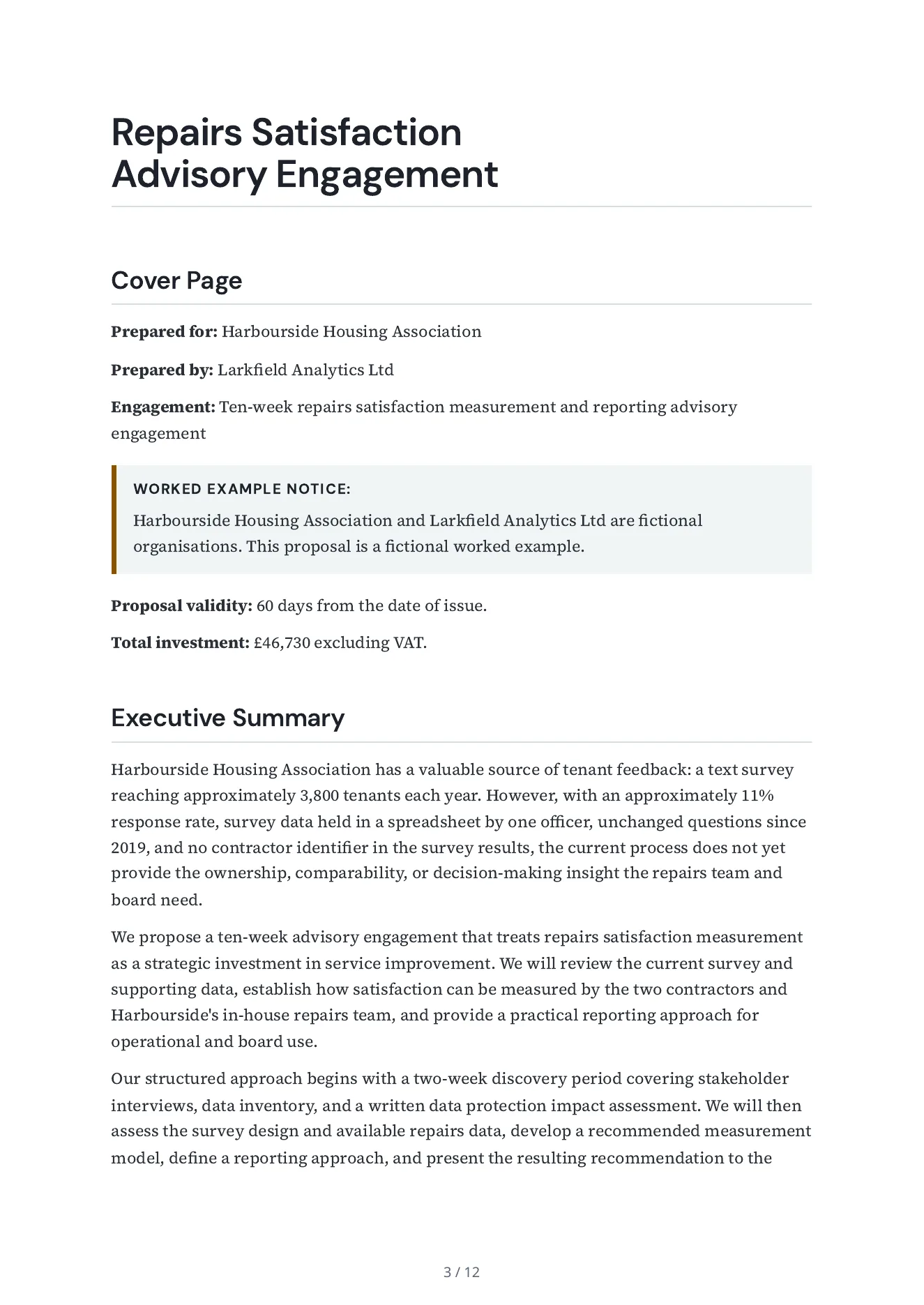
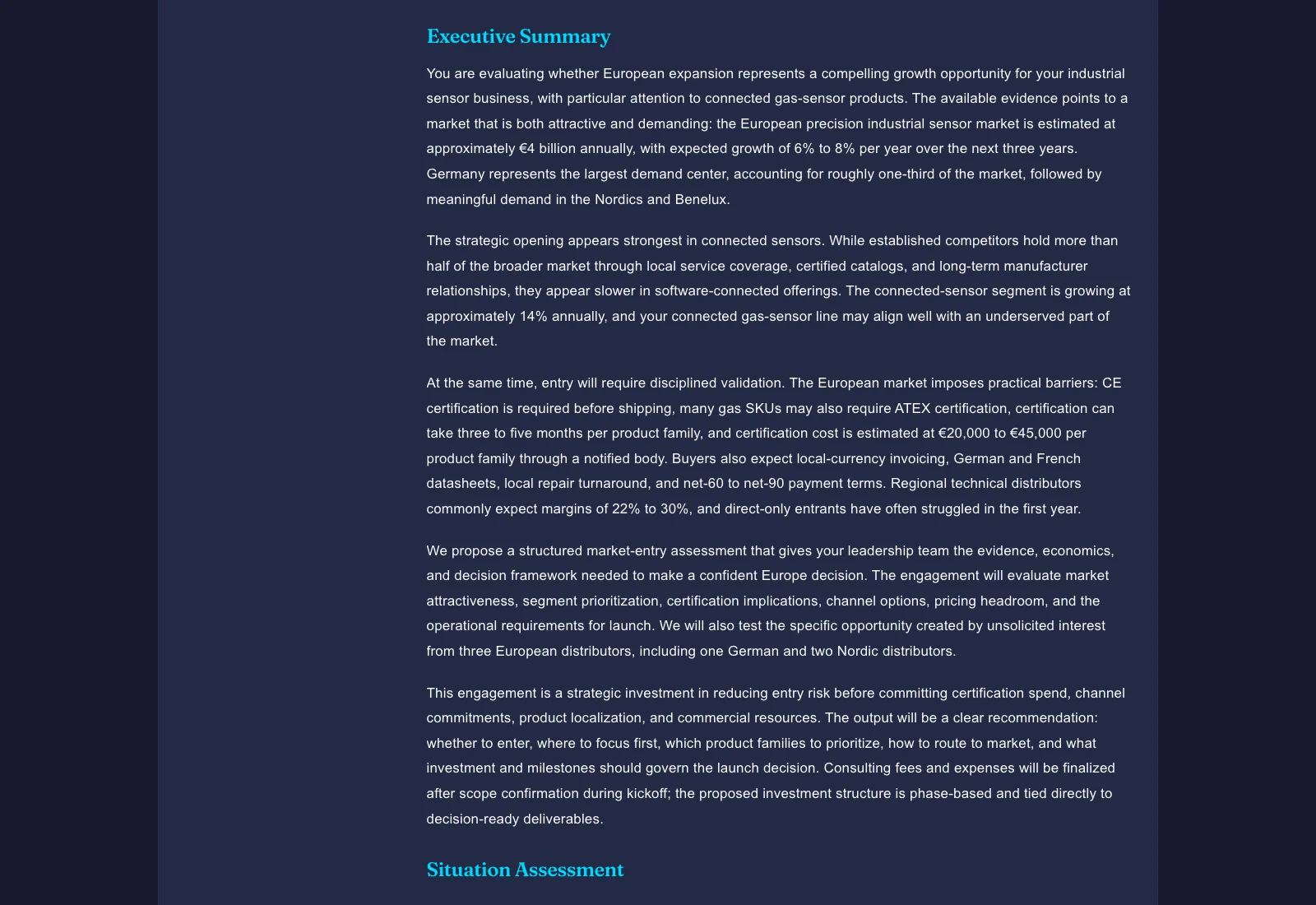
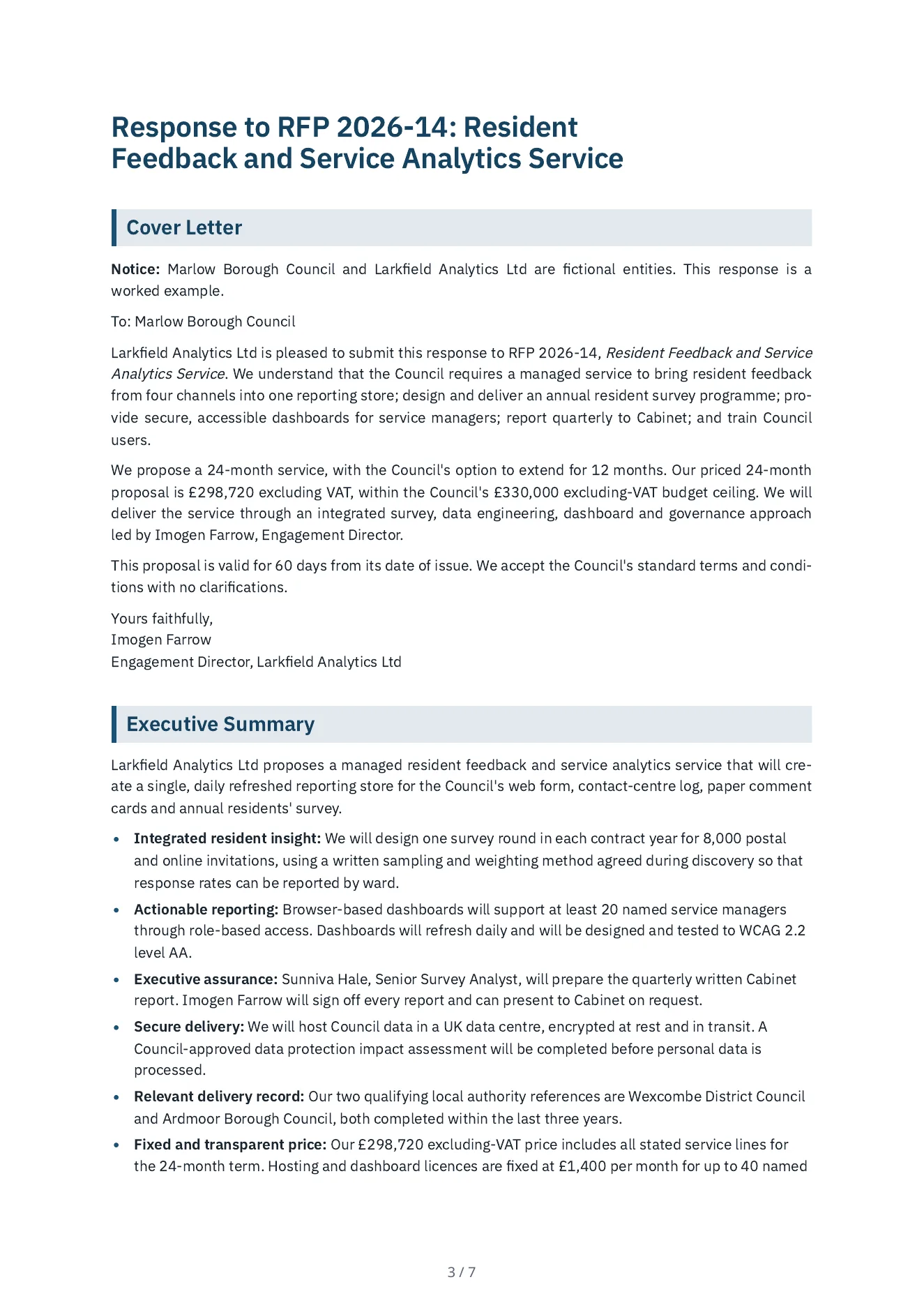
Read a real exported proposal alongside the brief Arc received. The example keeps supplied scope, commercial assumptions and reviewer responsibility visible.
A ten-week advisory engagement for an invented housing association: situation, approach and phases, a requirement-by-requirement compliance matrix, deliverables, timeline, team, terms, and a fee built phase by phase from the bidder's day rates, with the days of each role shown.
Propose a ten-week advisory engagement for Harbourside Housing Association, on behalf of Larkfield Analytics Ltd, that answers the association's brief: review the current repairs survey, recommend how to measure repairs satisfaction by contractor, and leave a reporting approach for the repairs team and the board. Build the fee for each phase from the standard rates in the evidence file (the days of each role times the day rate) and show those days. Add nothing the evidence file does not state. Put a notice on the cover page that the buyer and the bidder are fictional and the proposal is a worked example. Inputs: the buyer's document (brief-harbourside-housing.md); the bidder's evidence file (larkfield-evidence.md); commercial terms: value 46,000 to 52,000 GBP, valid for 60 days, payment terms 'Invoiced monthly in arrears, payable within 30 days.'; deal context: The buyer and the bidder in this proposal are fictional, and this proposal is a worked example. The engagement lead presents to the buyer's board in the ninth week.
A separate reviewer agent read its 177 claims against the bidder's evidence file, the buyer's brief and the deal terms: 115 are supported, 58 add design detail or an inference, 4 are in no input (it calls the fee fixed) and none contradicts one. Every price line recomputes. It is not a person's review.
Choose the proposal kind and supply the buyer brief, approved evidence, delivery assumptions and commercial terms. For RFP work, retain the issued requirements and separate known answers from missing evidence.
Inspect scope, exclusions, requirements and price assumptions. Use reviewable edits and saved comparisons; an unresolved buyer question needs an owner or an explicit qualification.
Inspect the actual PDF, Word or HTML output. Tracked delivery activity and a recorded deal outcome answer different questions; verify the recipient, permissions and current approval state before sharing.
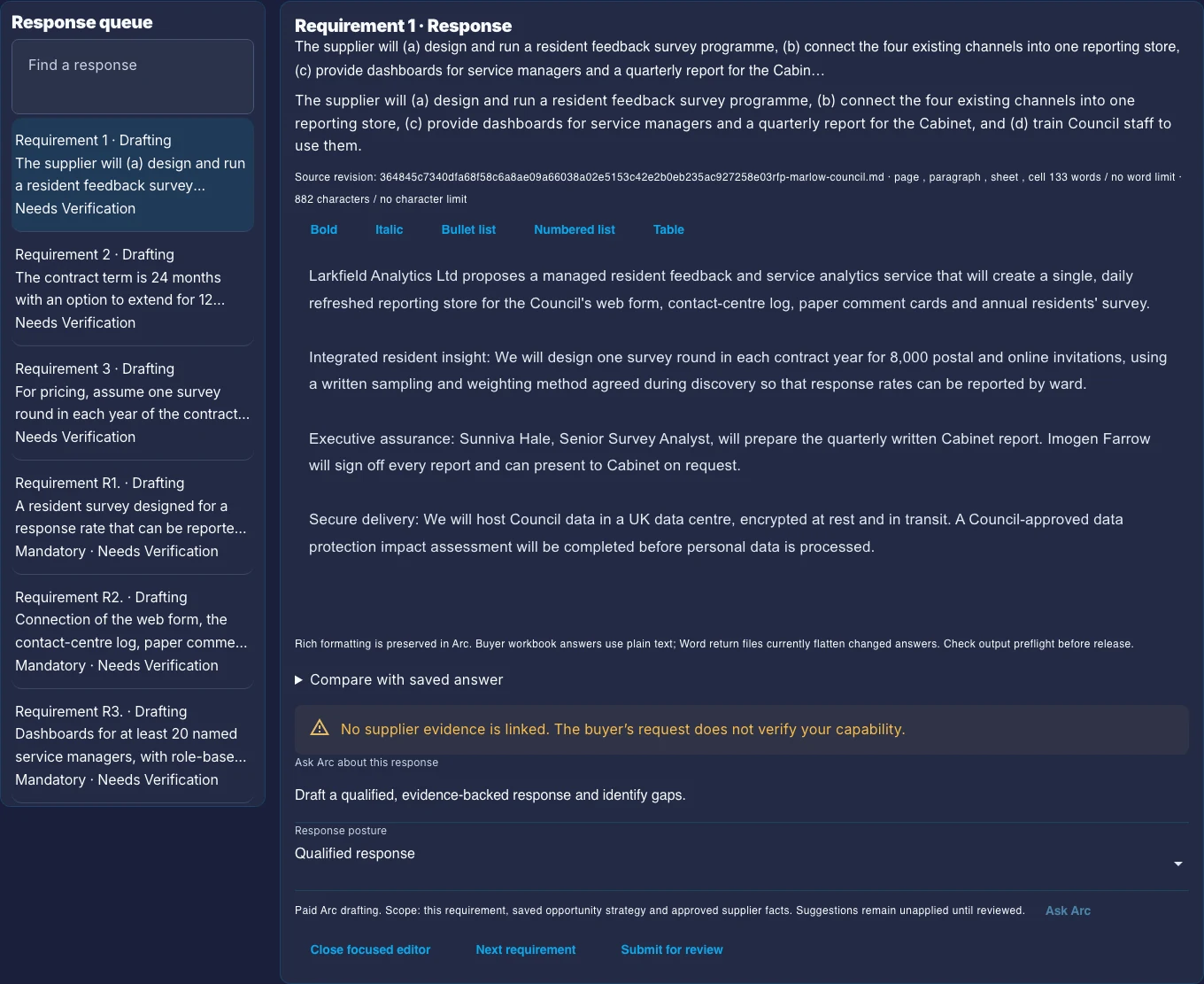
Keep buyer RFP files separate from bidder evidence and approved reusable answers. Inspect extraction coverage, requirement source locations, questionnaire previews and submission limits. Response work can carry an SME owner, due date, escalation owner and required reviewer decisions. Compare an addendum with the source before changing a response.
Review each line's quantity, rate, unit, optional status and one-off, monthly or annual recurrence. Inspect recurrence totals and the estimated first-year total separately. Currency, supplied tax input and commercial assumptions need review. When importing Business metrics, select and review the source values before applying them to the schedule.
Choose the current saved response or an approved edition. Inspect retained attachments, filled questionnaires, the compliance matrix and the package preview. A release manifest identifies stored delivery bytes. For tracked links, review recipient access, expiry, password and permissions separately from delivery activity and the recorded opportunity outcome.
A draft or readiness check is not approval of pricing, legal terms or a delivery commitment. Arc proposal drafting does not imply CRM, CPQ or tax-calculation automation.
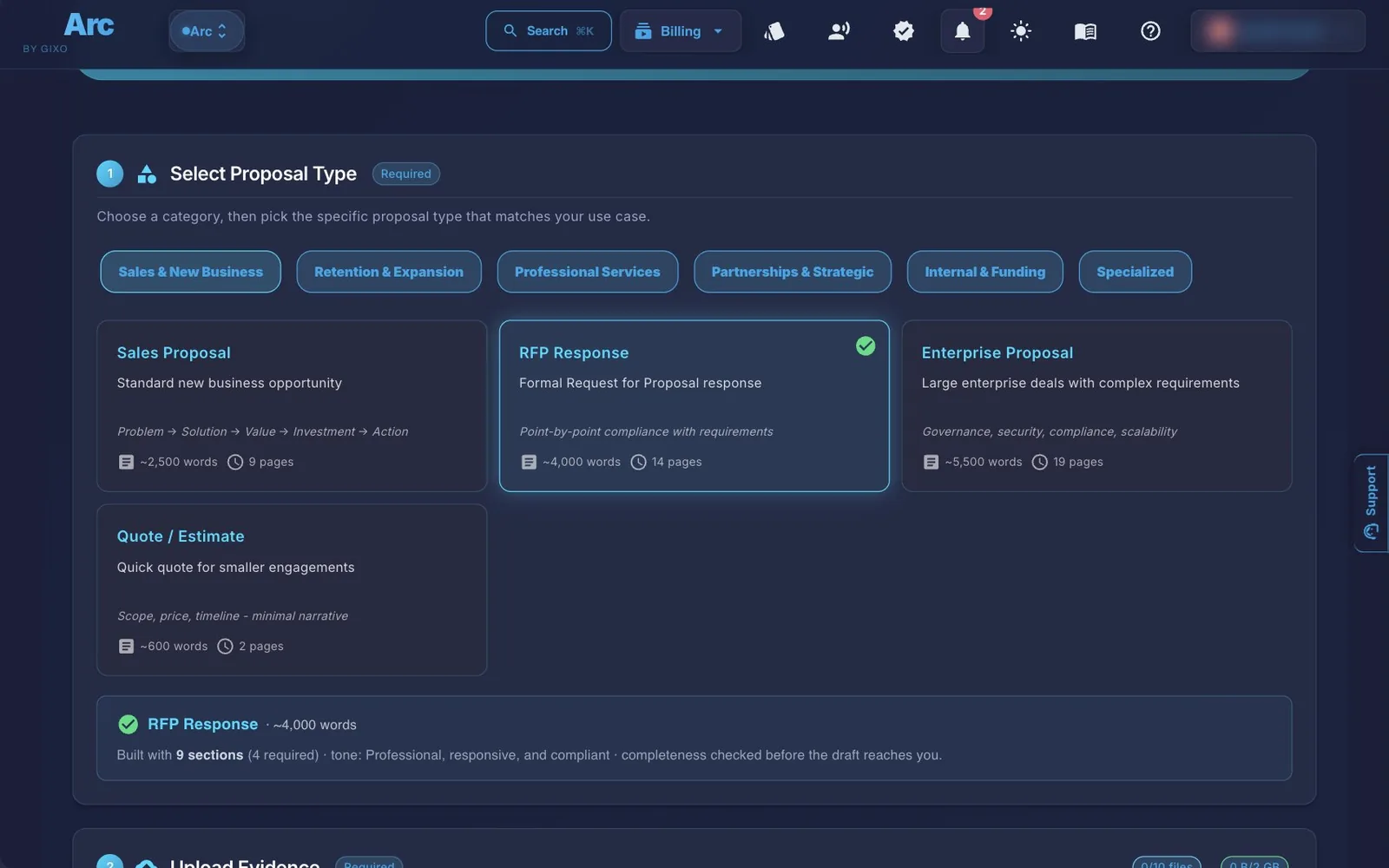
Choose the proposal type, add the RFP, brief, notes, or prior work, then review a structured first draft before it reaches a client.
A software proposal is the document a vendor or implementation partner sends to win a software build, rollout or migration. It sets out the target system, how it connects to what the buyer already runs, the delivery phases, who does what, how the work will be accepted, and what it costs.
Treat a software proposal template as a completeness checklist, not finished copy. Keep the stable sections—current state, target architecture, integrations, migration, responsibilities, timeline, acceptance criteria, risks, support, and commercial terms—but replace every placeholder with facts from the buyer's requirements and your delivery plan. Remove sections that do not apply, name open assumptions, and make dependencies visible before the proposal is priced or approved.
Upload your technical documentation and Gixo generates structured proposals covering all nine critical areas. Edit collaboratively, then export to PDF or DOCX.
Generates solution architecture sections from your uploaded technical specs. Describes system components, data flows, infrastructure requirements, and technology stack decisions with the detail technical reviewers expect.
Drafts phased migration plans with clear stage gates between phases. Each phase gets defined scope, dependencies, rollback procedures, and success criteria so the client understands the transition path.
Generates integration specifications covering APIs, data formats, authentication, and third-party system connections. Upload the client's current architecture documentation and Gixo maps integration touchpoints.
Drafts team structure sections with roles, responsibilities, and time allocations per phase. Covers both your implementation team and the client-side resources needed for a successful deployment.
Generates risk assessment sections with identified risks, probability, impact, and mitigation strategies. Technical implementations carry inherent risks — this section shows the client you have thought them through.
Drafts project timelines with milestones, deliverables per milestone, and dependencies between workstreams. Each milestone has clear completion criteria so progress tracking is straightforward.
Generates acceptance criteria for each deliverable and phase. Defines what "done" means in measurable terms — performance benchmarks, functional requirements, and sign-off procedures that protect both parties.
Drafts post-implementation support sections covering SLA tiers, response times, escalation paths, and knowledge transfer plans. Shows the client what happens after go-live so the relationship extends beyond implementation.
Generates pricing structure sections with phase-based billing, payment milestones, and commercial assumptions. Include your pricing model documentation and Gixo drafts terms appropriate for the implementation scope.
| Section | What Gixo Generates |
|---|---|
| Architecture Planning | System components, data flows, infrastructure requirements, and technology stack decisions from uploaded technical specs |
| Migration Phases | Phased plans with stage gates, defined scope, dependencies, rollback procedures, and success criteria per phase |
| Integration Requirements | API, data format, authentication, and third-party connection specs mapped from the client's current architecture docs |
| Resource Allocation | Team structure with roles, responsibilities, and time allocations across implementation and client-side resources |
| Risk Mitigation | Identified risks with probability, impact, and mitigation strategies |
| Timeline and Milestones | Project milestones, deliverables per milestone, and cross-workstream dependencies |
| Acceptance Criteria | Measurable "done" definitions — performance benchmarks, functional requirements, sign-off procedures |
| Support Model | Post-implementation SLA tiers, response times, escalation paths, and knowledge transfer plans |
| Commercial Terms | Phase-based billing, payment milestones, and commercial assumptions |
Drop in the RFP, technical requirements document, architecture diagrams, API documentation, or project briefs. Gixo supports PDF, DOCX, and scanned documents via OCR.
Gixo reads your source files and generates a structured proposal covering architecture, migration phases, integrations, resources, risks, timeline, acceptance criteria, support, and commercial terms.
Solutions architects, project managers, and commercial leads take turns refining their sections in one shared team proposal, and can see who else has it open. Use inline AI tools to expand technical detail or simplify executive summaries.
Export to PDF or DOCX with professional formatting. The implementation proposal is comprehensive, structured, and ready for technical and business reviewers.
| Aspect | With Gixo | Manual Process |
|---|---|---|
| First draft | Minutes from sources | Days of writing |
| Architecture sections | Generated from tech docs | Written from scratch |
| Migration planning | Phased with stage gates | Manual structuring |
| Risk assessment | Auto-generated framework | Often overlooked |
| Cross-team input | One shared team draft | Sequential reviews |
| Acceptance criteria | Measurable per deliverable | Vague or missing |
| Consistency | Structured every time | Varies by author |
| Export | PDF / DOCX ready | Manual formatting |
Updated