
Gixo Arc
Turn source material into a proposal your team can review
Upload an RFP, brief, deck, notes, or prior work. Arc creates a source-grounded first draft with proposal-specific structure, then keeps questionnaire round-trip, review gates, tracked delivery links, and simple electronic signature on the same proposal. Your team keeps control of facts, scope, pricing, and final approval.
Facts, claims, scope, pricing, and proof points should stay traceable to uploaded source material so reviewers can inspect the draft before it reaches a client. In the response workspace, a deterministic response-quality pass flags unsupported claims, unsupported high-risk claims, placeholder text, duplicate answers, and word- or character-limit breaches so the team can resolve them first.
See an RFP move from source material to review
Follow the real Arc workflow from RFP intake and opportunity context through a structured response, evidence checks, and focused final review.
See what Arc helps your team review
Choose the proposal type, add the RFP, brief, notes, or prior work, then review a structured first draft before it reaches a client.
- 1Add source materialRFPs, briefs, notes, decks, and prior work
- 2Draft to the proposal typeSections and structure follow the real opportunity
- 3Review before deliveryYour team checks facts, scope, pricing, and commitments
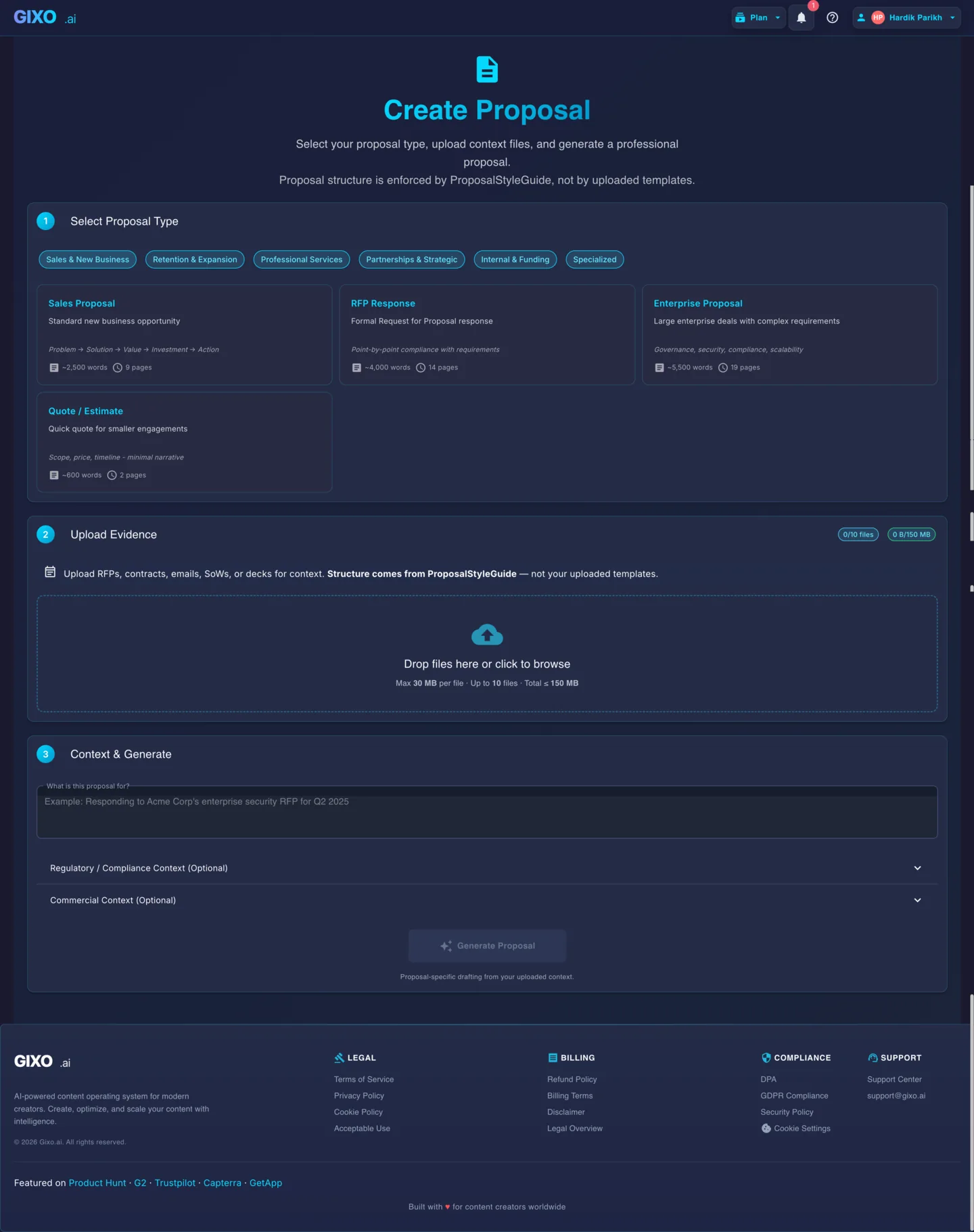
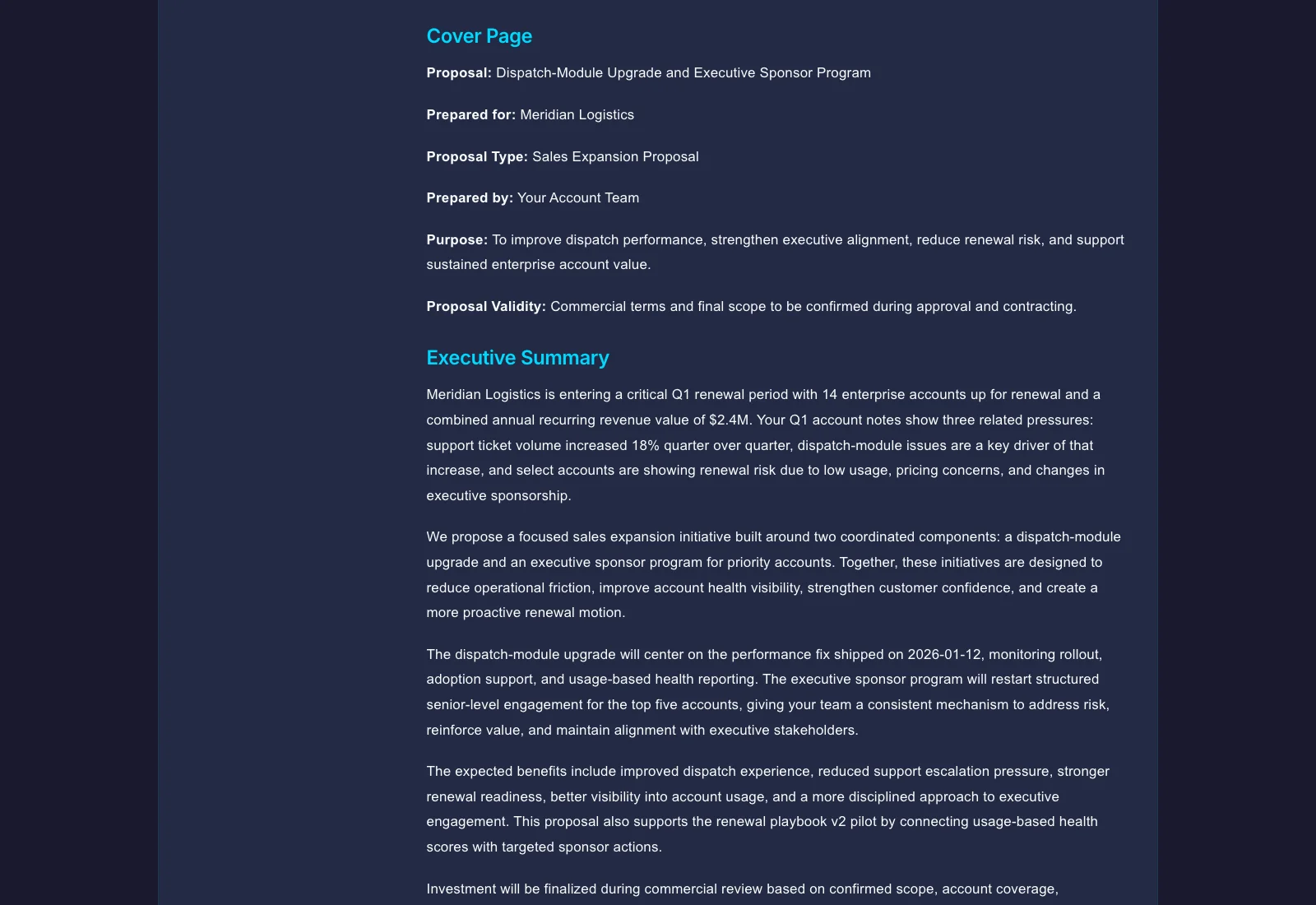
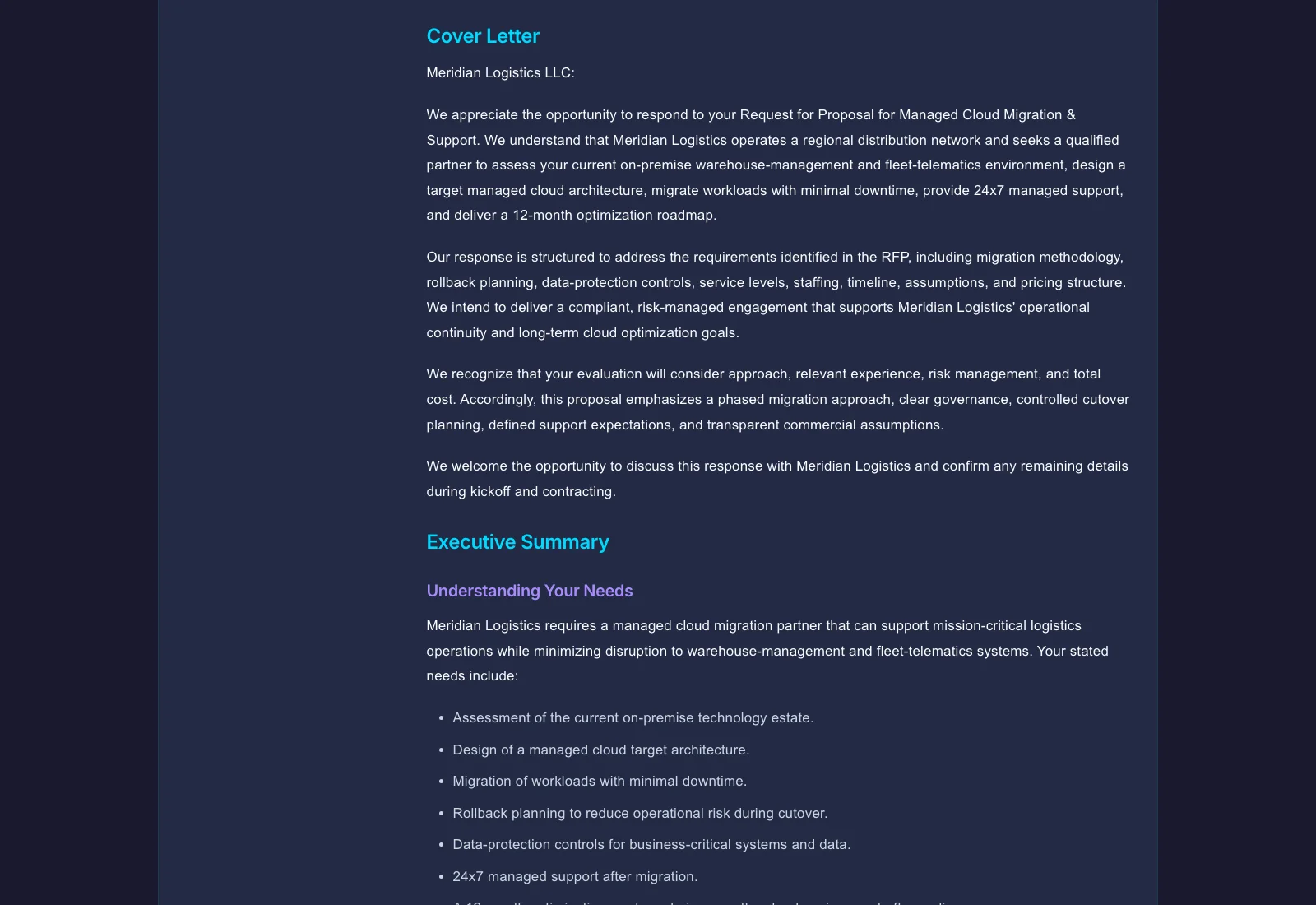
Illustrative example Output screens show document structure — not a promised or real customer result.
Create a new proposal
Best for new opportunities where you need a structured draft from an RFP, brief, or set of source documents. Pick the proposal type, add context files and instructions, and generate a first draft.
Sales proposals and consulting engagement letters
RFP and RFI responses
Grant applications and partnership proposals
Internal business cases and renewal proposals
Analyze an existing proposal
Paste a proposal draft and, optionally, the RFP it answers. The deterministic analyzer checks expected sections, requirement coverage, and mechanical readiness without generating new text.
No signup is required, and the same draft produces the same result when you run it again.
Common uses for the Arc proposal workspace
Sales Proposal
Scope, pricing, timeline, and next steps shaped for the buyer's requirements.
RFP Response
Point-by-point responses aligned to the issuer's requirements and evaluation criteria.
Grant Application
Structured narrative, budget justification, and impact sections for funding requests.
Consulting Engagement
Approach, deliverables, team, timeline, and commercial terms for advisory work.
Partnership Proposal
Value proposition, joint benefits, resource commitments, and governance structure.
Internal Business Case
Problem statement, options analysis, recommendation, and resource request for internal approval.
What Gixo Does
Generates a structured first draft with proposal-specific sections and tone
Extracts context from uploaded RFPs, decks, SOWs, and reference files via OCR
When the buyer issues a structured questionnaire as an XLSX or DOCX file, Arc deterministically writes the answers from your response workspace into a copy of that file, leaving the file you uploaded unchanged and preserving the workbook formulas, styles, and layout as well as Word content controls and response-table cells. A direct export writes each answered requirement whatever its review status; only an approved release requires every answered active requirement to be approved first. A preflight previews every target before writing and blocks on protected sheets, formula cells, merged cells, dropdown values the buyer does not allow, missing required or scored answers, and conflicting requirements, so a person still runs the final check and submits.
Arc runs proposal review as governed team execution: each requirement can carry a response owner, a reviewer, a due date, and a workflow status, and subject-matter-expert, security, legal, commercial, and executive review gates track who must approve, their decision, and when. A deterministic workload view surfaces open, due-soon, overdue, and escalation tasks under a team capacity policy, with reviewer reminders. Your organization still owns every approval.
Arc creates recipient-specific tracked view-only or view-and-download links. You can send the link directly by email from Gixo or copy it to send yourself, and receive alerts when buyers view, download, ask questions, or accept; Arc does not submit the proposal to a procurement portal.
Arc includes native simple electronic signature: a frozen PDF snapshot, named signers on tokenized links, typed-name adoption, and a sealed PDF with an audit certificate. It is not a qualified or certificate-based digital signature.
Supports editing, collaboration, and export to PDF, DOCX, HTML, Markdown, JSON, and plain text
Arc writes a proposal in the language you pick on the create page rather than drafting in English and translating, and the buyer edition, Word, PDF, and PowerPoint files of an approved release are laid out in that language, right to left for Arabic and other right-to-left scripts. Reviewers still check terminology and figures in that language.
On a tracked link, the buyer can accept the proposal by entering a full name and a business email. The acceptance appears in your delivery history, and the proposal workspace keeps an acceptance record of that name and email, the time, and the proposal revision it covers. Where electronic signature is enabled, the buyer can choose Accept and sign instead, and Arc then emails them a request to sign the accepted proposal. When the link shares a reviewed proposal edition, the buyer can also record a question or next-action suggestion for your team without changing that edition. Acceptance on its own is a recorded response, not a signature.
A package preflight checks submission readiness, response quality, every buyer-questionnaire mapping, and required attachments before you submit. An approved release is created only when every answered active requirement is approved and each approved review gate still matches the current revision; it freezes a submission snapshot with a SHA-256 manifest of the buyer edition, DOCX, PDF, PowerPoint, and returned buyer files, plus handoff instruction packs for Business, Lumen, Lex, and Prism that still need review in each product.
Where a generated draft leaves a price as a bracketed placeholder, Arc keeps it visibly unresolved, as [commercial amount: to be confirmed] in an English proposal and in the proposal's own language otherwise, so the draft analyzer and the response-quality review flag it as placeholder text instead of it reading like a finished sentence. A price the draft writes out is not checked against your files, so confirm every figure.
From the response workspace you can export a compliance matrix as CSV, with requirement, source location, compliance, evidence, owner, reviewer, due date, response, and word or character limits, and a response pack as a PowerPoint deck of the answered requirements.
When the buyer issues a revised RFP or an addendum, Arc compares the requirements extracted from the earlier and the later source and lists each one as added, removed, or modified, so the team can see what changed before re-answering.
Arc keeps an approved-answer library with review decisions and an audit export, and its projects view reports win rate, loss reasons, and reusable-answer effectiveness from outcomes your team records. The associations are descriptive, not causal, and never approve or publish content.
Before drafting, a team can score bid qualification against weighted criteria and a decision threshold, map buyer stakeholders by role, influence, and stance, and keep competitor profiles and differentiators linked to evidence alongside the team's win themes. The bid decision stays with your team.
What Gixo Does Not Do
Does not guarantee that every price, timeline, or commitment came from your files: the model is instructed not to invent ones you have not provided, so check each figure and commercial term before sending
Does not guarantee win rates or replace deal-specific strategy
Does not auto-submit proposals or integrate with procurement portals