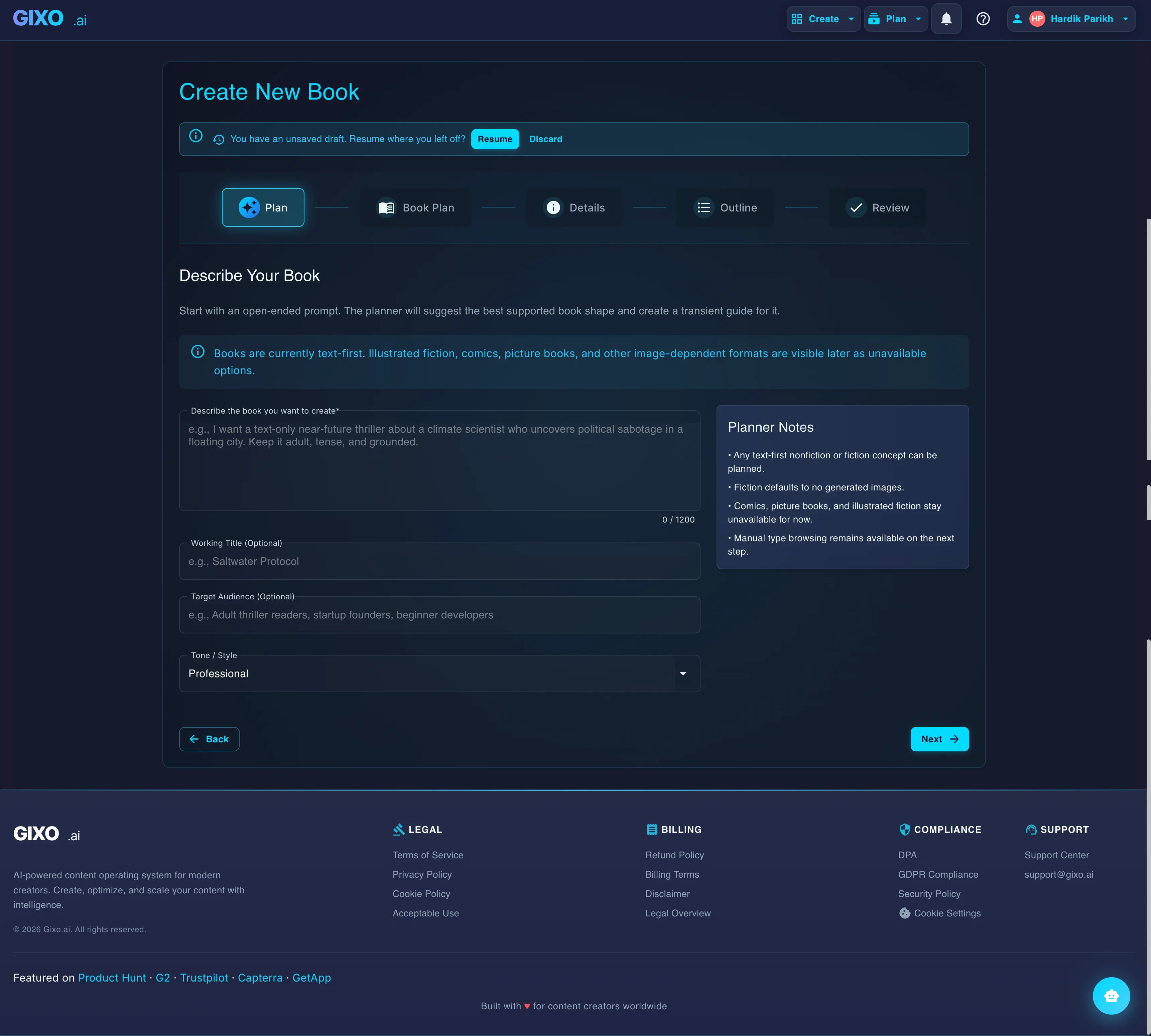
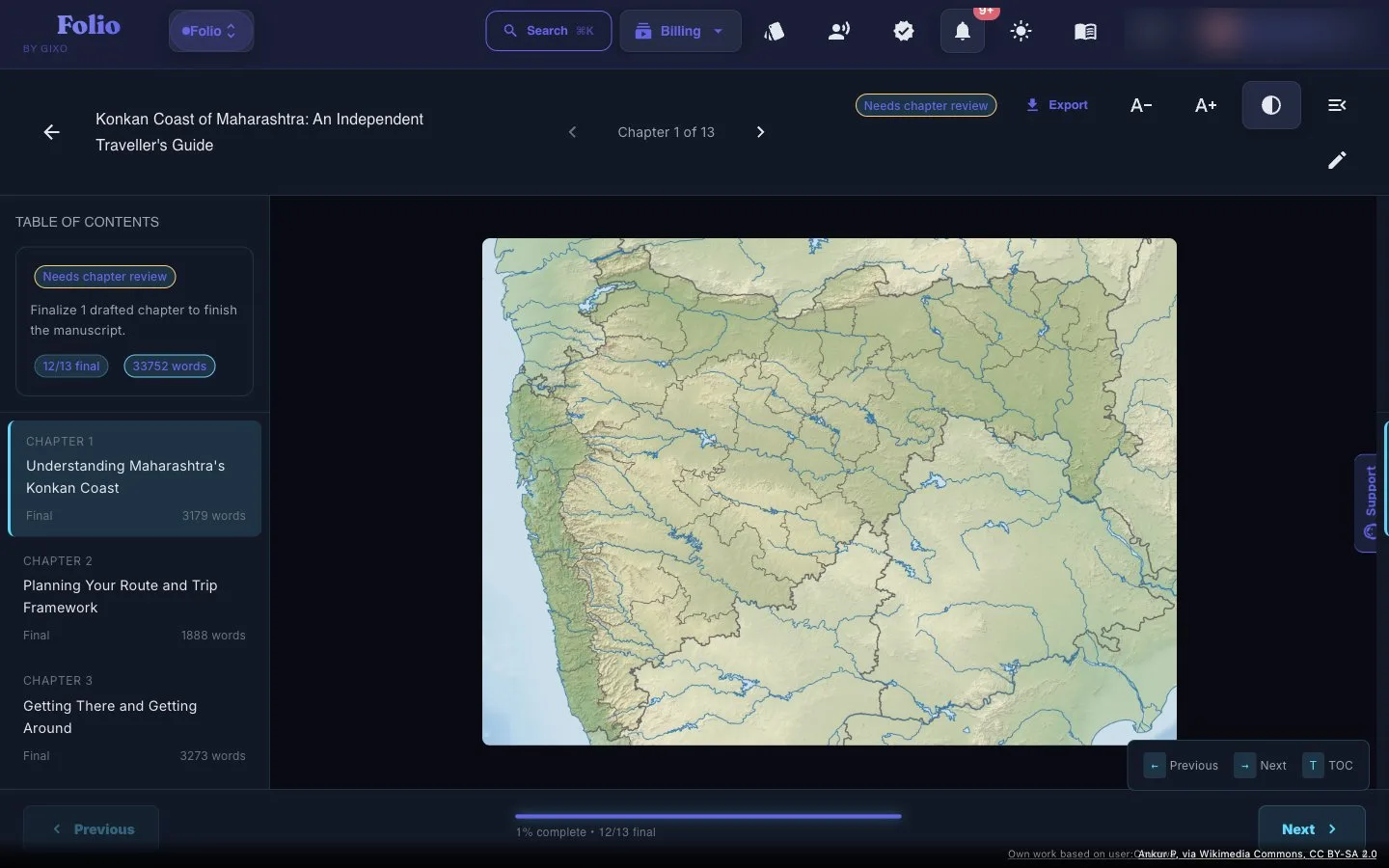
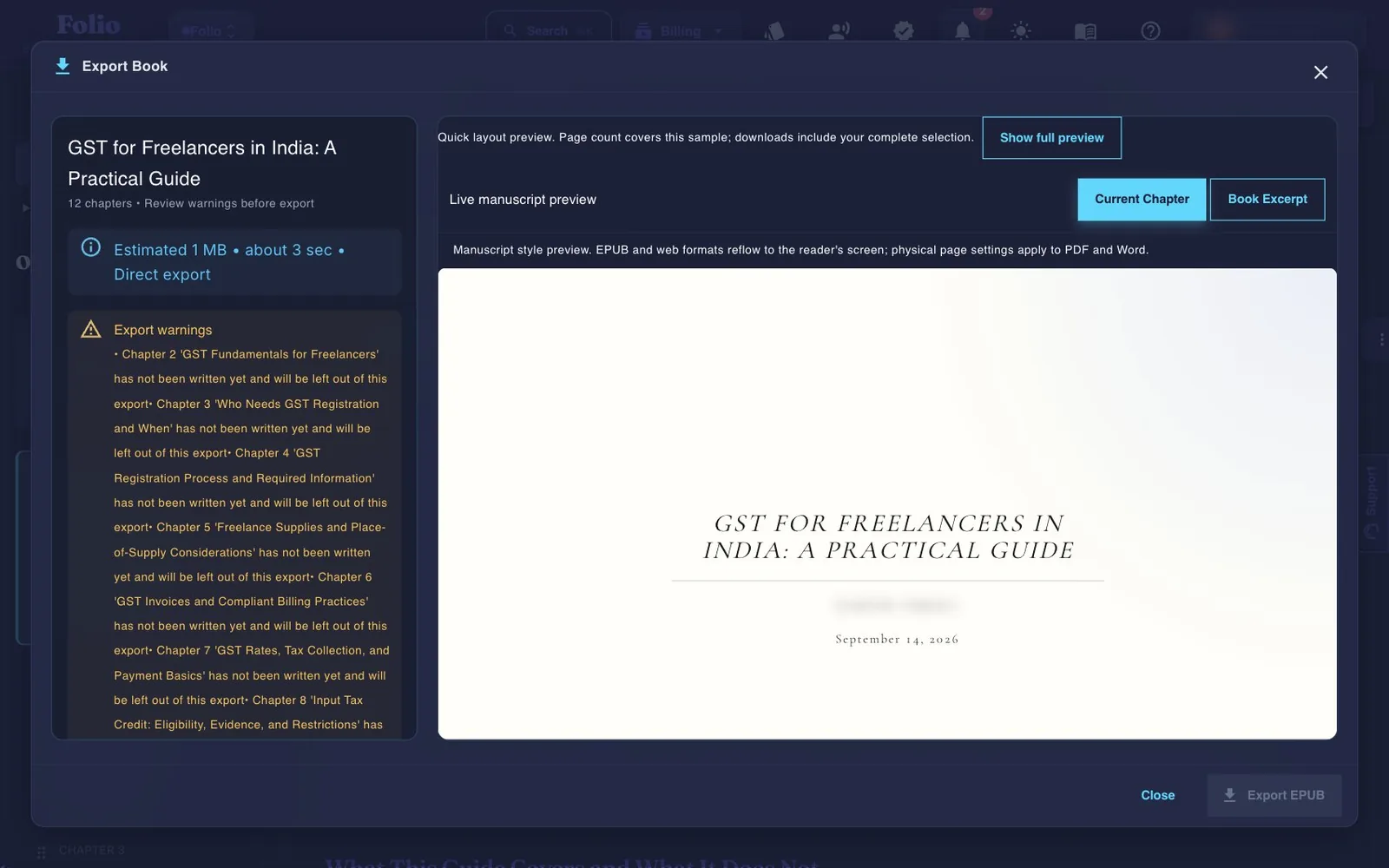
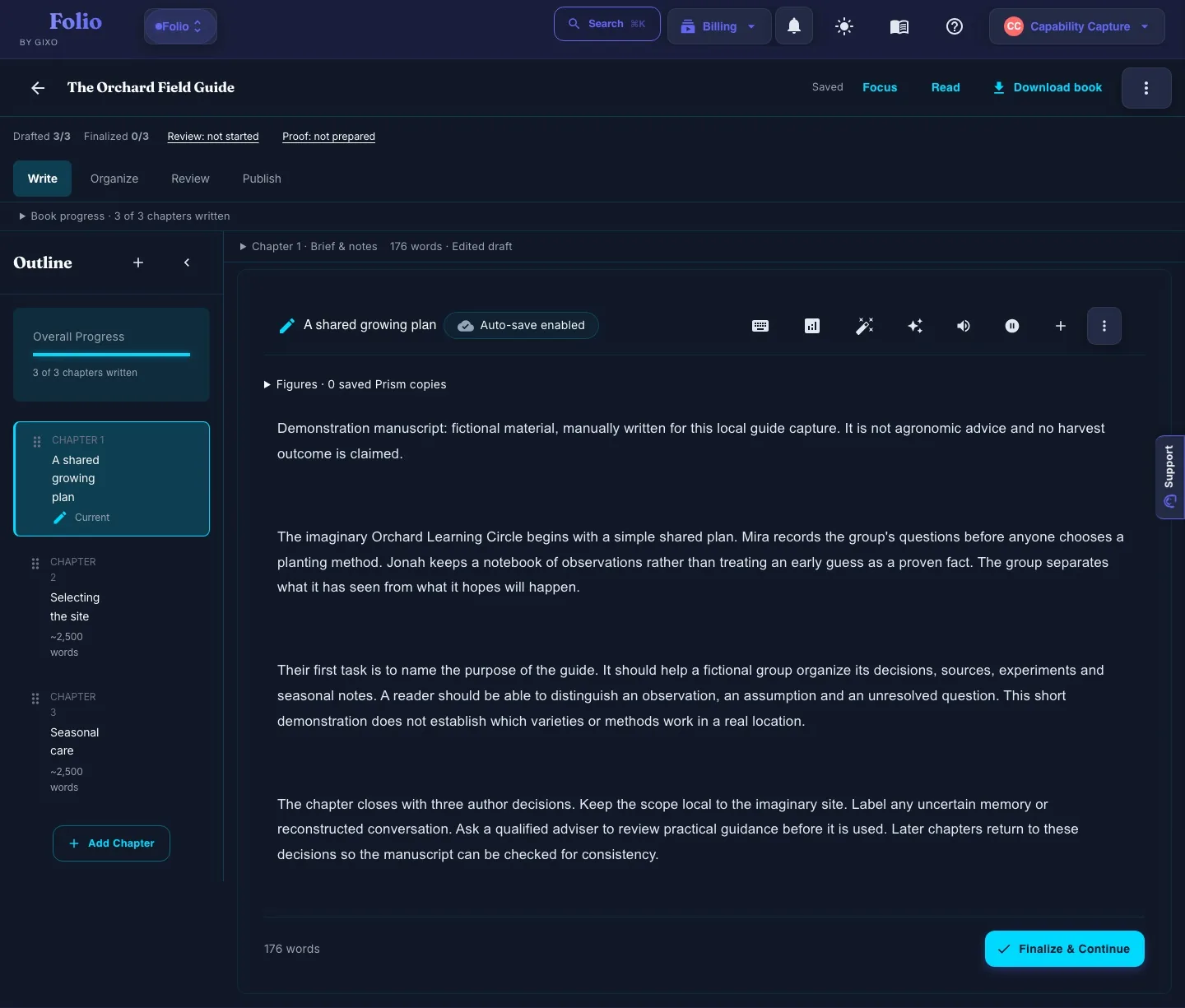
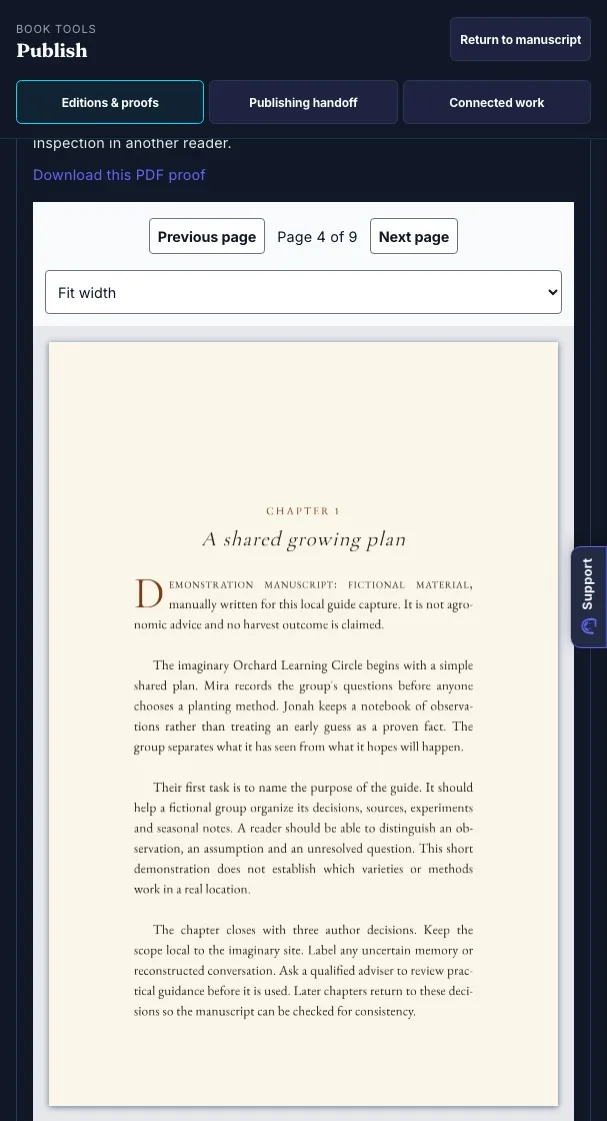
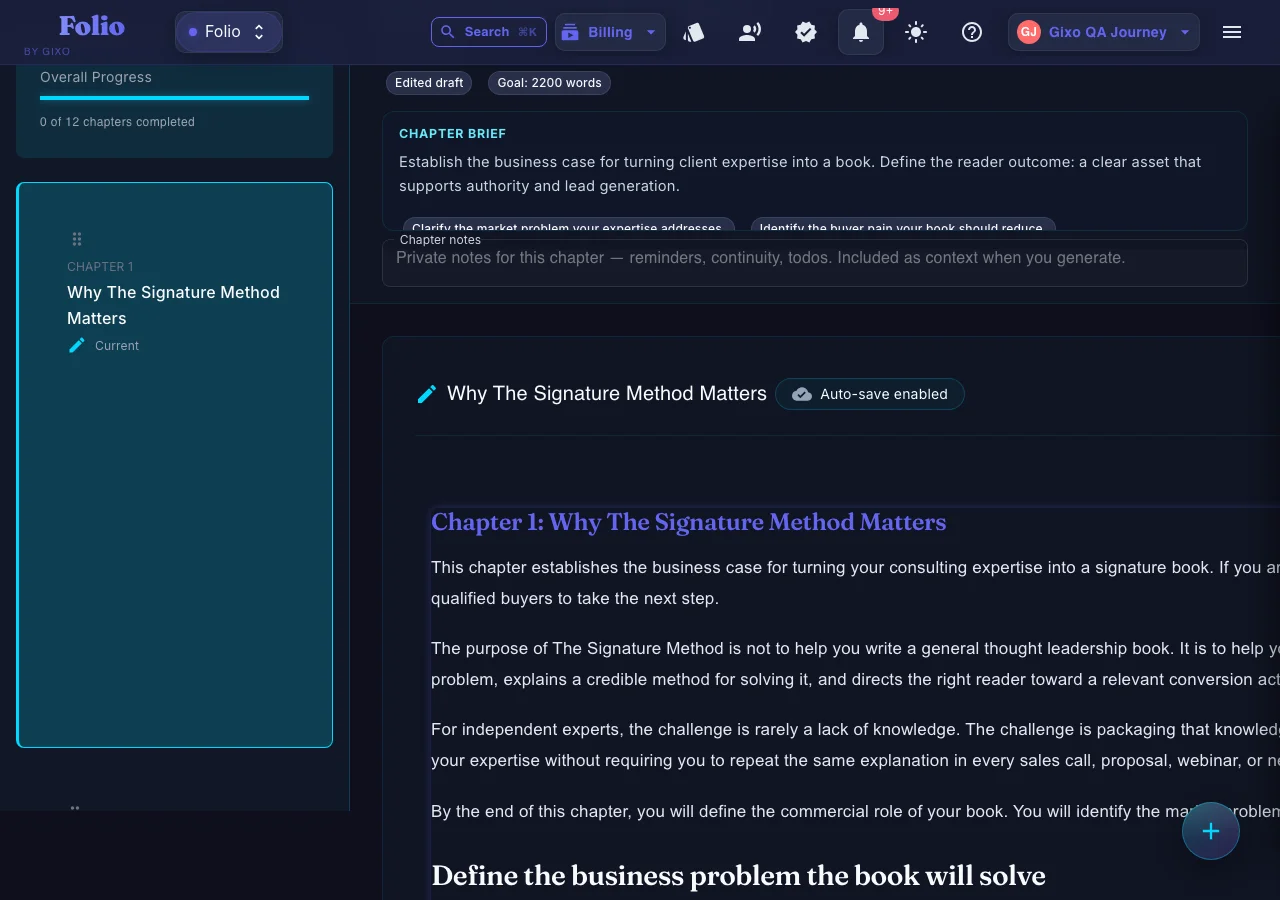
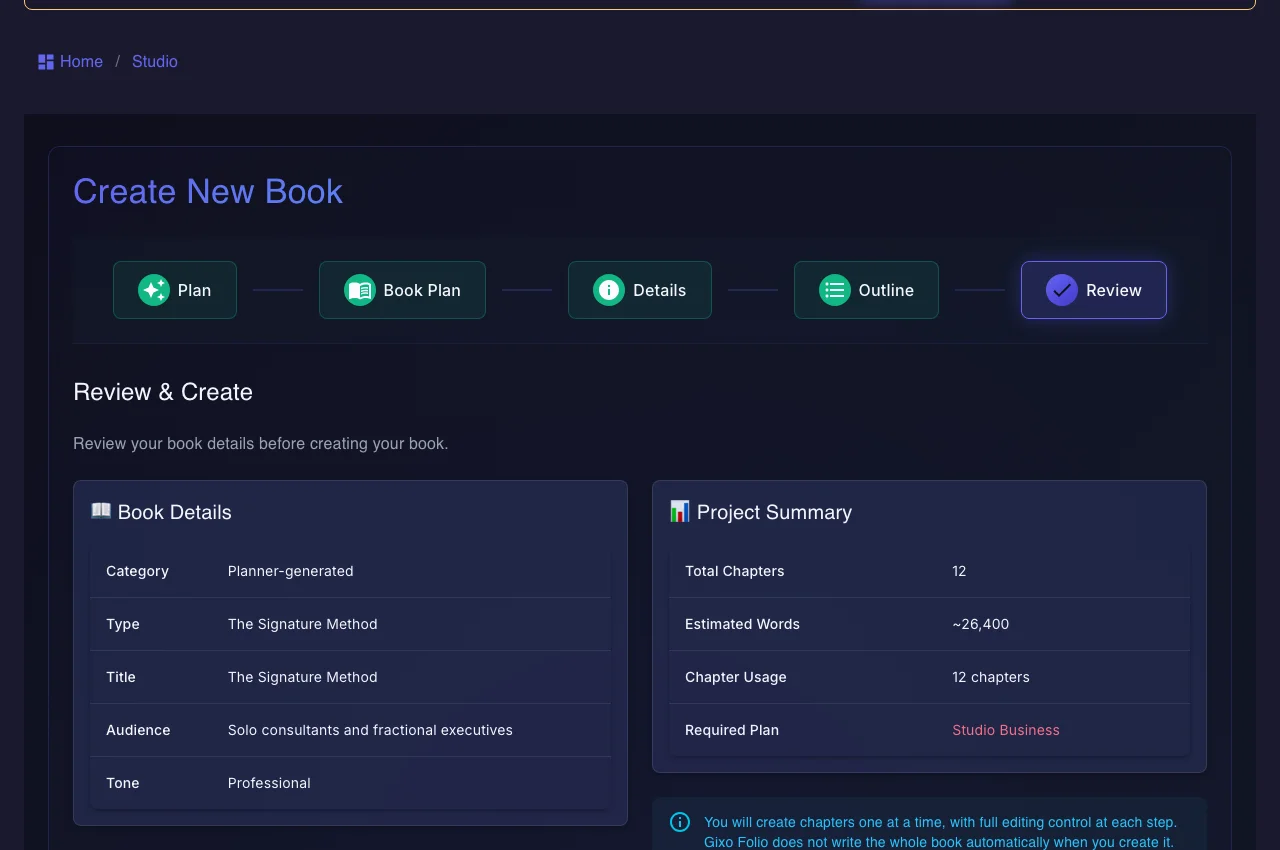
Folio planned, outlined and drafted each book chapter by chapter on 3 October 2026 from the brief shown, then exported the same saved book as Word, EPUB and PDF without editing. The two stories are invented throughout, and the workbook names no one. They are samples of what Folio writes from one paragraph, not finished books: nobody has edited them.
Chapter book · 6 chapters · 9,528 words · 57-page PDF
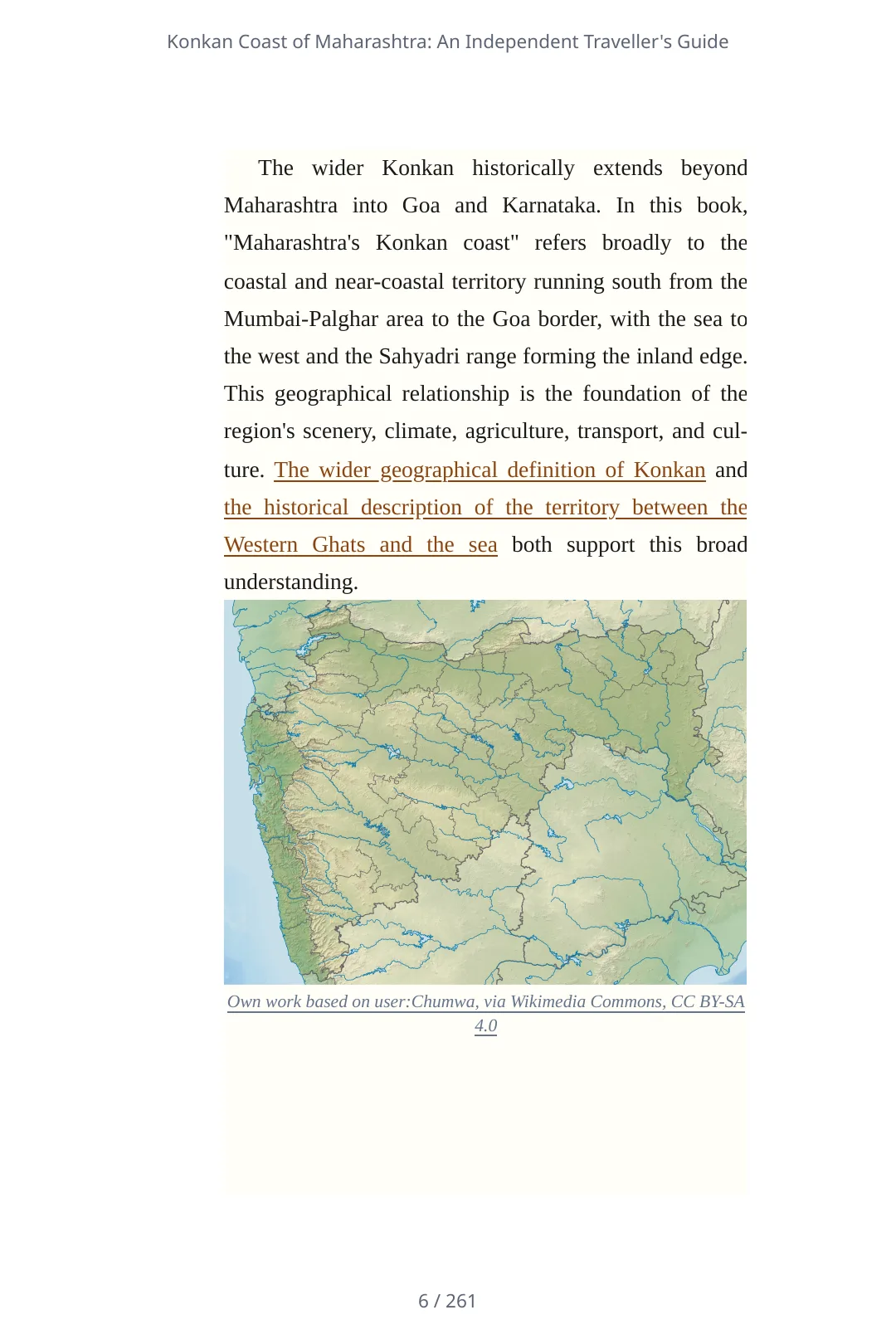
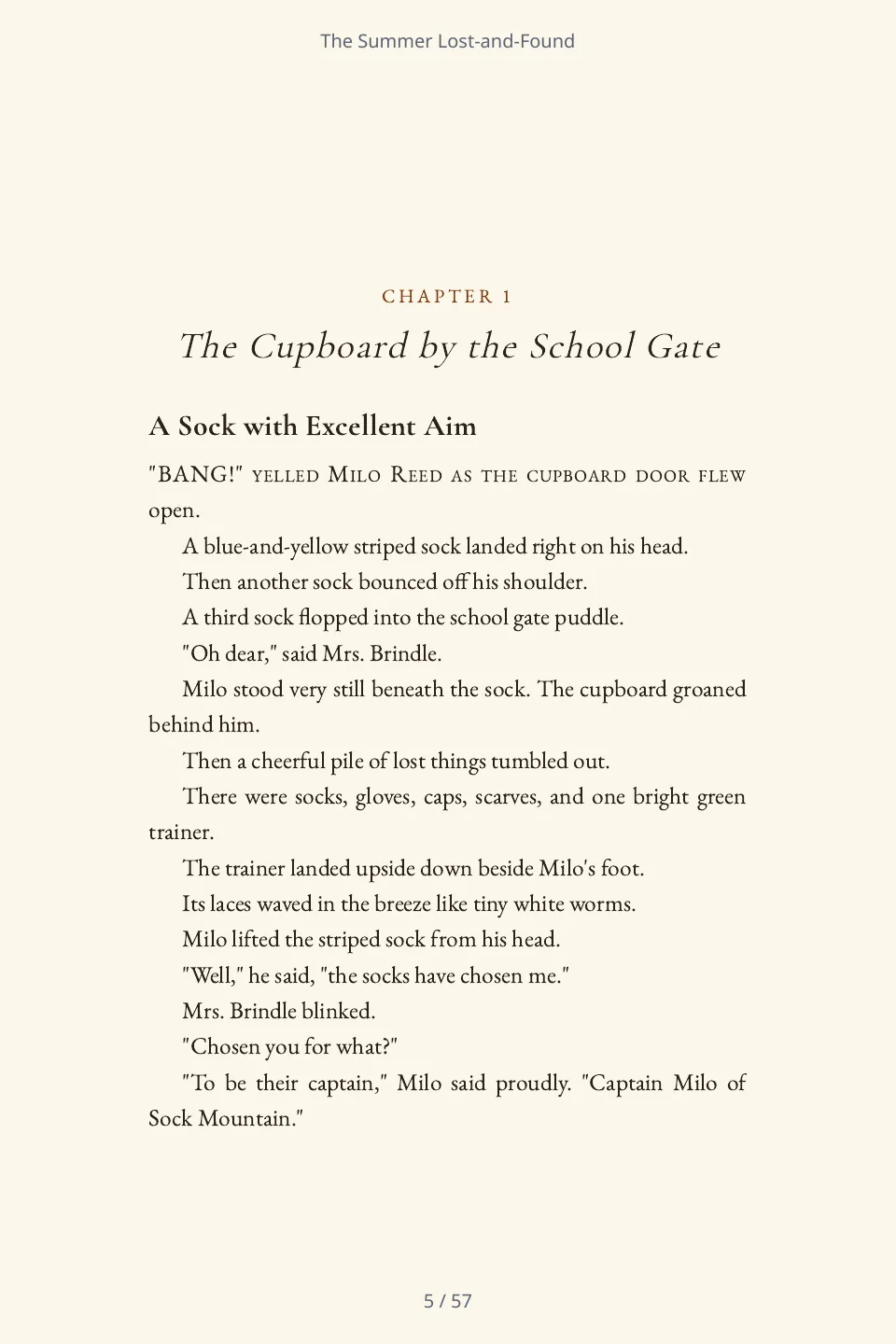
The Summer Lost-and-Found
A chapter book for readers aged seven to nine: a boy is put in charge of his village's lost-property cupboard for one summer and has to find the owners of a growing pile of odd objects. Folio wrote all six chapters from the brief. Each runs 1,513 to 1,754 words where the brief asked for about 1,100.
The brief Folio was given
A funny, warm chapter book for readers aged seven to nine about a boy who is put in charge of his village's lost-property cupboard for one summer and has to find the owners of a growing pile of odd objects. Six short chapters of about 1,100 words each, short sentences, plenty of dialogue, and a gentle surprise in the last chapter. Audience: Children aged seven to nine, read alone or aloud. Tone: Funny, warm and gentle. Everything in the book is invented: the village, the people and the events. Use no real person, organisation, brand or place, and no statistics or quotations.
PDF (378 KB)Word (30 KB)EPUB (31 KB)
Screened mechanically for what the brief forbade (a real person, organisation, brand, place, statistic or quotation) and found none: every capitalised name is a character or place in the book. Nobody has edited the text, and nobody has read it for quality.
Novella · 5 chapters · 30,103 words · 132-page PDF
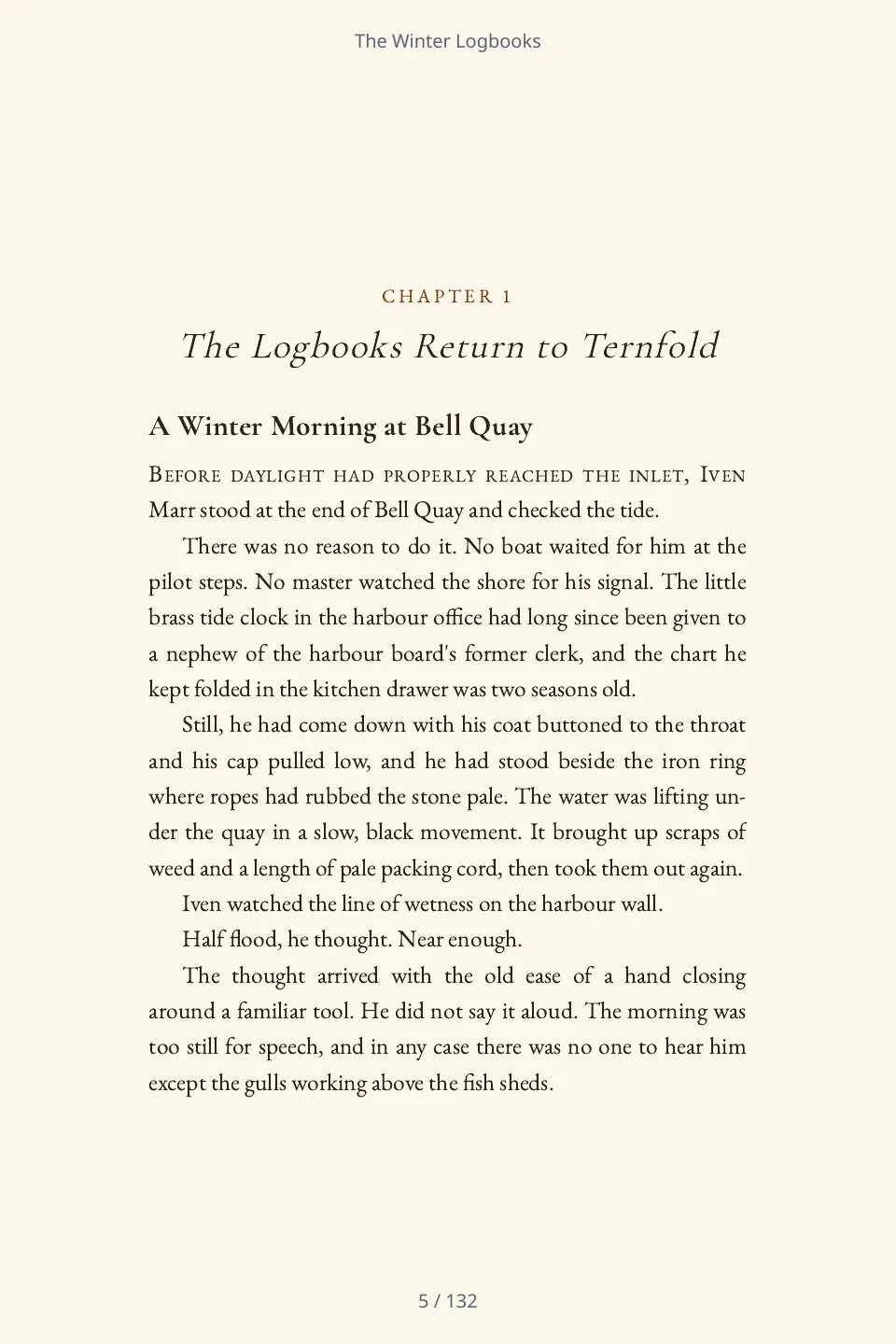
The Winter Logbooks
A quiet, character-driven novella in five chapters. A retired harbour pilot who has not spoken to his sister for years is asked by a young archivist to explain the entries in the old harbour office logbooks, and as they catalogue them the two learn how the town came to make a decision it never talks about. Folio wrote it from one paragraph; each chapter runs 4,890 to 6,860 words where the brief asked for about 4,500.
The brief Folio was given
A quiet, character-driven novella set in a small harbour town over one winter. A retired harbour pilot who has not spoken to his sister for years is asked by a young archivist to explain the entries in the old harbour office logbooks. As the logbooks are catalogued, the two of them learn how the town came to make a decision it never talks about. Five chapters of about 4,500 words each, in close third person, for adult readers of literary fiction. Audience: Adult readers of quiet literary fiction. Tone: Reflective and warm. Everything in the book is invented: the town, the people, the organisations and the events. Use no real person, organisation, place or event, and no statistics or quotations.
PDF (694 KB)Word (74 KB)EPUB (71 KB)
Screened mechanically for what the brief forbade (a real person, organisation, place, event, statistic or quotation) and found none: every capitalised name is a character, place or heading in the book. Nobody has edited the text, and nobody has read it for quality.
Workbook · 6 chapters · 21,038 words · 75-page PDF
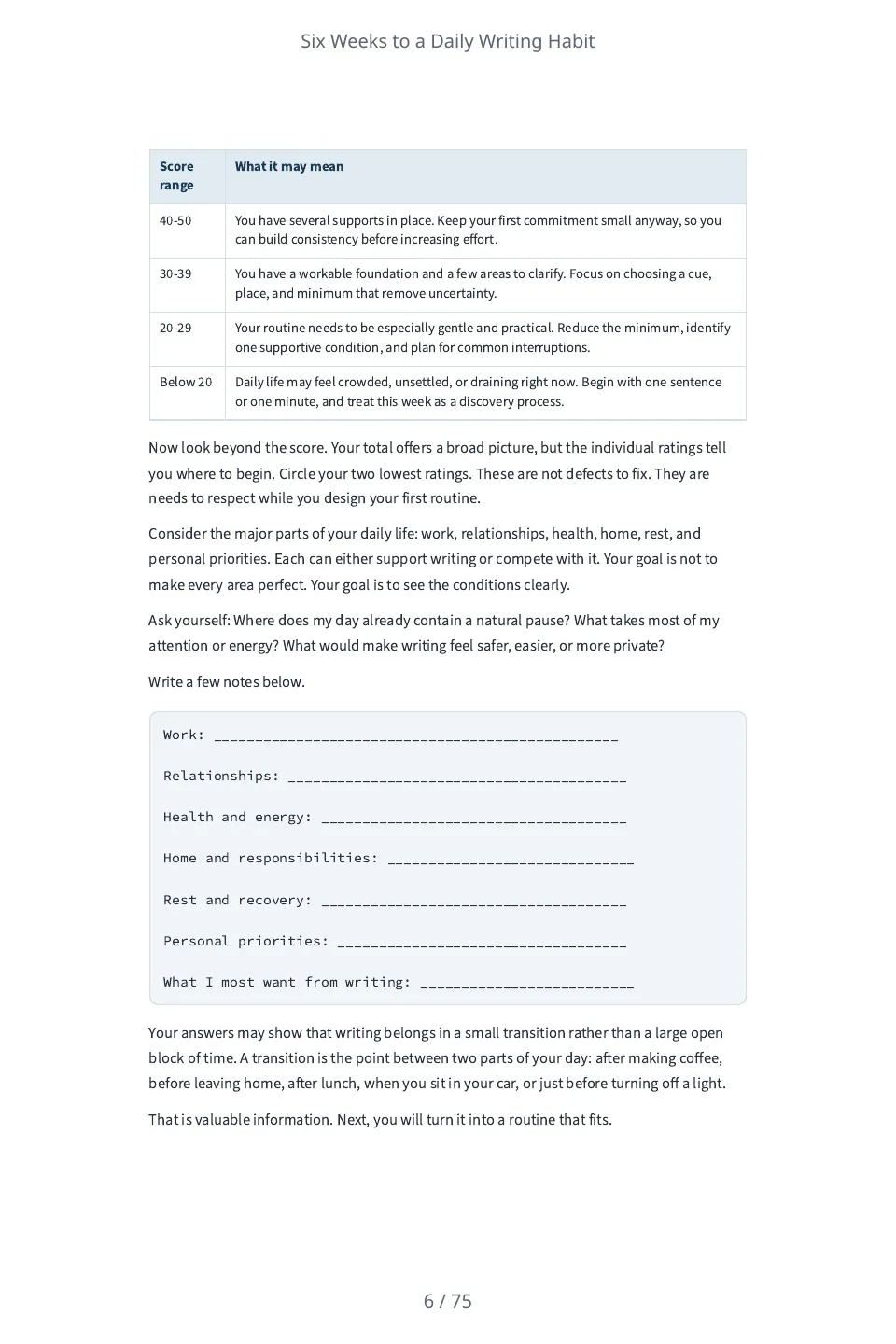
Six Weeks to a Daily Writing Habit
A six-week workbook of short exercises and reflection prompts for adults who want to start a daily writing habit. Each week is one chapter with ten-minute exercises to do with pen and paper, blank lines to write on and a page to look back on the week. Folio wrote it from one paragraph; each chapter runs about 3,000 to 3,800 words where the brief asked for about 2,800.
The brief Folio was given
A six-week workbook of short exercises and reflection prompts for adults who want to start a daily writing habit. Each week is one chapter of about 2,800 words with a few ten-minute exercises the reader does with a pen and paper, and a short page to look back on the week. Audience: Adults who want to write a little every day and have never kept the habit. Tone: Encouraging and practical. Do not state any statistic, study, survey, quotation, case study, testimonial or named person, and do not describe what research shows. Do not describe hypothetical writers or give anyone a name: speak to the reader as 'you'. Every exercise is something the reader does themselves with a pen and paper.
PDF (740 KB)Word (65 KB)EPUB (54 KB)
Screened mechanically for what the brief forbade (a statistic, study, survey, quotation, case study, testimonial, named person or a claim about what research shows): the only figure is the ten minutes an exercise takes, and no person is named. It carries blank lines for the reader to write on. Nobody has edited the text, and nobody has read it for quality.