Sign In Try Free
Workflow-specific products Content, decks, briefs, proposals, legal, and sales each have a clearer buying path.
Review before delivery Draft, edit, collaborate, approve, and export in the same workspace.
Security + procurement path Security policy, support, and Azure Marketplace buying are public.
Import-first book workflow

Turn your existing content into a book before you pay for drafting

The fastest Folio path for repeat-publishing experts is not a blank page. Import the newsletter issues, essays, workshop notes, or client material you already have, map that source material into a chapter plan, then use AI where the manuscript needs connective tissue, expansion, or revision inside a paid Folio plan.

Import first Start with existing expertise instead of an empty manuscript.
Paid workflow Plan, write, and import inside the selected Folio plan.
Repeat authors Built for consultants, coaches, and creators who publish more than once.
$19/mo Add 10 AI-drafted chapters/month and final export when ready.
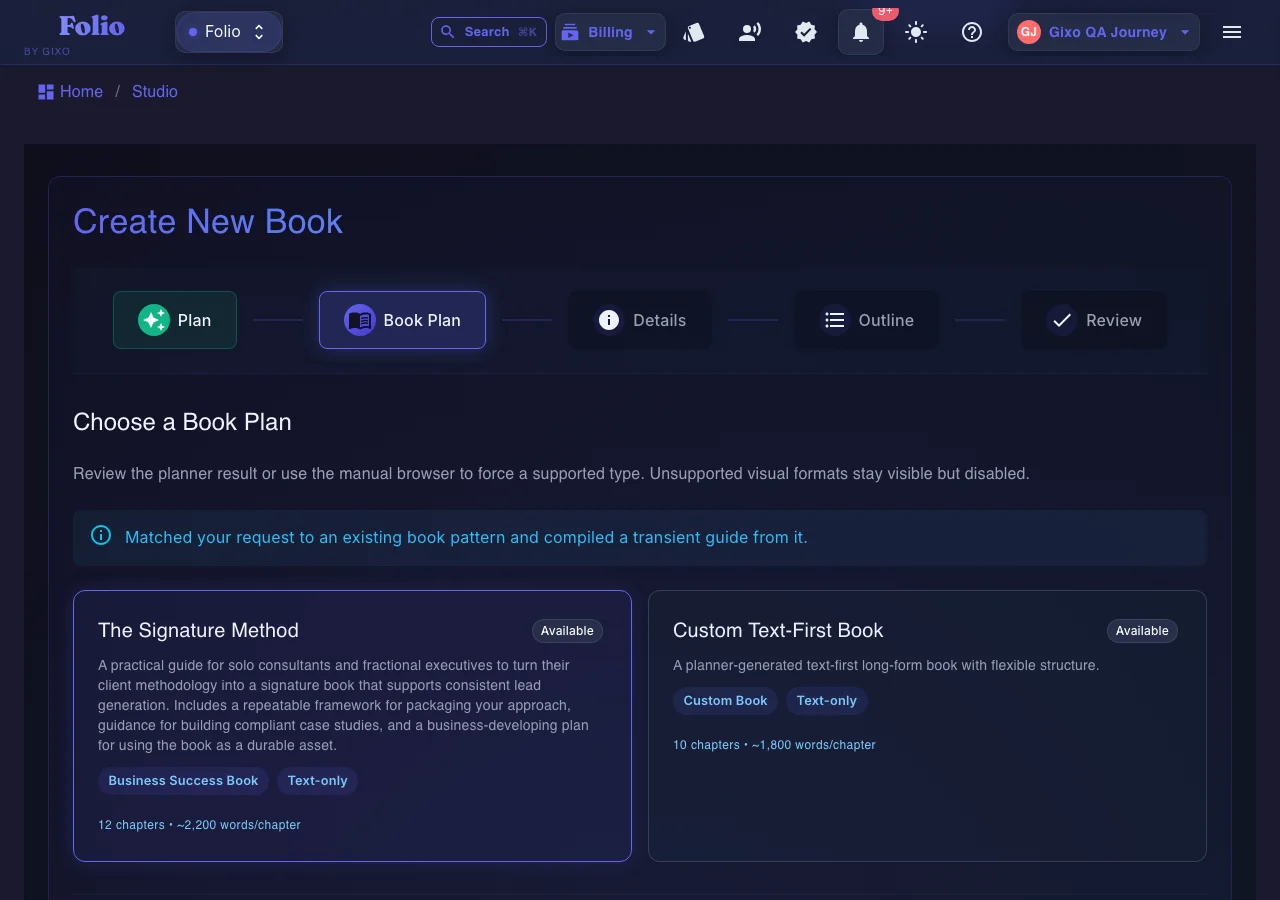
Gixo Folio — a real Gixo Folio planning screen, showing the planner matching a fresh book idea to an existing pattern
A real Gixo Folio planning session — the planner matched a fresh book idea to an existing pattern and compiled a working outline shape for it.
01Brief the book
02Shape the outline
03Draft chapters
04Review the manuscript
05Export the edition
Folio is a strong fit whenThe manuscript still needs structure, revision, and a finish line.

Use the persistent book workspace when the outcome is a real guide, authority book, training manual, client asset, or exportable edition.

Consider another tool whenYou only need one narrow part of the publishing job.

If your manuscript is already finished and you only need specialist formatting or a dedicated fiction system, a focused tool may be the simpler choice.

What makes import-first book creation work

The source material is not the book yet. Folio helps turn it into one.

Collect
Bring source material into one place
Start from the articles, newsletters, transcripts, and notes that already prove your expertise.
Map
Turn the archive into a chapter spine
Decide the reader journey instead of pasting posts in chronological order.
Bridge
Use AI for connective tissue
Draft intros, transitions, summaries, and missing chapters around the imported material.
Review
Tighten for authority and proof
Add the examples, frameworks, and claims only you can validate.
Export
Ship when the manuscript is ready
Use paid final export after the source material has become a coherent book.
Repeat
Come back for the next book
Repeat-publishing experts can import the next archive without rebuilding the workflow.

How to turn a newsletter archive into a book

The order keeps the book from feeling like a content dump.

1
Import the strongest source material
Choose posts and notes that support one clear reader outcome.
2
Create the book promise
Define the audience, transformation, and reason this archive should become a book.
3
Map posts to chapters
Group source material by the reader journey, not publication date.
4
Draft, review, and export
Use AI for the gaps, revise the full manuscript, then export from a paid plan.

Frequently Asked Questions

Can I turn a newsletter into a book with AI?
Yes. Folio is designed to start from existing material, then structure it into a book before AI fills gaps or drafts new sections.
Is import included?
Yes. Planning and manuscript import are included in the paid Folio workflow; Author and Pro add the AI chapter and export allowances described on the pricing page.
Who is this best for?
Consultants, coaches, creators, newsletter writers, and solo experts who already have a body of content and want repeatable book assets.
Will it just stitch posts together?
No. The intended workflow maps source material to a reader journey, then revises the manuscript as a book.
Already have the raw material for a book?
Import it into Folio first, then decide whether AI drafting and paid export are worth a paid month.

Current public contract

Current Gixo Folio implementation at a glance

These figures are derived from the implementation catalogs used by the live product.
AspectCurrent behaviorWhy it matters
implemented book export formats6EPUB, editable DOCX, full-book print or chapter-review PDF, HTML, Markdown, and SCORM.
EPUB layout modes2Reflowable and fixed layout.
book export themes3Novel, cookbook, and self-help workbook.
EPUB versions2EPUB 2 and EPUB 3.