
AI RFP Responses for Enterprise Teams — Respond to Complex RFPs With Confidence
Upload the RFP document and your supporting materials — Gixo generates structured responses aligned to evaluation criteria with point-by-point compliance. Source-first AI drafting that handles the complexity of formal procurement processes.
An AI RFP response tool for enterprise teams is software that reads an uploaded RFP document — including scanned PDFs via OCR — and generates a structured, point-by-point draft response mapped to each requirement and weighted by evaluation criteria. For enterprise bids, it also needs to support cross-functional collaboration, since legal, engineering, security, and finance typically each own separate sections. Gixo does this: upload the RFP and supporting materials, get a compliance-mapped first draft, edit collaboratively in real time, then export to PDF or DOCX. It is a drafting and collaboration layer, with simple electronic signature for a finished proposal, not a full RFP management or approval-routing platform.
See what Arc helps your team review
Choose the proposal type, add the RFP, brief, notes, or prior work, then review a structured first draft before it reaches a client.
- 1Add source materialRFPs, briefs, notes, decks, and prior work
- 2Draft to the proposal typeSections and structure follow the real opportunity
- 3Review before deliveryYour team checks facts, scope, pricing, and commitments
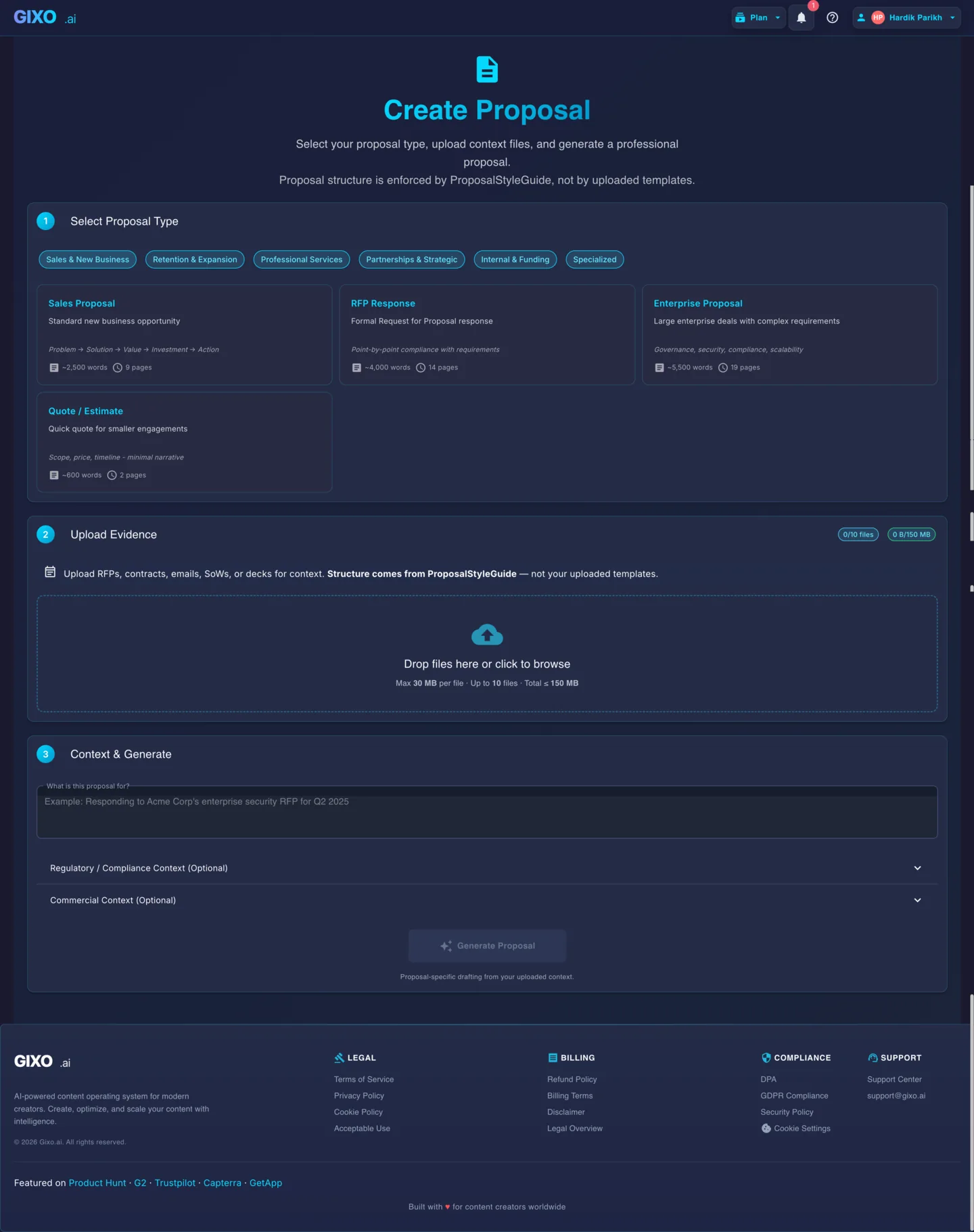
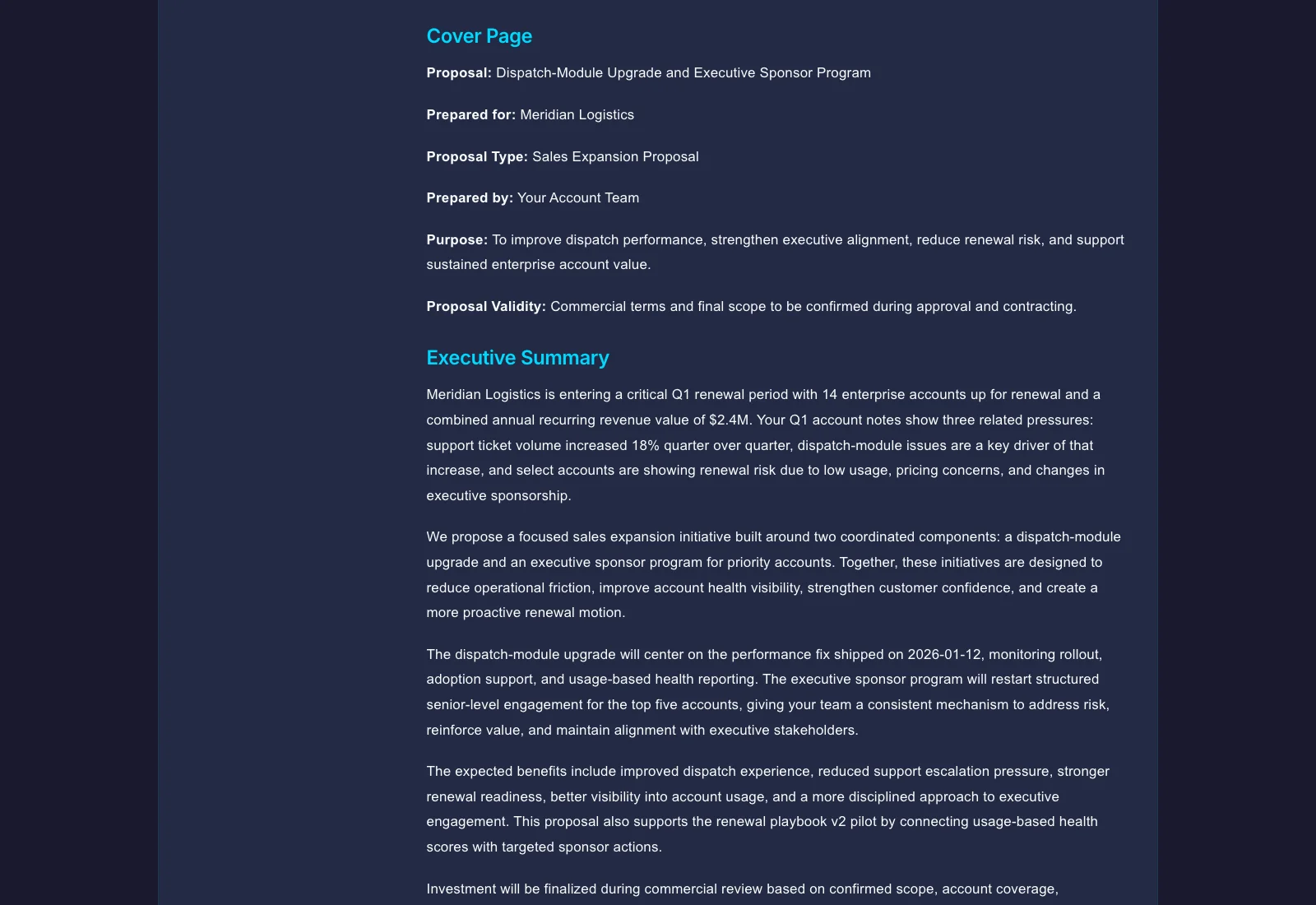
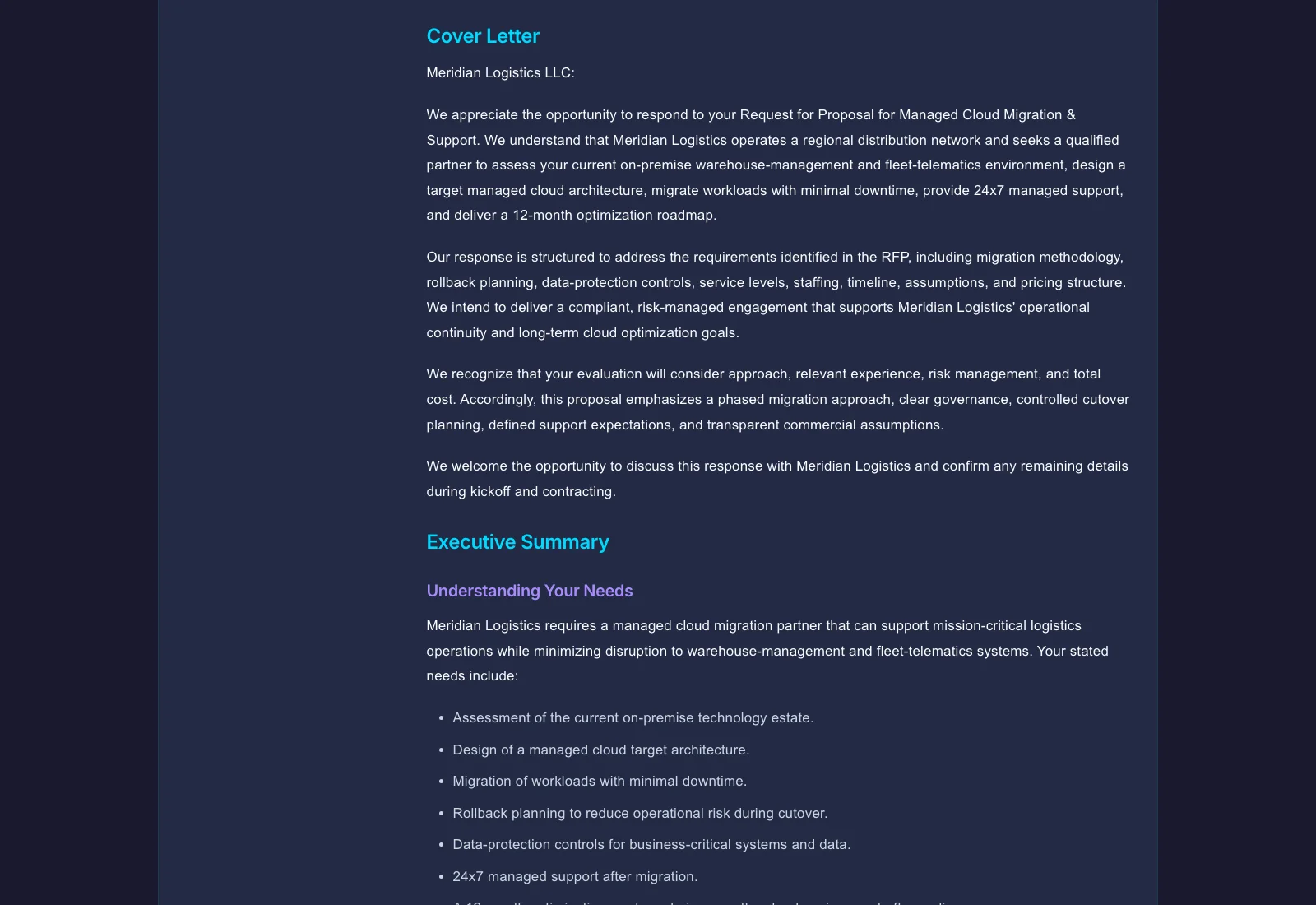
Illustrative example Output screens show document structure — not a promised or real customer result.
Why Do Enterprise Bid Teams Use AI for RFP Responses?
RFPs demand structured compliance, alignment to evaluation criteria, and input from multiple departments. Gixo reads the RFP document and generates a first draft that addresses requirements point by point.
Upload the RFP and Gixo maps its requirements into structured response sections. Each requirement gets a direct answer rather than generic capability statements. Evaluators can trace your response back to their specific criteria.
RFPs score responses against weighted criteria. Gixo structures the draft to emphasize sections that carry the most evaluation weight, so your strongest capabilities are positioned where evaluators look first.
Enterprise RFP responses require input from legal, engineering, security, and finance. Real-time collaborative editing lets each team contribute their sections simultaneously without sequential review bottlenecks.
What does an AI RFP response tool for enterprise teams include?
| Capability | What it does | Grounded detail from page |
|---|---|---|
| Source intake | Reads the RFP plus supporting materials | PDF, DOCX, and scanned documents via OCR |
| Requirement mapping | Point-by-point compliance | Each RFP requirement gets a direct, traceable response section |
| Evaluation weighting | Aligns depth to scoring | Higher-weighted criteria sections get more detailed responses |
| Cross-team collaboration | Real-time multi-department editing | Legal, engineering, security, and finance edit sections simultaneously with remote cursors |
| Proposal type coverage | Breadth of RFP formats supported | 21 proposal types |
| Export | Reviewable output for final approval | PDF, DOCX, or HTML, plus Markdown, JSON, or plain text |
| Scope boundary | What it does not do | Not a full RFP management platform — requirement owners, reviewers, due dates, review gates, and reviewer reminders are built in, but there is no configurable multi-step approval-routing engine; signing is simple electronic signature, not a qualified or certificate-based signature |
Common RFP Response Types, Including Government RFPs
Gixo generates the right response structure and compliance format for each RFP category.
| RFP Type | Key Response Sections | Compliance Level |
|---|---|---|
| Government RFP | Technical approach, past performance, staffing plan, cost volume, certifications | Strict |
| Corporate Procurement | Solution overview, implementation plan, SLA commitments, references, pricing | Structured |
| Technology RFP | Architecture, integration capabilities, security posture, scalability, support model | Technical |
| Professional Services RFP | Methodology, team qualifications, case studies, timeline, rate card | Moderate |
Where Does AI Fit in the Enterprise RFP Process?
Enterprise RFP responses run through a governance process — intake and qualification, content authoring, layered review, and submission. Arc supports source-based authoring, approved-answer reuse, requirement owners, and review gates. The product records review decisions; your team makes them and owns the final sign-off.
Your team qualifies the opportunity against fit, competition, and profitability. This stays your decision and your process.
Upload the RFP and Gixo reads it — scanned PDFs included via OCR — then drafts a point-by-point response mapped to each requirement, so nothing is missed. This is where Gixo does the work.
Legal, engineering, security, and finance refine their sections in parallel in the collaborative editor, with inline AI for expansion or clarification. Gixo provides the workspace; your reviewers own the content.
Final sign-off runs through your governance, then export to PDF or DOCX in the format the RFP requires. Your approval gates; Gixo handles the clean export.
How Does AI RFP Response Software Work?
Drop in the RFP document along with your capability statements, past performance references, case studies, or technical documentation. Gixo supports PDF, DOCX, and scanned documents via OCR.
Gixo reads the RFP requirements and generates a point-by-point response draft. Each section addresses the specific criteria from the RFP, not generic boilerplate.
Assign sections to legal, engineering, security, and finance. Each team refines their sections simultaneously in the collaborative editor with inline AI tools for expansion or clarification.
Export to PDF or DOCX in a format that matches the RFP submission requirements. The structured response is ready for final review and submission.
Frequently Asked Questions
Reviewed 2026
Updated