Skip to content
Workflow-specific products Content, decks, briefs, proposals, legal, and sales each have a clearer buying path.
Review before delivery Draft, edit, collaborate, approve, and export in the same workspace.
Security + procurement path Security policy, support, and Azure Marketplace buying are public.

Real Lumen output

Inspect business decks built for an actual handoff.

Open the decks Lumen generated from public U.S. government documents for executive, investor, buyer, and consulting work, with the PowerPoint, PDF and HTML each one exported. Inspect the source-review findings on each card: generated claims can extend beyond the supplied documents and need review before use.

Each deck opens as a complete presentation in a new tab. The files on each card are the product's own exports, listed with the request that produced them.

Source to reviewed presentation

How do I turn source notes into a five-slide deck?

Start with a short source packet, plan the slide sequence, review the claims, then generate and export the deck. This prepared example opens Lumen with the title, notes, instructions and five-slide target already filled in.

The packet summarizes public FTC guidance for a small-business briefing. It describes no company and supplies no customer results. AI generation uses the current Lumen access policy; opening this example does not generate a deck.

The five-slide request

  1. Purpose and source
  2. Collect and retain only what is needed
  3. Limit access and protect credentials
  4. Protect stored and transmitted information
  5. Review questions and the source link

Five slides is the requested target, not a promise of the final count. Lumen plans which supplied facts should appear visibly and checks their coverage. Repair candidates that lose previously reviewed facts or source-backed assets are rejected. If source planning or coverage review cannot complete, Lumen may still deliver a draft. A completed draft does not mean the source coverage passed. These checks do not establish source truth or perfect preservation. Review the outline, final wording, figures and references before delivery.

Open this prepared five-slide request
Read the prepared source notes
Prepared practice notes, summarized from the FTC's Start with Security: A Guide for Business.
These selected notes are not the complete guide and describe no real company.

Collect only personal information that is needed. Retain it only for a legitimate business need.
Limit sensitive-data access to people who need it for their work. Separate administrative access.
Use strong authentication and store credentials securely.
Protect sensitive information when it is stored and transmitted. Use established methods and check their configuration.
Security needs continuing attention: apply software updates and respond to credible vulnerability reports.

Source: https://www.ftc.gov/business-guidance/resources/start-security-guide-business

Read the full FTC source. The short packet covers selected points; it is not a security assessment or a compliance determination.

Read the instructions sent to Lumen
Prepare a five-slide briefing for a small-business leadership team, using only the supplied notes.
1. State the purpose and the source; this is general guidance, not a security assessment.
2. Explain collecting and retaining only information the business needs.
3. Explain limiting access and protecting credentials.
4. Explain protecting sensitive information during storage and transmission.
5. Close with source-based review questions and the FTC source link.
Do not invent company names, incidents, statistics, certifications or implementation status.
Keep recommendations distinct from observed facts. Review the outline before generating slides.

Inspect an existing product export

The real buyer-conversation sample below uses the FTC guides and contains 12 slides. It is a different, previously generated request—not a finished version of this new five-slide example.

Open the complete 12-slide sample · Download its PowerPoint file

Stable layouts export as editable text and shapes. Complex visuals may be images. Check the downloaded file in your intended PowerPoint environment.

Decks Lumen generated from public documents

Lumen built each deck on 4 October 2026 from the public U.S. government document or documents named on its card, with web research switched off and a request to use only those sources. The review findings on each card identify supported claims and claims needing correction or further evidence. Each deck exports as an HTML player, a PowerPoint file and a PDF, and the files below are exactly those exports; only the player's photographs are re-encoded to WebP so the pages that embed it stay light. No company is named or described in any of them, so none carries company figures: a fundraising deck leaves out the product, traction and ask slides because the documents do not supply them, and Lumen was told not to invent them.

The title slide of the executive briefing deck, Governing Cybersecurity Risk, beside a generated picture of a server hall with rows of racks.
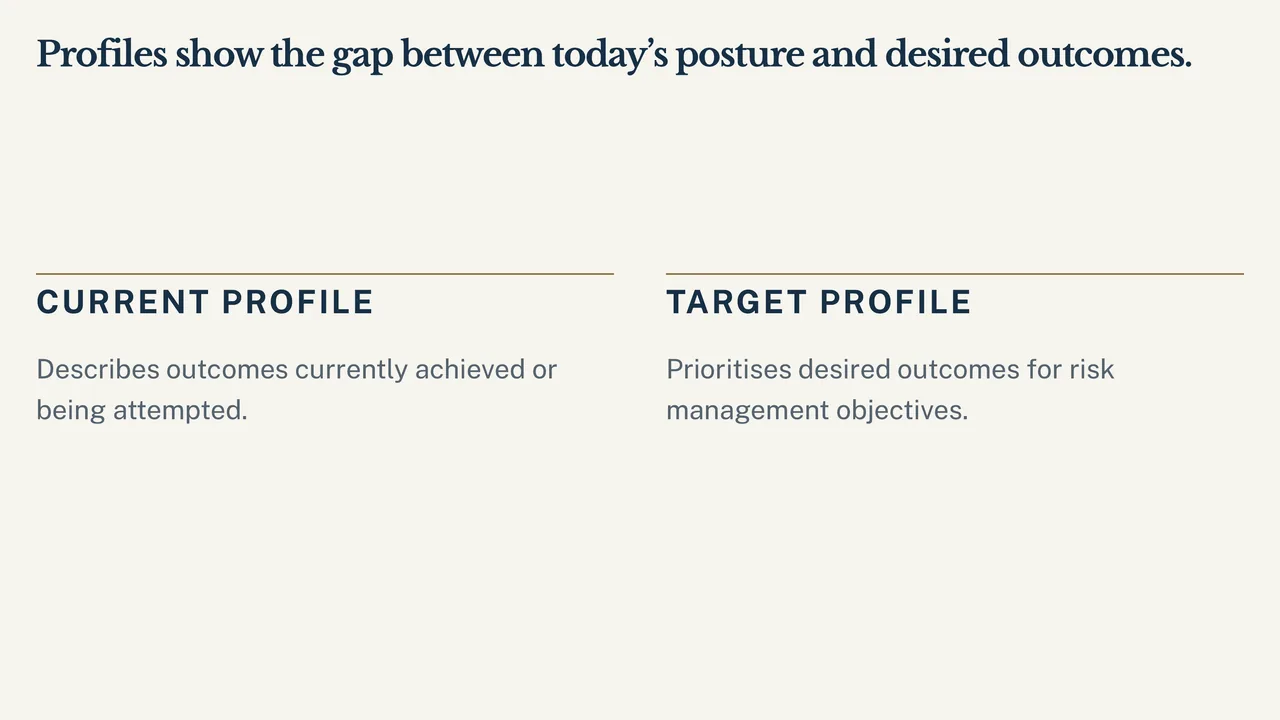
A slide of the executive briefing deck: Profiles show the gap between today’s posture and desired outcomes, in two columns, Current Profile and Target Profile.

Board update deck · 10 slides · 10-page PDF

Governing Cybersecurity Risk: An Executive Briefing on NIST CSF 2.0

A 10-slide briefing for an organisation’s leaders on NIST’s Cybersecurity Framework 2.0, built only from the framework document: the six Functions as a set with Govern at the centre, what Govern covers, questions leaders can ask their teams, how Current and Target Profiles show the gap to close, and the four Tiers. It describes no company, so it has no performance data.

The request and the documents Lumen was given

A briefing for the executive leadership of an organisation of any kind; no company is named and none is described. Cover, in this order: what the framework is and why leaders should care; the six Functions, shown together as a set with Govern at the centre, with no numbering or order because the document says they are addressed concurrently; what the Govern Function covers, using the document's own list of Govern topics; questions leaders can ask their teams, in the document's own terms; what Current and Target Profiles are and how comparing them shows the gap to close; the four Tiers by name; and what to ask for next. Do not show any process as numbered steps. Say executives, leaders or the organisation wherever the document does: it mentions boards of directors only as readers, so do not give a board any role the document does not give it. Give at most one slide to how different kinds of organisation use the framework. Use only the supplied document. Where it gives no figure, date or finding, do not supply one: use no placeholders, no illustrative numbers and no made-up status data. Pictures should show technology, infrastructure or abstract subjects, not people. Workflow: Corporate executive. 10 slides requested. Document supplied as text (NIST, "The NIST Cybersecurity Framework (CSF) 2.0, NIST CSWP 29 (26 February 2024)", https://nvlpubs.nist.gov/nistpubs/CSWP/NIST.CSWP.29.pdf).

HTML player (1.1 MB)PowerPoint (3.3 MB)PDF (1.6 MB)

A separate reviewer agent read the deck’s 70 claims, slides and speaker notes, against the framework document: 62 are supported, 8 loosen or go a little beyond its wording, and none is missing from it or contradicts it. 19 of the 70 are advice the deck gives, and all 19 are supported. It is not a person’s review.
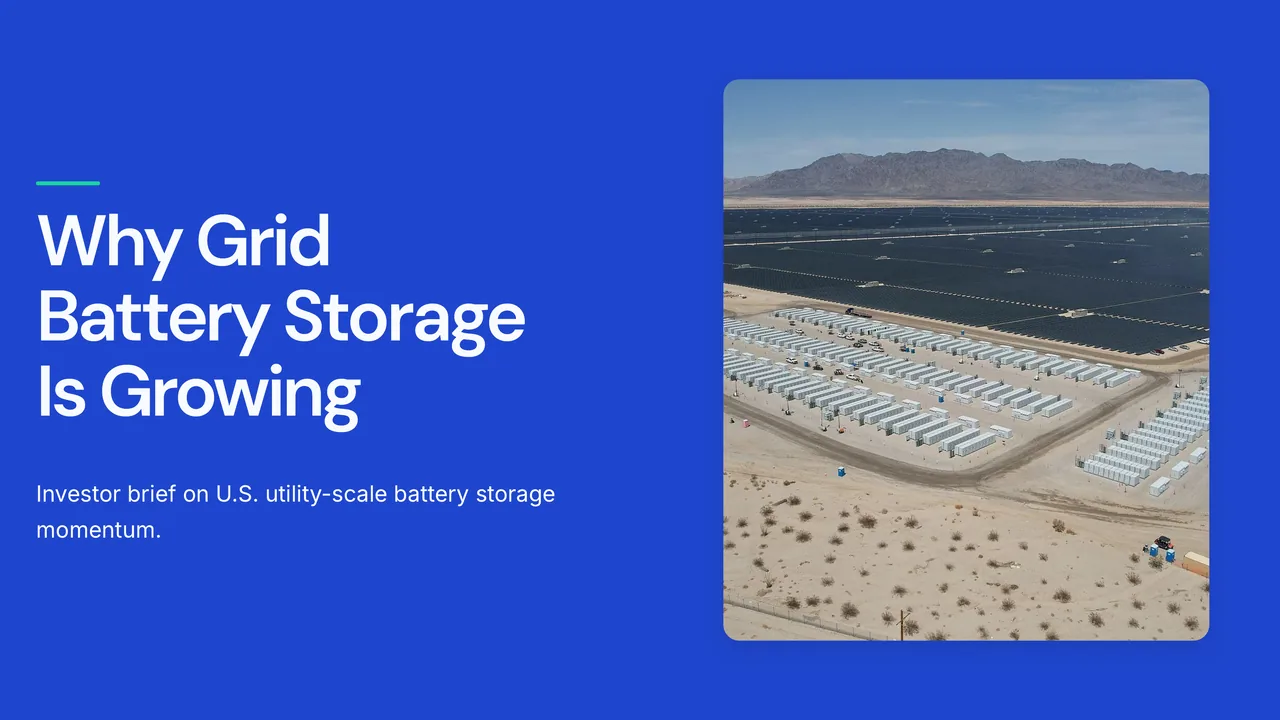
The title slide of the investor brief, Why Grid Battery Storage Is Growing, beside a picture of a battery storage site in a desert.
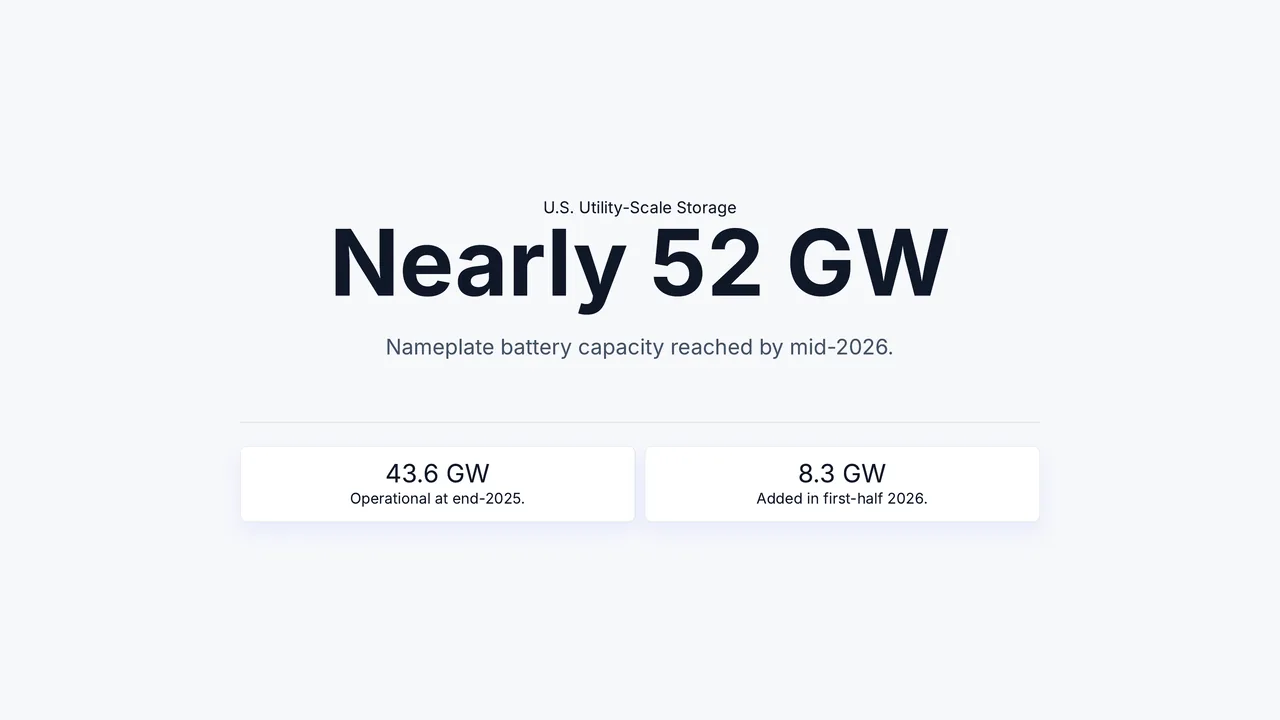
A slide of the investor brief: nearly 52 GW of U.S. utility-scale battery storage capacity by mid-2026, with two supporting figures, 43.6 GW operational at the end of 2025 and 8.3 GW added in the first half of 2026.

Fundraising deck · 12 slides · 12-page PDF

Investor Brief: Why Grid Battery Storage Is Growing

A 12-slide investor brief on grid battery storage, built only from two public EIA articles: how much capacity the U.S. has and how fast it grew, what is planned for 2026 to 2028, and how storage earns revenue. It has no product, traction or ask slides, because the articles supply none and Lumen did not invent them.

The request and the documents Lumen was given

An investor narrative for a company that is raising money; no company is named and nothing is known about it. Build the market context and the case for why now from the supplied pages only: how large and how fast utility-scale battery storage has grown, what is planned next, what the largest facilities are, and how storage earns revenue, as the pages describe it. The company's product, traction, financials, team and the amount it is raising are not supplied, so leave those slides out: do not invent them, and use no placeholders and no illustrative numbers. Every figure must come from the supplied pages. Workflow: Startup fundraising. 12 slides requested. Documents supplied as text (EIA, "U.S. battery capacity increased 66% in 2024 (Today in Energy, 12 March 2025)", https://www.eia.gov/todayinenergy/detail.php?id=64705; EIA, "Battery storage capacity averaged 70% growth over the last three years (Today in Energy)", https://www.eia.gov/todayinenergy/detail.php?id=67925).

HTML player (2.3 MB)PowerPoint (8.3 MB)PDF (3.2 MB)

A separate reviewer agent read the deck’s 86 claims, slides and speaker notes, against the two EIA articles: 69 are supported, 11 loosen or go a little beyond their wording, 6 are in neither article and none contradicts one. Three of the six are the deck’s opinions or advice about the opportunity; the other three say how big storage is on the grid or how fast it is growing in comparison, which the articles do not say. It is not a person’s review.

The title slide of the buyer conversation deck, Customer Data Security, beside a generated picture of a man reading a tablet at a desk.
A slide of the buyer conversation deck: access controls, with a generated picture of a man at a laptop and the heading, a short text block and a line of advice.

Buyer narrative deck · 12 slides · 12-page PDF

Customer Data Security: A Buyer Conversation Built on FTC Guidance

A 12-slide buyer conversation about protecting customer data, built only from two FTC guides: why customer information is worth protecting, the guides’ five principles and ten lessons, and practical first steps. It describes no provider and no product, so its proof is the FTC’s own guidance.

The request and the documents Lumen was given

A client-facing deck for a conversation between a security services provider and the owner of a small business that holds customer information. Open on the owner's situation, then the proof, then the next step. The proof is what the supplied FTC guides say; do not describe, praise or price any provider, product, customer or result, and name no company. Every statement must come from the supplied guides; where they give no figure or finding, do not supply one and use no placeholders. Workflow: Sales and marketing. 12 slides requested. Documents supplied as text (FTC, "Start with Security: A Guide for Business (FTC)", https://www.ftc.gov/system/files/documents/plain-language/pdf0205-startwithsecurity.pdf; FTC, "Protecting Personal Information: A Guide for Business (FTC)", https://www.ftc.gov/system/files/documents/plain-language/pdf-0136_proteting-personal-information.pdf).

HTML player (770 KB)PowerPoint (2.9 MB)PDF (1.3 MB)

A separate reviewer agent read the deck’s 78 claims, slides and speaker notes, against the two FTC guides: 73 are supported, 5 loosen or go a little beyond the guides’ wording, and none is missing from them or contradicts them. 37 of the 78 are advice the deck gives, and 36 of those are supported. It is not a person’s review.
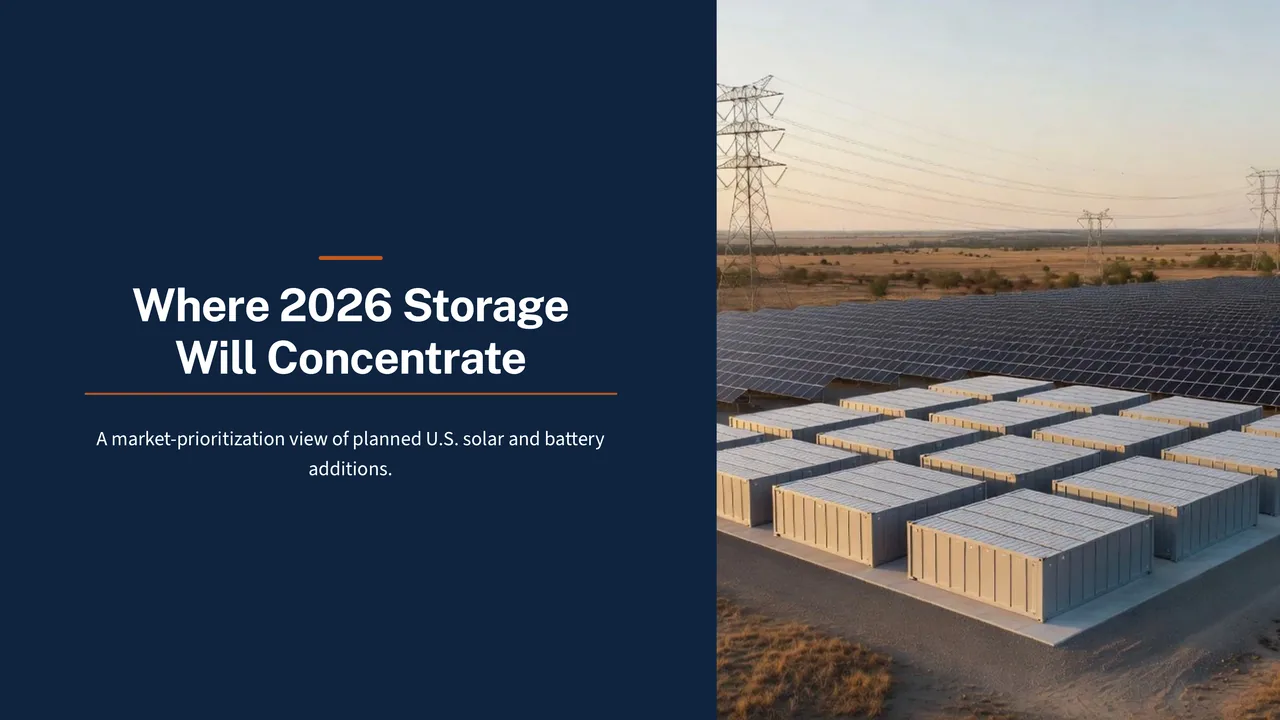
The title slide of the client strategy deck, Where 2026 Storage Will Concentrate, beside a generated picture of battery storage units and solar panels under power lines.
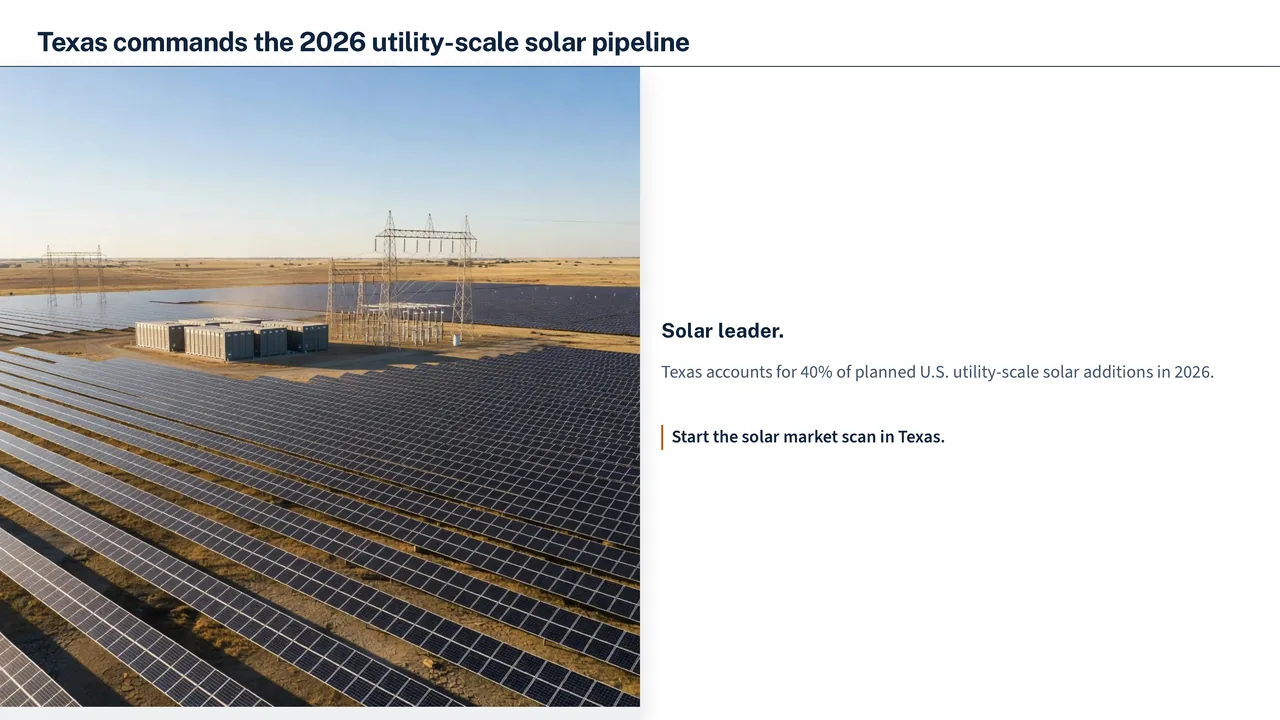
A slide of the client strategy deck: Texas commands the 2026 utility-scale solar pipeline, with a generated picture of a solar farm and substation, the finding that Texas accounts for 40% of planned 2026 U.S. solar additions, and a line of advice.

Client strategy deck · 12 slides · 12-page PDF

Grid-Scale Battery Storage: Where the 2026 Buildout Is Concentrated

A 12-slide client strategy deck on where planned U.S. solar and battery storage additions concentrate in 2026, built only from two EIA articles: the national buildout, the leading states for solar and for storage, the named projects, and a recommended order of attention. It reaches its answer at the end.

The request and the documents Lumen was given

A consulting-style handoff for the leadership team of an electricity business that is deciding where to look first as new solar and battery storage capacity is built; no client is named and none is described. Frame the situation, the analysis the supplied pages support, a recommendation and an action plan. Every figure must come from the supplied pages. The client's own numbers are not known, so recommend in terms of what the pages show, and use no placeholders and no made-up client metrics. Workflow: Consulting and strategy. 12 slides requested. Documents supplied as text (EIA, "Solar, battery storage to lead new U.S. generating capacity additions in 2025 (Today in Energy)", https://www.eia.gov/todayinenergy/detail.php?id=64586; EIA, "New U.S. electric generating capacity expected to reach a record high in 2026 (Today in Energy)", https://www.eia.gov/todayinenergy/detail.php?id=67205).

HTML player (1.7 MB)PowerPoint (4.7 MB)PDF (2.3 MB)

A separate reviewer agent read the deck’s 74 claims, slides and speaker notes, against the two EIA articles: 53 are supported, 5 loosen or go a little beyond their wording, 16 are in neither article and none contradicts one. All 16 are advice or a judgement about which market to take first, such as “Start the solar market scan in Texas.” It is not a person’s review.
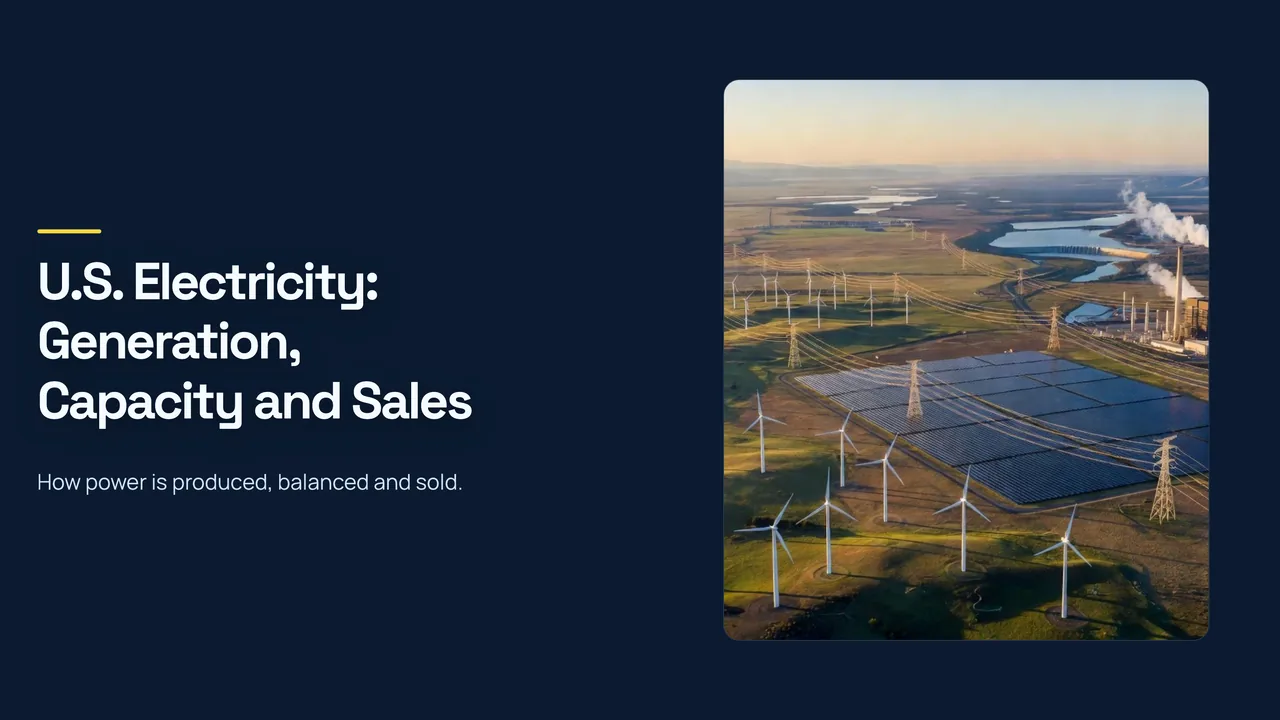
The title slide of the explainer deck, U.S. Electricity: Generation, Capacity and Sales, beside a generated aerial picture of wind turbines, solar panels and a power plant.
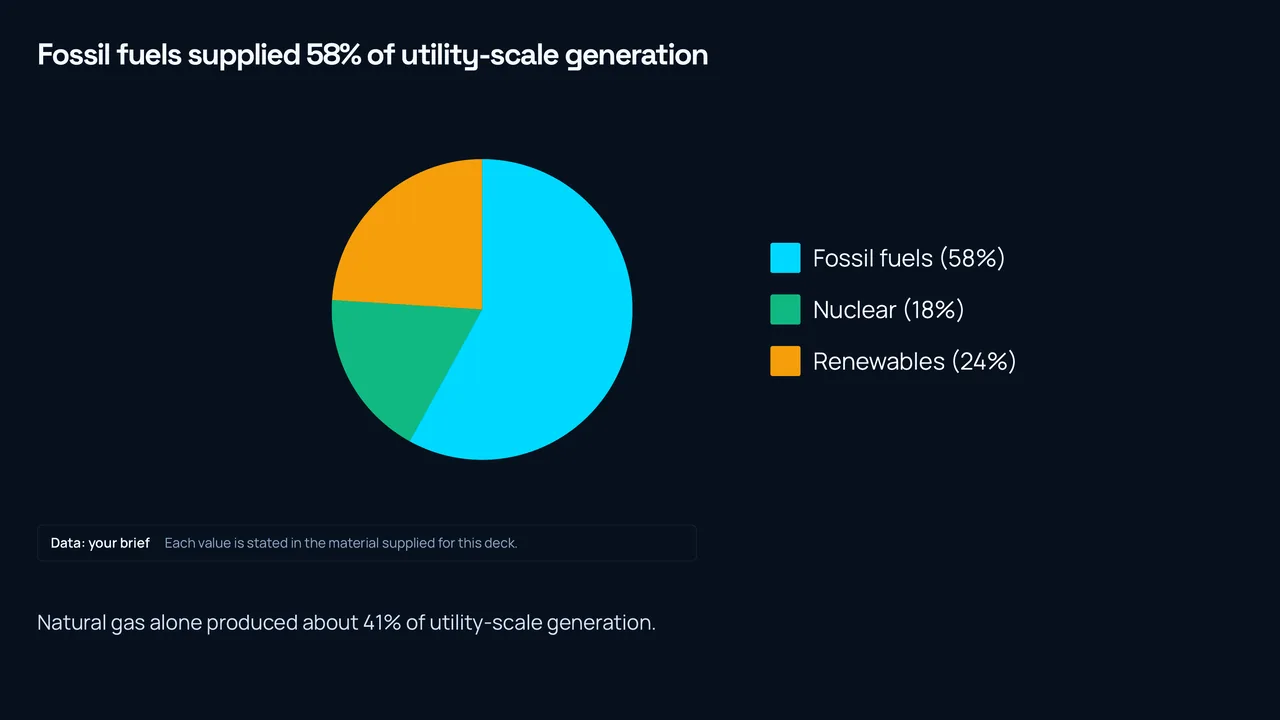
A slide of the explainer deck: a pie chart of 2025 utility-scale generation by source, fossil fuels 58%, renewables 24% and nuclear 18%, with the note that natural gas alone produced about 41%.

Long explanatory deck · 14 slides · 14-page PDF

Electricity in the United States: Generation, Capacity and Sales

A 14-slide explainer on how U.S. electricity is generated, delivered and sold, built only from two EIA pages: the 2025 generation mix, what each generating technology does, installed capacity and how it serves base, intermediate and peak demand, and retail sales by customer type. Its three charts use the pages’ own figures.

The request and the documents Lumen was given

A long explanatory deck for a general business audience on how electricity is generated, how generating capacity differs from generation, and how it is sold in the United States. Cover the three subjects in balance: generation by source, capacity and how the grid is run, and retail sales by customer sector and by type of seller. Use only the supplied pages; every figure, date and definition must come from them, and where they give none do not supply one. Use charts only for figures the pages give. Put the minor sources of generation together on one slide, and give every item of the agenda at least one slide of its own. Workflow: General business. 14 slides requested. Documents supplied as text (EIA, "Electricity in the United States (Energy Explained)", https://www.eia.gov/energyexplained/electricity/electricity-in-the-us.php; EIA, "Electricity in the United States: generation, capacity, and sales (Energy Explained)", https://www.eia.gov/energyexplained/electricity/electricity-in-the-us-generation-capacity-and-sales.php).

HTML player (1.6 MB)PowerPoint (5.2 MB)PDF (3 MB)

A separate reviewer agent read the deck’s 107 claims, slides and speaker notes, against the two EIA pages: 95 are supported, 10 loosen or go a little beyond their wording, 2 are in neither page and none contradicts one. One of the two is the closing slide’s advice; the other ranks rooftop solar as the leading distributed resource, which the pages do not say. It is not a person’s review.

A separate reviewer agent read each deck, slides and speaker notes, against its documents; the counts are on each card. It is not a person's review. Pictures are generated by Lumen or are credited photographs; none shows a real event.

Two visual stories Stanza built from public pages

Stanza turned two sets of public U.S. government pages into visual stories on 3 October 2026. The pages were sent as text and each story could use only what they say. Every story exports as a scrolling HTML page, a PDF and two PowerPoint files, one with editable text and one that keeps the exact appearance, and the files below are exactly those exports. The heat story carries pictures Stanza generated; the electricity story has none.

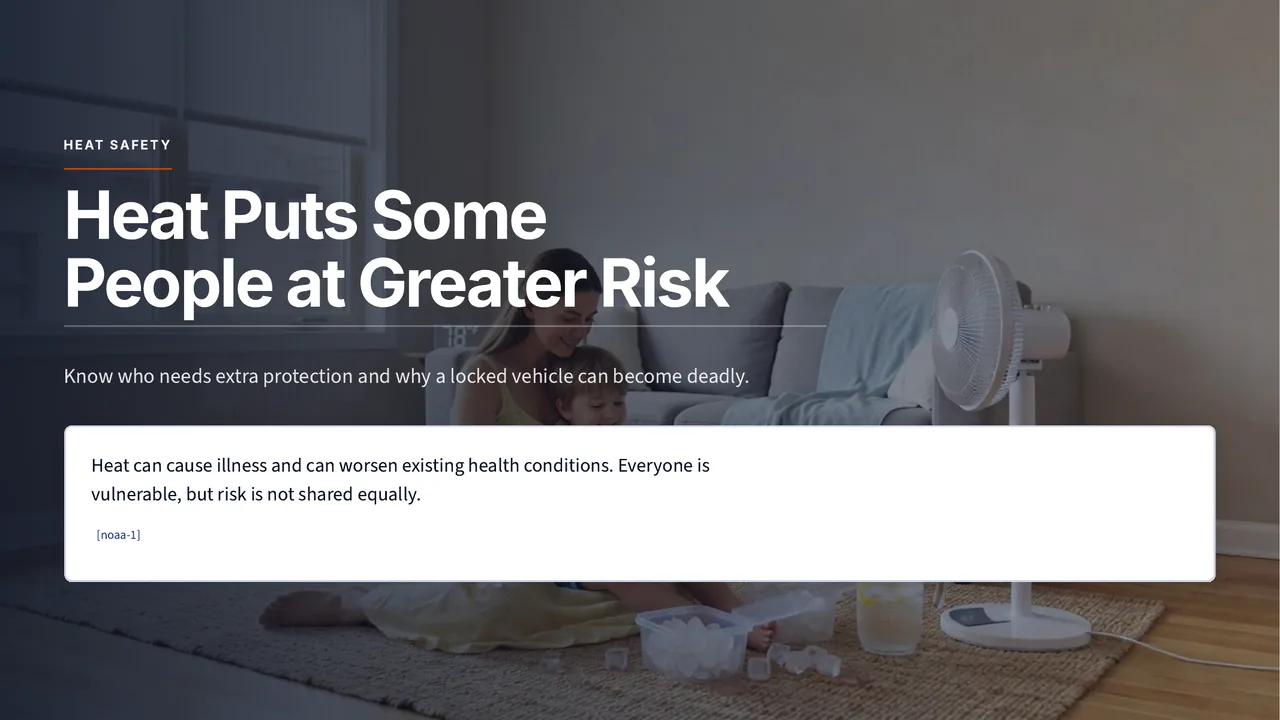
The opening scene of the heat safety story: the title over a generated picture of a woman and a young child on the floor of a living room beside a fan and a tub of ice, with the first sentence below it.
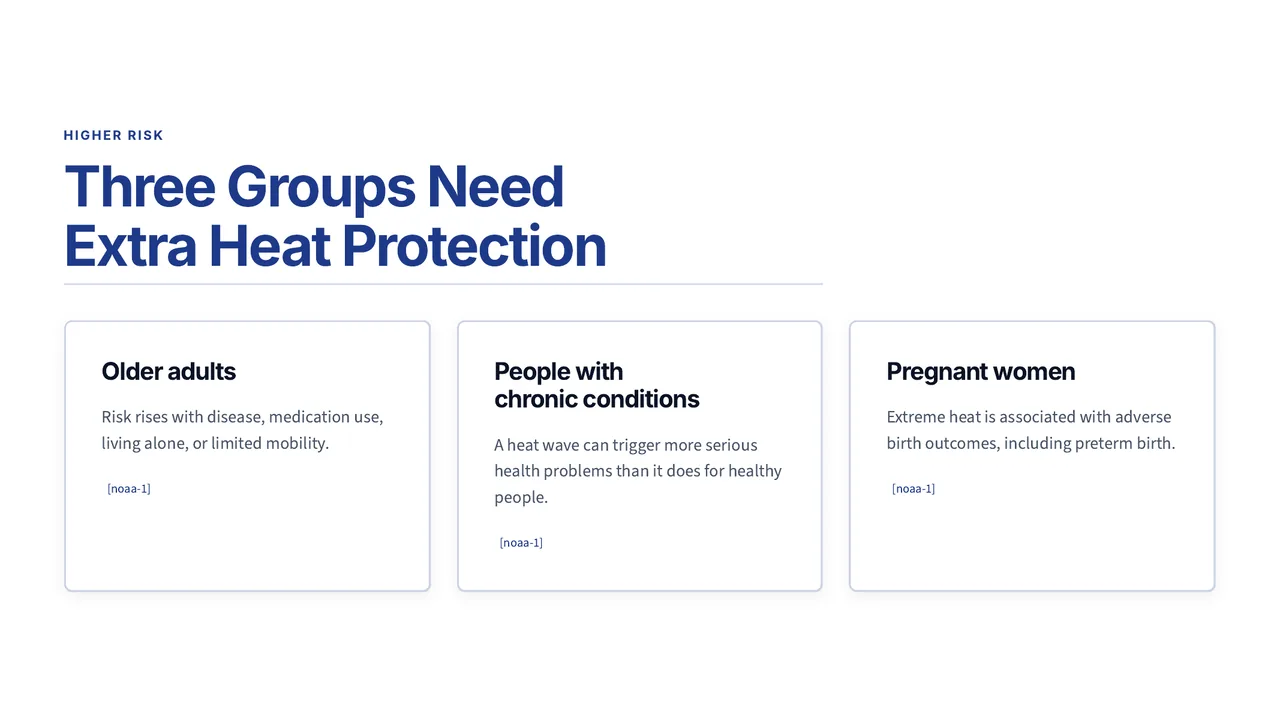
A scene of the heat safety story: three cards for the groups who need extra protection from heat: older adults, people with chronic conditions and pregnant women.

Visual story · 8-page PDF · 8 slides

Heat Safety: Protect Those at Greater Risk

A story of six scenes on heat safety, built only from one National Weather Service page: who needs extra protection from heat, why a child's body copes less well, and why a locked vehicle is never a safe place for a child, a disabled person or a pet. Stanza generated the three pictures.

The request and the pages Stanza was given

A visual story about heat safety, built only from the supplied page: who is most at risk from heat and what the National Weather Service says about children, pets and vehicles. Do not use charts or data scenes; give a figure as a short statement or in a card. Keep every scene light: at most three cards or items, and one or two short sentences of text. Audience: Parents, carers and the general public. Intent: Educate. Pages supplied as text (NOAA National Weather Service, "Heat Safety Resources", https://www.weather.gov/safety/heat).

PDF (1 MB)Story (HTML) (1.9 MB)PowerPoint, editable text (4.2 MB)PowerPoint, exact appearance (4.6 MB)

A separate reviewer agent read the story's 32 claims against the National Weather Service page: 21 are supported, 10 loosen or go a little beyond its wording, 1 is in no page (the call-to-action button's label) and none contradicts one. It is not a person's review.

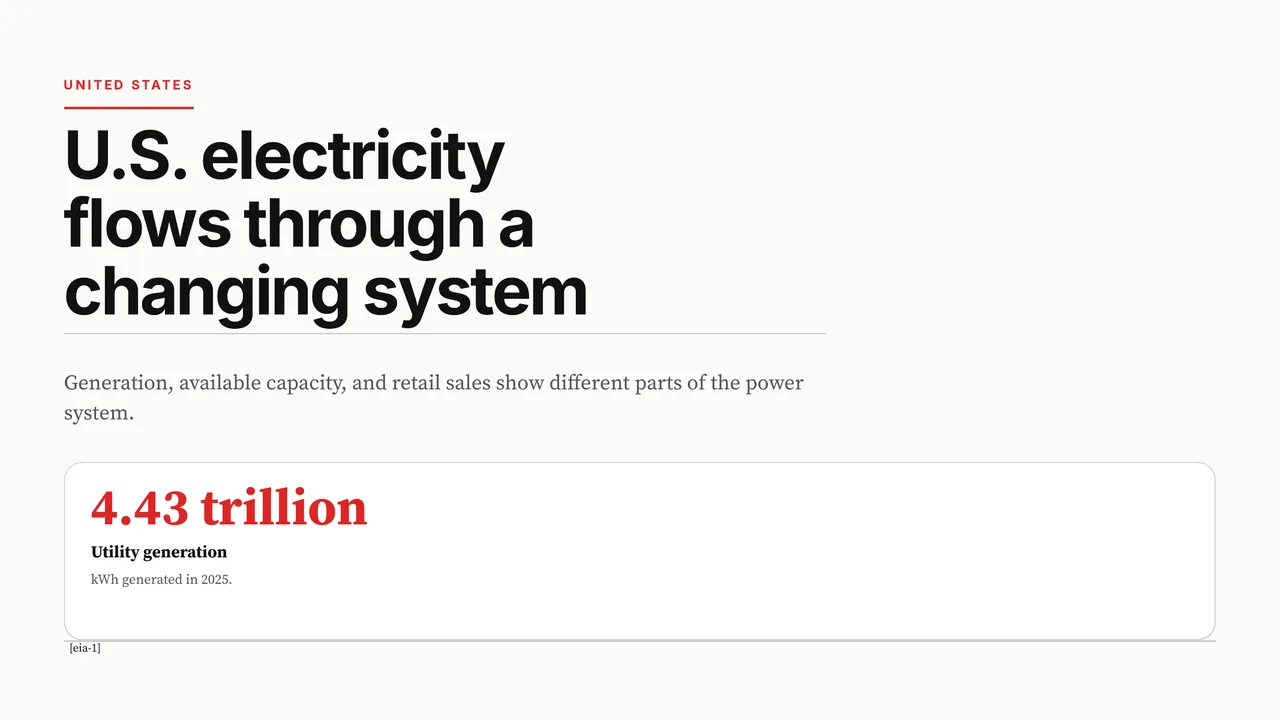
The opening scene of the electricity story: a figure for U.S. utility generation in a stat card under the heading.
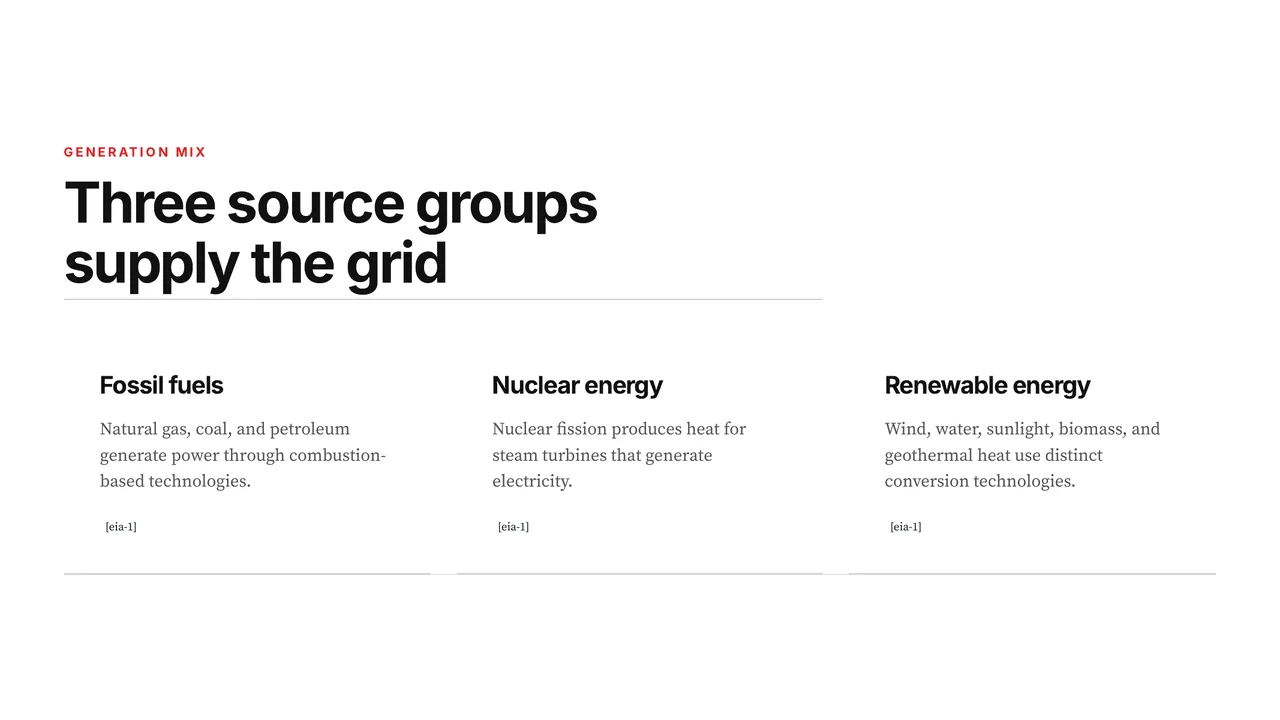
A scene of the electricity story: three cards for the fossil, nuclear and renewable source groups that supply the grid.

Visual story · 7-page PDF · 7 slides

U.S. Electricity: Generation, Capacity, and Sales

A story of five scenes and a sources page on how electricity is generated, kept available and sold in the United States, built only from two EIA Energy Explained pages: the generation mix, what capacity means, the rise of wind and solar and how retail sales compare with generation. It has no pictures and a restrained journal theme.

The request and the pages Stanza was given

A visual story about how electricity is generated and used in the United States, built only from the supplied pages: where the power comes from, how much generating capacity there is and how it is changing, and how electricity is sold. Do not use charts, timelines or data scenes; give a figure as a short statement or in a card. Keep every scene light: at most three cards or items, and one or two short sentences of text. Use at most four figures in the whole story. Audience: General readers who follow energy news. Intent: Report. Pages supplied as text (EIA, "Electricity in the United States (Energy Explained)", https://www.eia.gov/energyexplained/electricity/electricity-in-the-us.php; EIA, "Electricity in the United States: generation, capacity, and sales (Energy Explained)", https://www.eia.gov/energyexplained/electricity/electricity-in-the-us-generation-capacity-and-sales.php).

PDF (110 KB)Story (HTML) (837 KB)PowerPoint, editable text (24 KB)PowerPoint, exact appearance (581 KB)

A separate reviewer agent read the story's 31 claims against the two EIA pages: 21 are supported, 10 loosen or go a little beyond a page's wording, none is absent from both pages and none contradicts one. It is not a person's review.

A separate reviewer agent read each story against its pages; the counts are on each card. It is not a person's review. The pictures are generated, not photographs of real events.

Compare a story's two PowerPoint files

Open either Stanza story above and compare its editable-text and exact-appearance PowerPoint files. The guide explains what remains editable in each.

Inspect the example and files →

Fictional, hand-authored demonstration inputs. The files were created by the actual product export services; this does not establish AI output quality or customer outcomes.

Digital storytelling examples: inspect the explanation and its sources

Visual storytelling uses a sequence of scenes to explain a subject. Data storytelling adds a question, the measures that answer it and the limits of their interpretation. The electricity story above separates generation, capacity and sales: related measures that should not be presented as interchangeable. Trace each figure and qualifier to the supplied EIA pages, then read the reviewer findings on its card.

Review the narrative as well as the number

The heat-safety story uses short scenes and cards for the groups needing extra protection. A supported figure or citation does not automatically support the advice beside it. Inspect the qualifications and any proposed action before using the story with readers.

Compare the two PowerPoint handoffs

Choose PowerPoint with editable text to give the recipient native PowerPoint text boxes they can revise; visual styling stays behind them as artwork. PowerPoint with exact appearance preserves each scene as an image, with no independently editable text. HTML keeps the scrolling reading experience. Creating an editable Lumen deck is a separate conversion to slide layouts, which needs its own review.

The files above show the product's exported text and artwork. They do not establish customer outcomes or a ranking benefit.

Evaluation checklist

What to inspect before you start a trial.

Narrative

Does the deck build toward a decision?

Look for a clear audience, a logical sequence, explicit evidence, and a close that makes the requested next step understandable.

Review

Can another person challenge the structure?

Assess whether headings, proof points, assumptions, and sources give a reviewer enough context to improve the first pass.

Handoff

Will the exported file survive delivery?

Lumen uses hybrid PowerPoint export: stable layouts become editable shapes, while complex slides may preserve fidelity as images.

Four intents, four structures

Which presentation example are you actually looking for?

Most searches for presentation examples are really searches for a structure. The executive, investor, buyer and consulting decks above cover the four that come up most, and each one is shaped differently on purpose.

Board update

A briefing a director can act on

The deck here is an executive briefing on NIST's Cybersecurity Framework 2.0: the six Functions as a set, what Govern covers, the questions leaders can put to their teams, how Current and Target Profiles show the gap to close, and the four Tiers. It describes no company, so it has no performance data; a board update of your own starts from your numbers, and the test is the same: whether a director who reads only the first slide knows what is being decided. If you are writing one, how to structure a board deck walks the running order.

Investor pitch deck

Market and why now before product

The fundraising deck here makes the market case, from two public articles on battery storage: how large and how fast it has grown, what is planned next and how storage earns revenue. Its product, traction and ask slides are not in it, because the documents do not supply them and Lumen did not invent them; a pitch deck of your own carries yours. A pitch deck template settles the look; the sequence of problem, market context, product, traction and ask is what carries the raise. See how to structure a pitch deck.

Sales and buyer narrative

Their situation first, your product second

The buyer narrative deck opens on the customer's situation, then the proof, which here is the FTC's own guidance, then a first step: the same order a working sales deck uses. It describes no provider or product, so its proof is public rather than a vendor's claim. Compare it against how to structure a sales deck.

Consulting readout

Situation, analysis, then a recommended order

The client strategy deck frames the national buildout, shows where planned solar and storage additions concentrate, and ends on a recommended order of attention. It reaches its answer at the end; an answer-first version states the recommendation on the second slide and defends it downward. Either starts as an outline, which is the part worth copying: see how to create a presentation outline.

How to read them

These decks were generated in Lumen from public documents, not from customer data, so read them for structure, information hierarchy, and how the slides hold up as a sequence, not as evidence about any company's results. Each was exported as a PowerPoint file, a PDF and a self-contained HTML player, and the files on the cards are those exports, so what you are judging is real output rather than a mockup. The claim counts come from a separate reviewer agent, not a person.

From source material to presentation handoff

Build the deck, review it, and evaluate the exported handoff in one workspace.

Start a 14-day, no-card Starter trial to generate and review decks and evaluate clean hybrid PPTX and PDF exports. Existing decks remain reviewable after the trial; paid Lumen continues generation and unlocks the delivery paths shown in pricing.

Lumen also includes Stanza, a responsive visual-story mode that turns the same sources into a scrolling web story instead of a slide deck. Start quickly, or plan first and approve the scene plan before generation. Stanza grounds sources through the same pre-authorized search path as Lumen decks, it ships under Lumen access, and a supported Lumen deck can be converted into a separate Stanza story. Review conversion warnings: the original theme and slide imagery are not copied automatically.

Stanza visual-story workspace with the heat-safety story open and its Download menu listing HTML, PDF, and two PowerPoint options
Stanza is included with Lumen: a scrolling web story from the same sources, with downloadable HTML, PDF, and PowerPoint.
Downloaded Stanza PDF scene with a generated picture of a woman and a child beside a fan, and the title and first sentence over it
A page from the Stanza PDF you download: a full-bleed picture and overlay copy in a 16:9 story file.