Skip to content
Workflow-specific products Content, decks, briefs, proposals, legal, and sales each have a clearer buying path.
Review before delivery Draft, edit, collaborate, approve, and export in the same workspace.
Security + procurement path Security policy, support, and Azure Marketplace buying are public.

Guided product tour

See the complete deck workflow before you start.

Follow the actual Lumen path from source material to outline review, slide editing, theme control, presenter tools, and final handoff. Every image below comes from the product workflow.

This tour shows product UI and output specimens. It does not use staged customer claims or imply that the first generated pass is final.

Five checkpoints

The workflow stays attached to one working deck.

Use the tour to decide whether Lumen fits your review and handoff process, then open a specimen or start a trial to test it with your own material.

  1. 1

    Start with context

    Bring the topic, notes, brief, article, or source files.

    Choose a fast topic start when speed matters or an outline-first path when reviewers need to challenge the structure before generation.

    • Select the workflow profile for the room
    • Keep uploaded material primary
    • Choose whether supporting web research is allowed

    Review source-grounding guidance

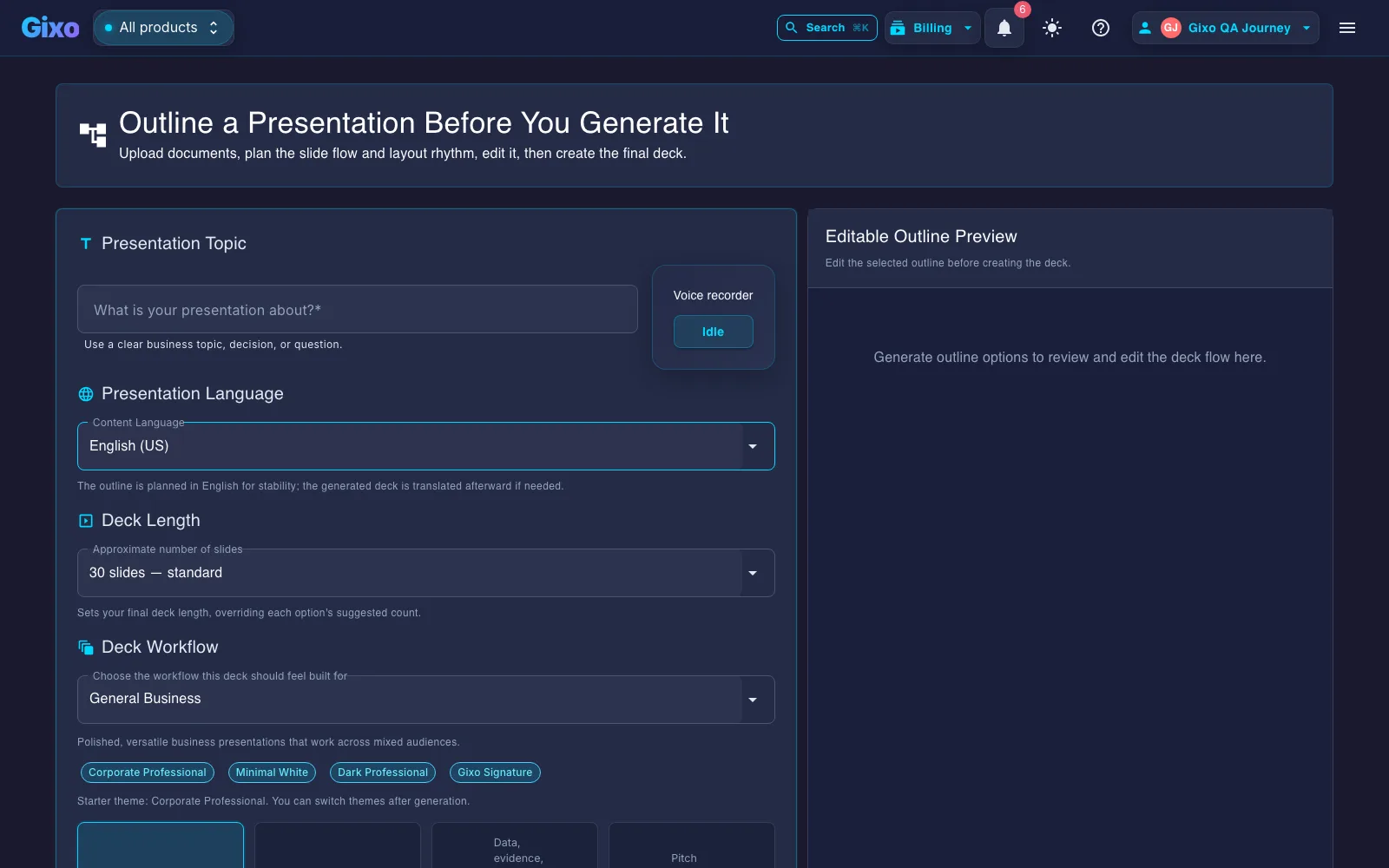
    Lumen outline creation workflow with topic and source-material controls
    Start from a topic or source material, then shape the outline before full generation.
  2. 2

    Review the narrative

    Inspect the outline before the deck becomes expensive to change.

    Check the audience, decision, section order, evidence needs, and missing transitions before committing to the full slide build.

    • Reorder or rewrite outline sections
    • Match the structure to the delivery context
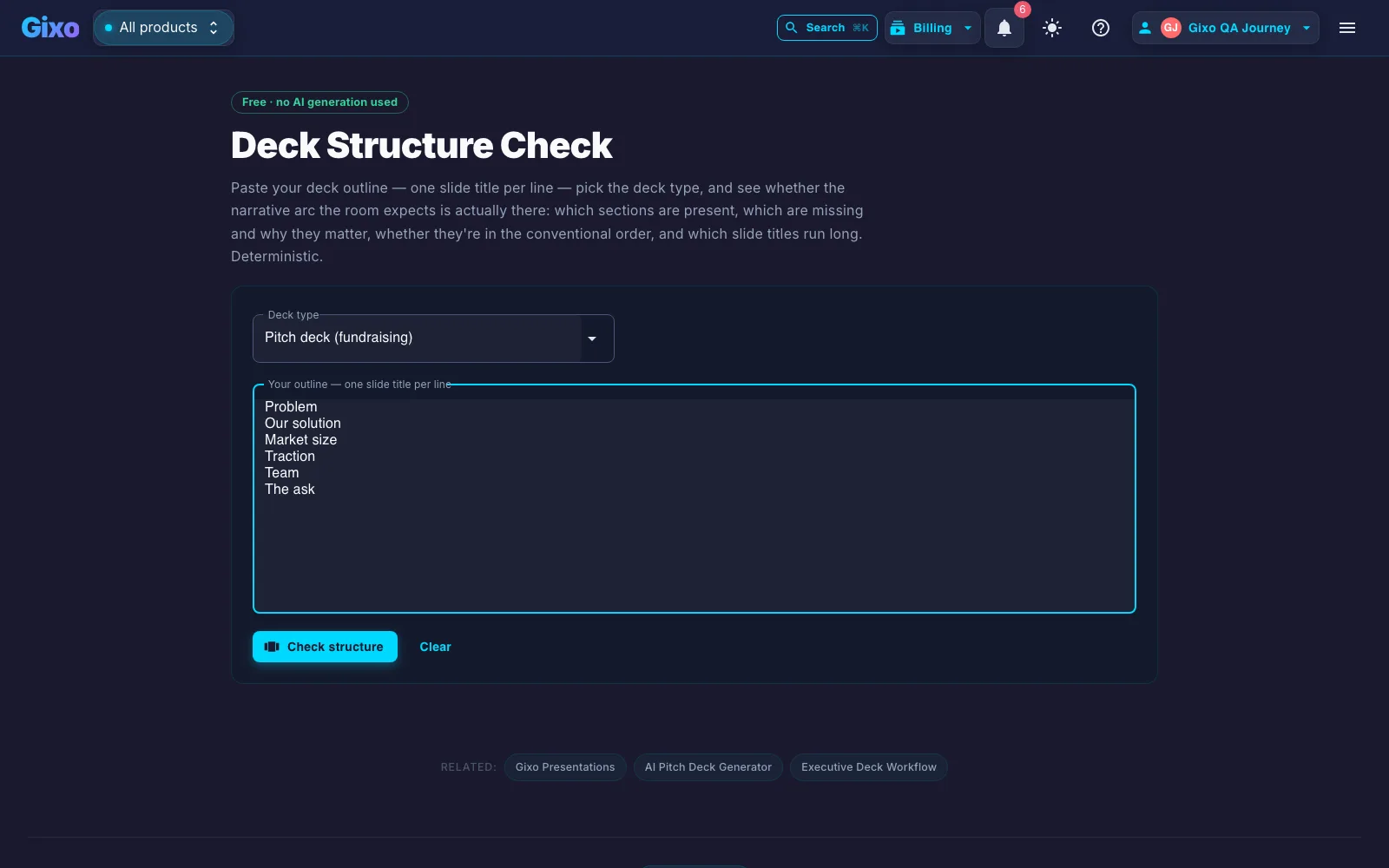
    • Use the free deck checker for expected-section gaps

    Open Lumen deck tools

    Lumen deck structure review showing expected sections and ordering checks
    The structure check helps reviewers find missing sections before visual polish begins.
  3. 3

    Edit the working deck

    Refine slides without rebuilding the presentation elsewhere.

    Use slide-level editing, layout changes, AI-assisted alternatives, images, citations, and deck-wide review controls on the same artifact.

    • Edit individual fields and slide layouts
    • Use Ask Lumen to preview and select proposed changes
    • Keep citations and source context available to reviewers

    Read the presentation editor guide

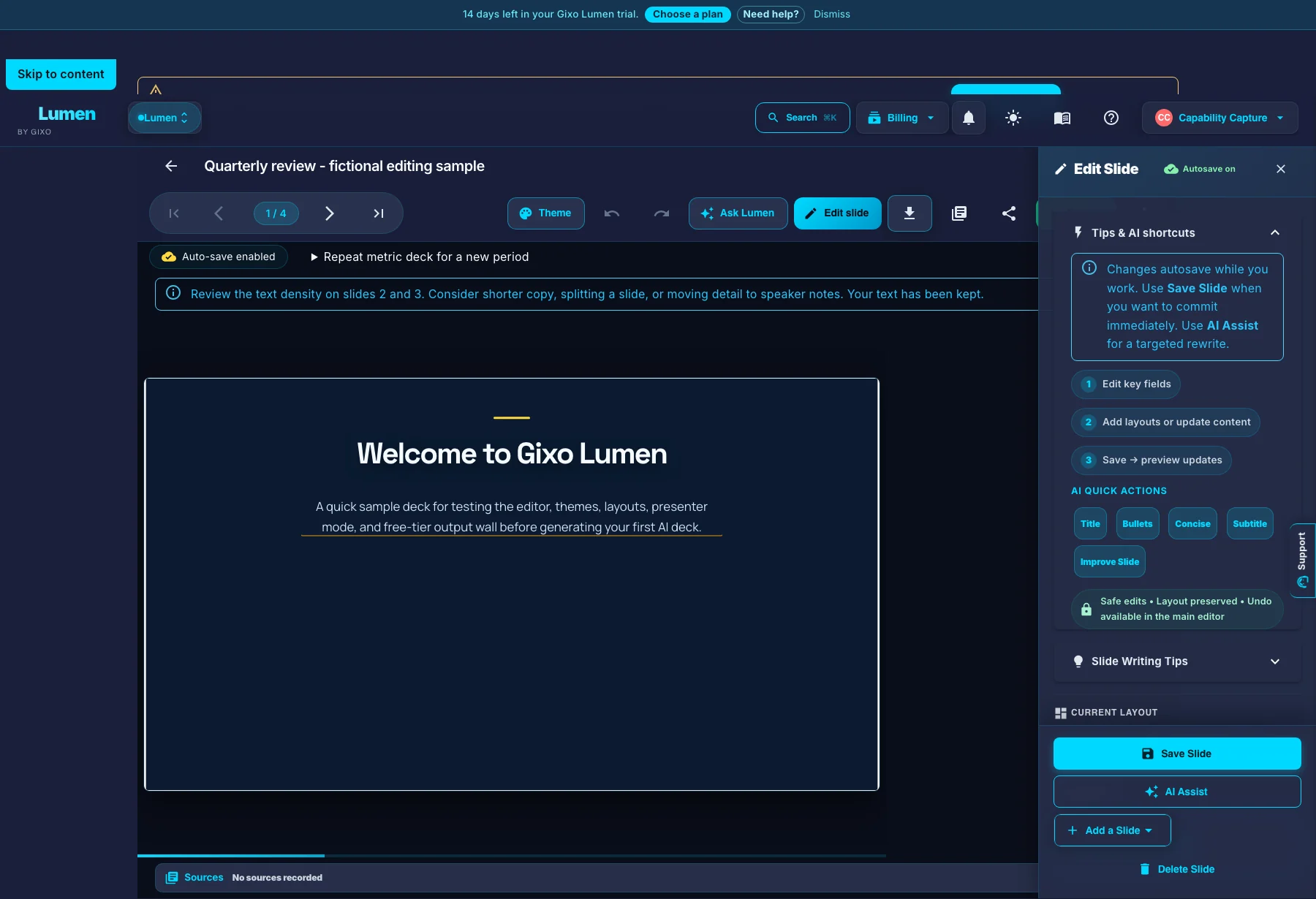
    Current Lumen Edit Slide panel beside a static manually authored onboarding slide
    The current Edit Slide panel on a static onboarding sample, captured locally on 13 October 2026. Its text-density notice is part of this sample; no AI request, source-preservation result or fresh generation is demonstrated.
  4. 4

    Control the visual system

    Switch themes or apply Brand Kit controls after content exists.

    Evaluate typography, contrast, density, and brand direction across the whole deck without rewriting the narrative.

    • Choose from the active theme library
    • Apply saved Brand Kit colors and fonts on Professional plans and up
    • Review contrast before client or executive delivery

    Review brand-consistency controls

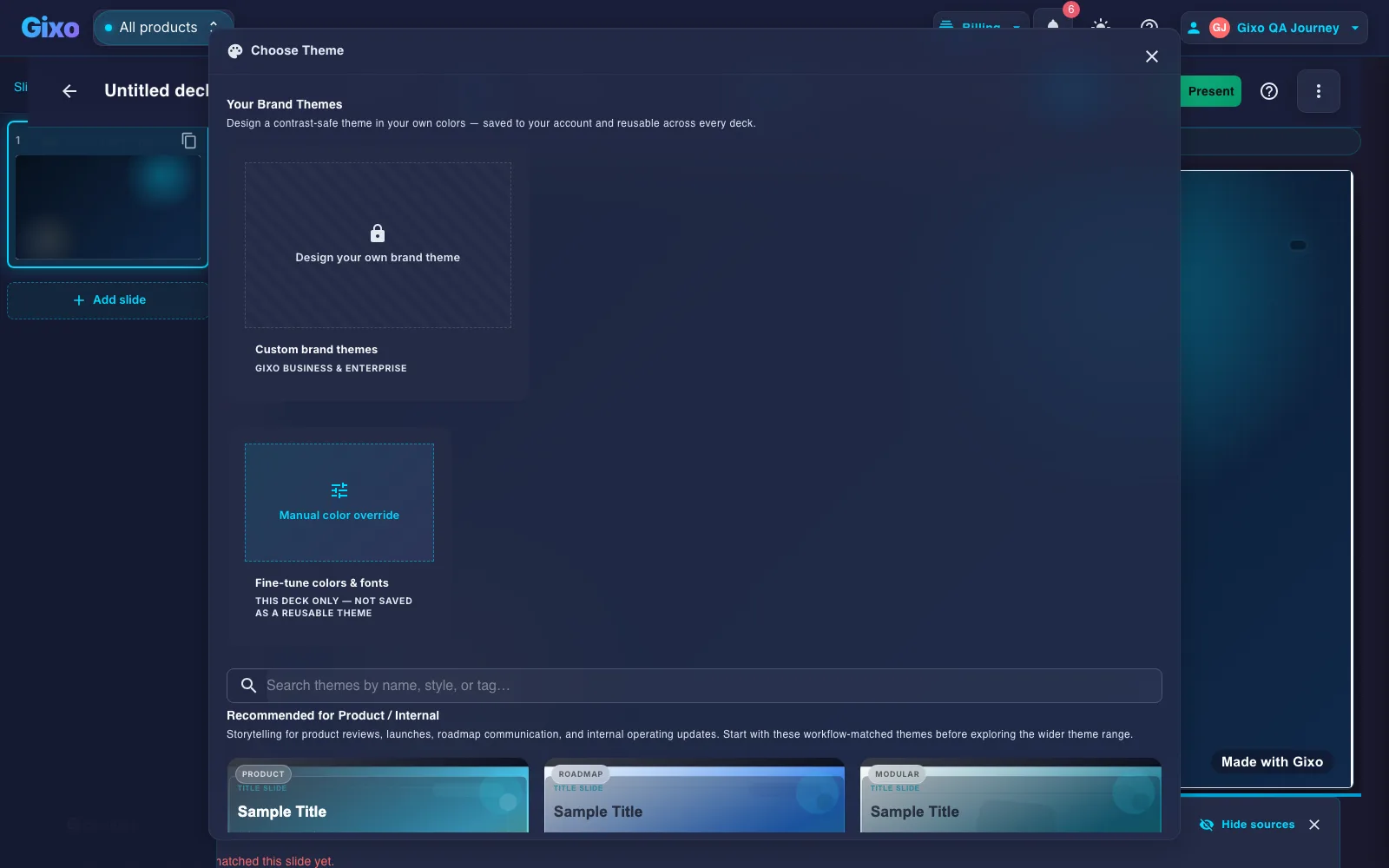
    Lumen theme picker with multiple presentation visual directions
    Theme switching changes the deck-wide visual direction while preserving the slide content.
  5. 5

    Present and hand off

    Rehearse, present, and evaluate the exported file.

    Use present mode and speaker notes in the browser, then inspect the hybrid PowerPoint or PDF output before it reaches a client or stakeholder.

    • Use slide navigation, notes, timer, and present mode
    • Review every claim and citation
    • Test the exported file in the recipient's real workflow

    Understand the hybrid PPTX boundary

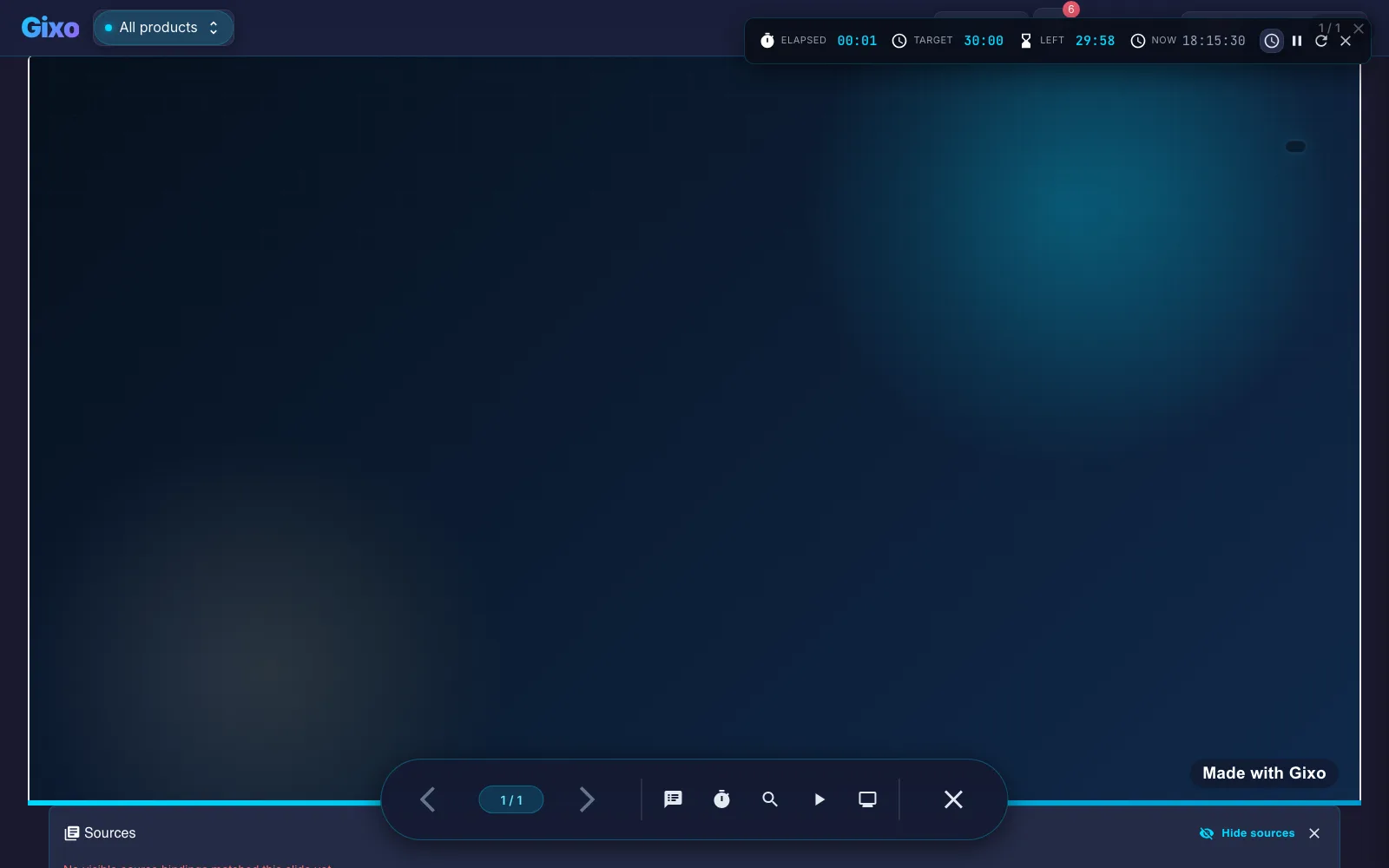
    Lumen presentation mode with speaker-ready controls
    Present mode keeps the working deck usable before and after export.

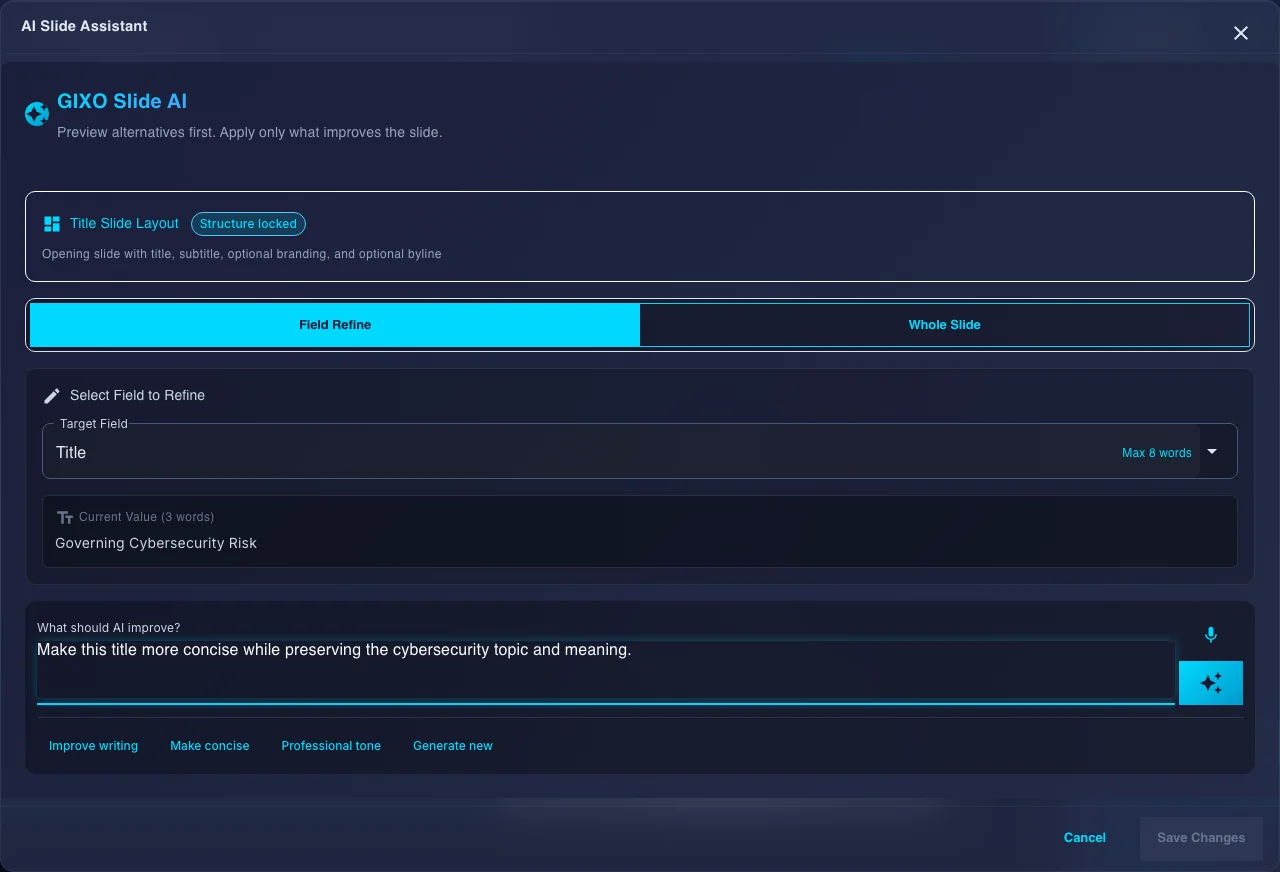
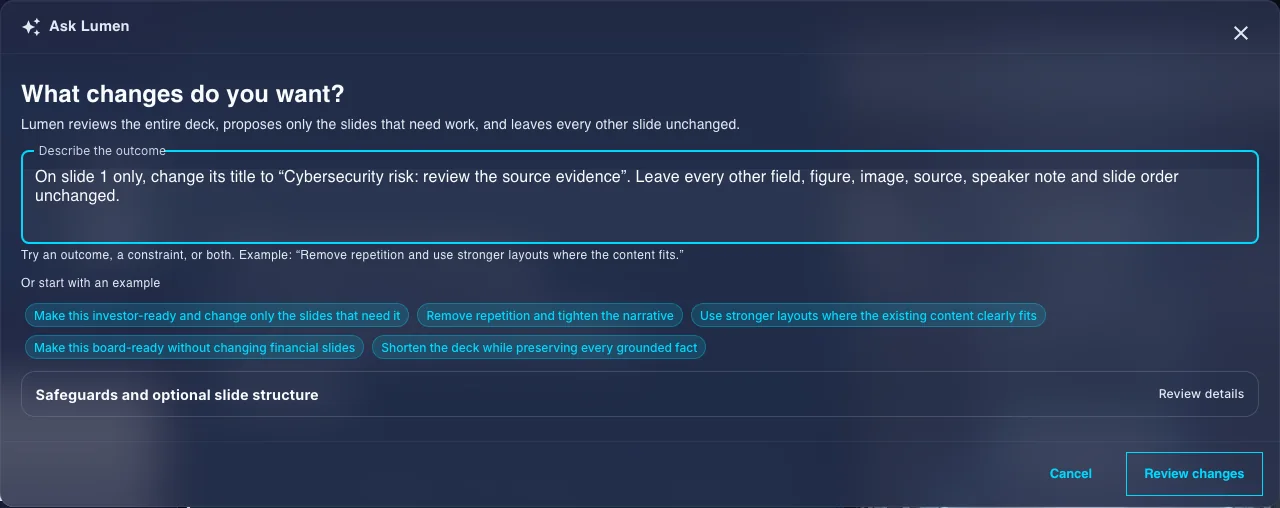
Choose a field or describe a change across the deck

The text dialog targets a field; Ask Lumen takes an outcome for the saved deck. These screenshots show prepared instructions on the imported example, before a request is submitted. Review any returned alternatives or proposals before applying them.

Lumen slide AI dialog with the Title field, its current words and an instruction to make it more concise
The field and instruction are prepared. No AI request was submitted and no returned alternative or accepted edit is shown.
Ask Lumen with a prepared first-slide instruction and Review changes control
Ask Lumen before Review changes. This capture shows the instruction controls, not a returned proposal or applied revision.

Before you start the trial

How to make a presentation with AI: the questions the tour answers

The five checkpoints above are the whole workflow. These are the things people want pinned down before they run it on real material.

How do you make a presentation with AI?

Bring the context — a topic, notes, a brief, an article, or source files. Choose the workflow profile that matches the room and decide whether supporting web research is allowed. Review the outline, because that is where the argument gets fixed cheaply. Generate the deck, then edit slides, swap layouts, add images and check citations in the same workspace. Finish by presenting from the browser or exporting the file. The tour above shows each of those five steps in the real interface rather than in a mockup.
Do I have to write an outline first?

You choose. A fast topic start goes straight to a generated deck when speed is what matters. The outline-first path exists for the opposite case: when reviewers need to challenge the section order, the audience, and the evidence requirements before anyone spends time on slides. Both paths end in the same editable deck. Outline review lets a second person challenge the argument before the slides are built.

Can I edit the slides after they are generated?

Yes, and the workflow assumes you will. Slide-level editing, layout changes, AI-assisted alternatives you preview before applying, images and citations all sit on the same deck rather than in a separate tool. Themes and Brand Kit controls apply after the content exists, so you can change the visual direction across the whole deck without rewriting the narrative. Review a proposed AI change before applying it, and inspect the resulting slides.

What can I export, and does it stay editable?

PowerPoint and PDF, on a hybrid model worth understanding before you commit: stable layouts export as editable PowerPoint text and shapes, while genuinely complex slides preserve their fidelity as images instead. The 14-day Starter trial includes AI generation and clean hybrid export, so the honest way to evaluate it is to export one of your own decks and open the file in the tool your recipient actually uses.

Use the same sources for a visual story

Stanza is the visual storytelling software included with Lumen. Choose a scrolling story when readers need to move through the explanation at their own pace. Start quickly or review a scene plan first; planning uses the same Lumen access rather than a separate paid tier.

Keep the story reviewable

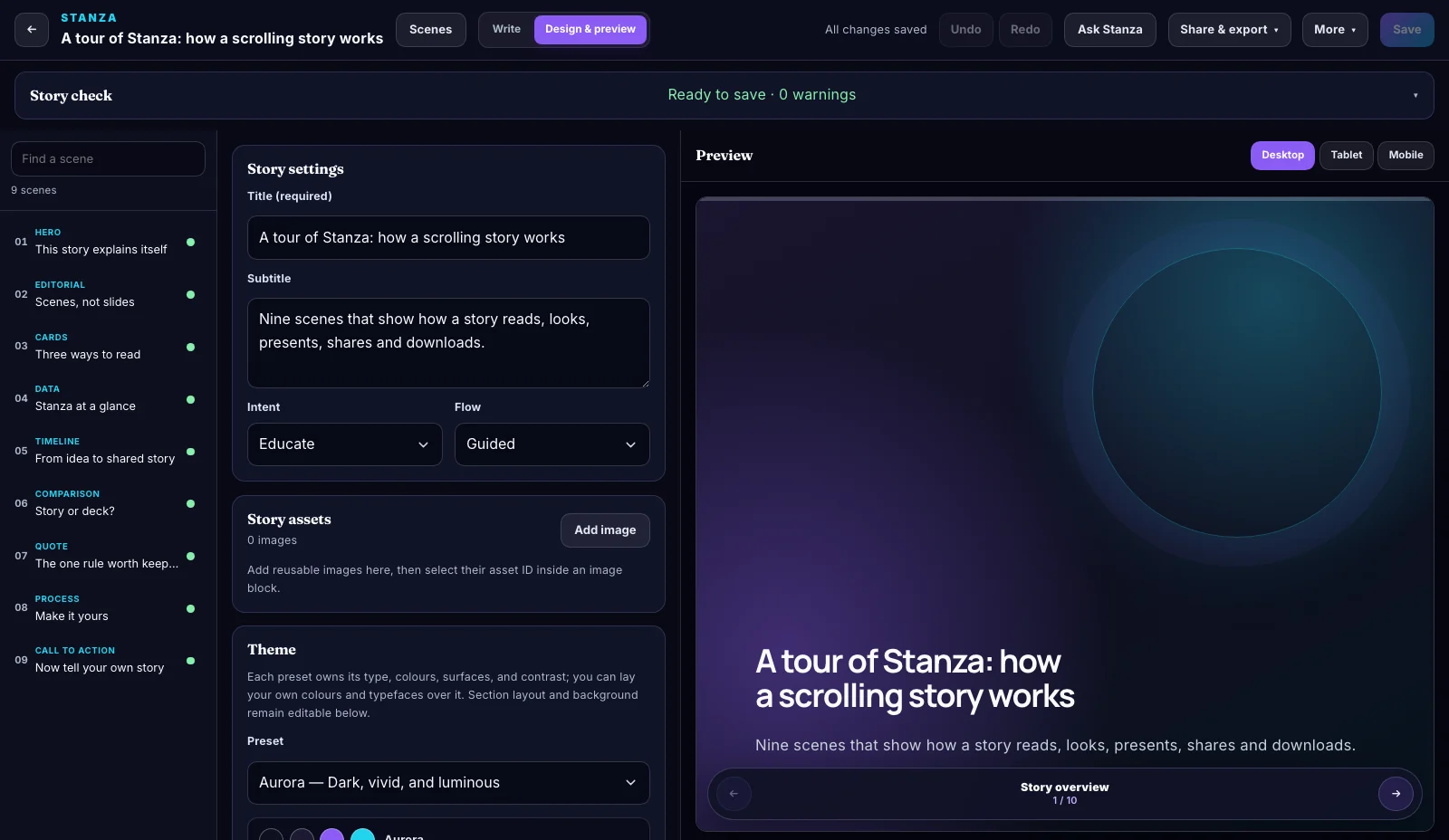
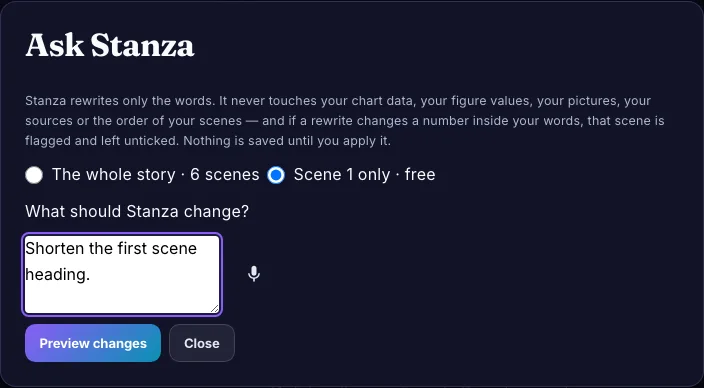
Write and arrange scenes, preview the design and check scene capacity. Ask Stanza proposes text changes for a scene or story for review before you apply them. Autosave, undo and saved story history support continued editing; resolve a save conflict before applying AI changes.

Choose the recipient's file

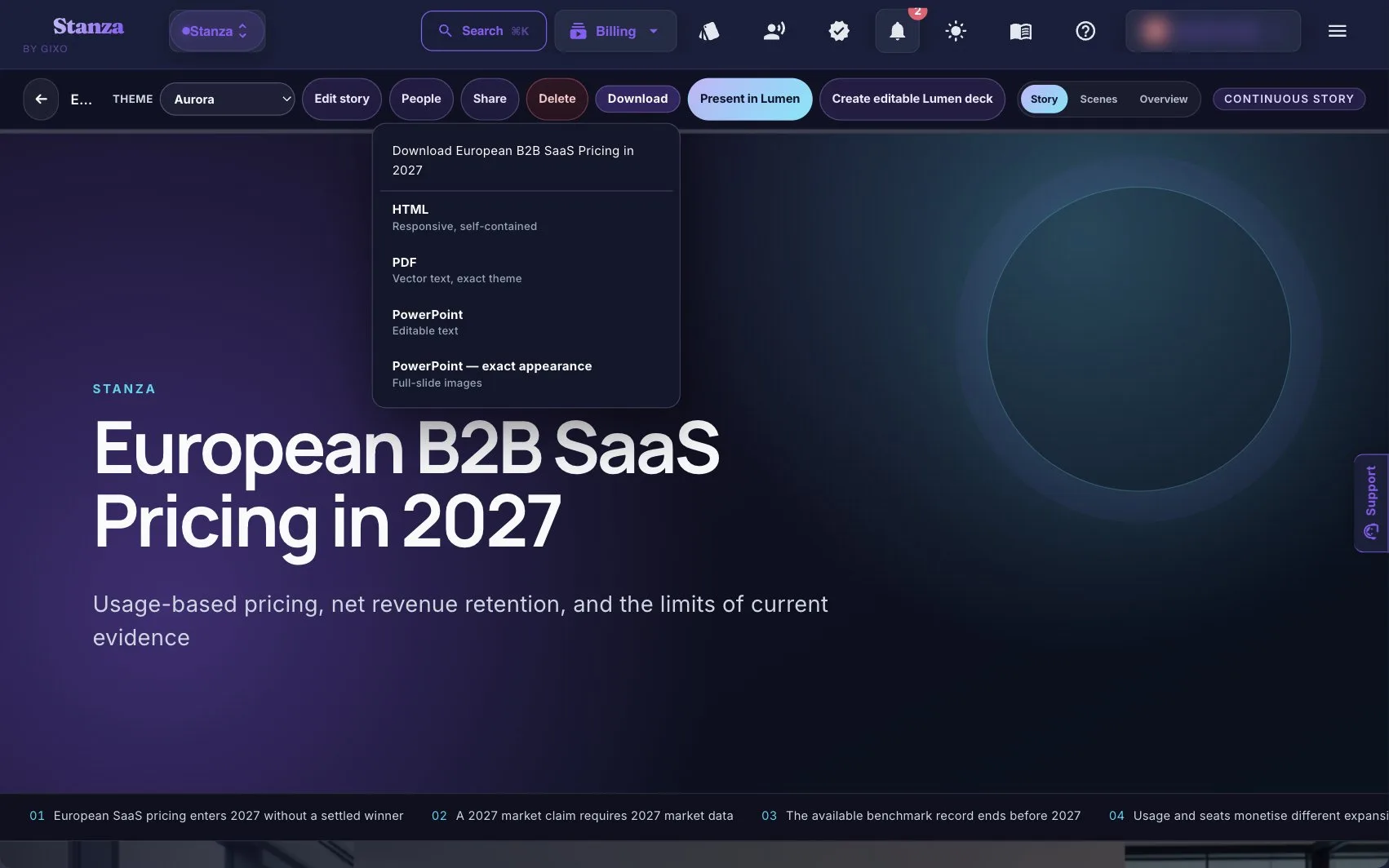
Choose PowerPoint with editable text to give the recipient native PowerPoint text boxes they can revise; visual styling stays behind them as artwork. PowerPoint with exact appearance preserves each scene as an image, with no independently editable text. HTML keeps the scrolling reading experience. Creating an editable Lumen deck is a separate conversion to slide layouts, which needs its own review.

Inspect the two real Stanza sample exports.

Current Stanza scene outline, story settings, More and Share and export menus beside the Design and preview canvas
Current Stanza editing controls on a handwritten app tour, captured locally on 13 October 2026. This shows the available editor controls, not fresh AI generation or an exported result.
Ask Stanza with Scene 1 only selected, a prepared heading instruction and Preview changes control
Ask Stanza before Preview changes. The request was not submitted; no proposed or applied rewrite is shown.
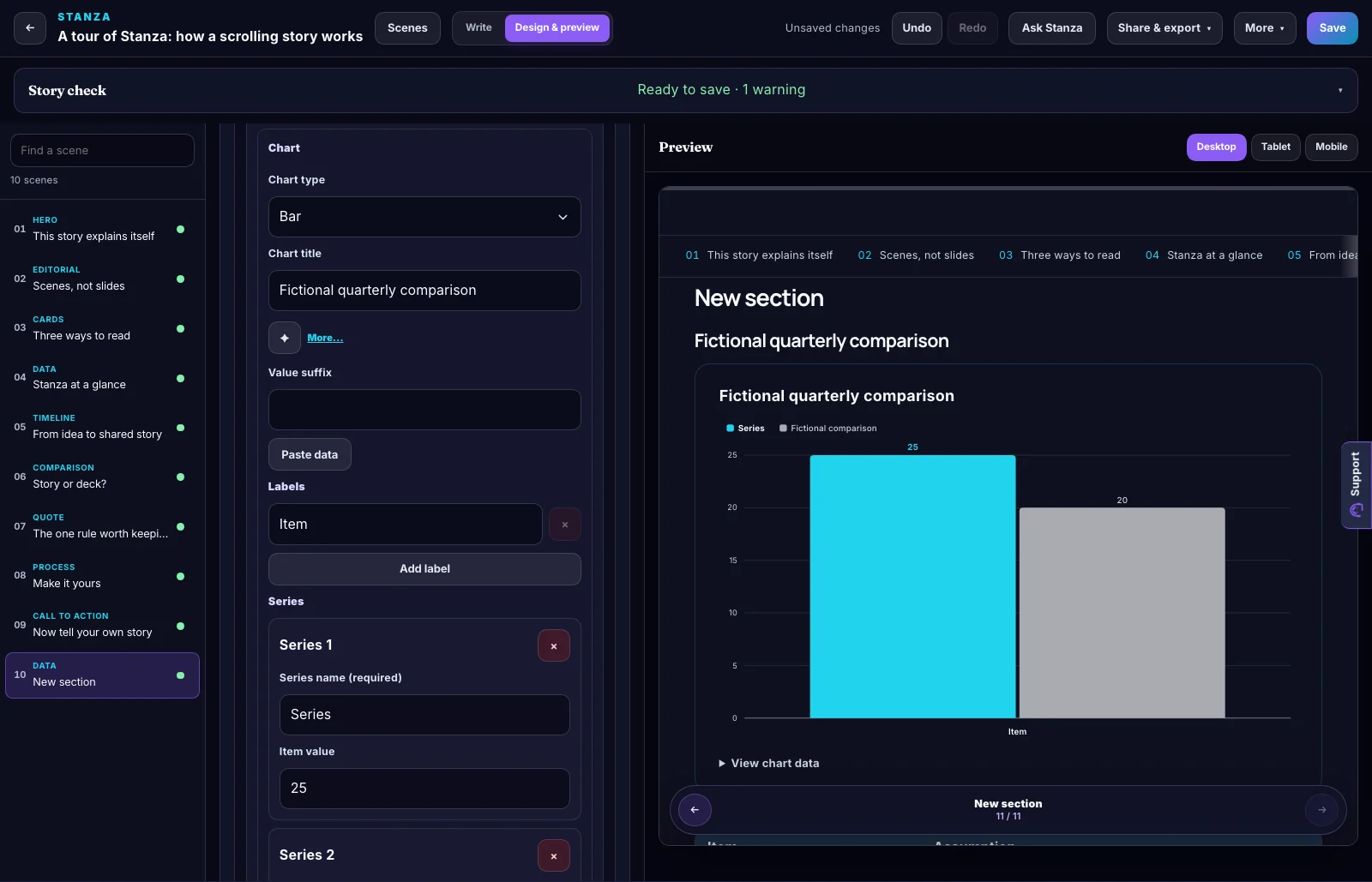
Stanza chart controls beside a Bar chart of two fictional manually entered values
Actual chart controls and preview using manually entered values 25 and 20. The native picker was checked for all eight chart types; Pie, Donut and Funnel display the first series. This is editing-control evidence, not generated findings.
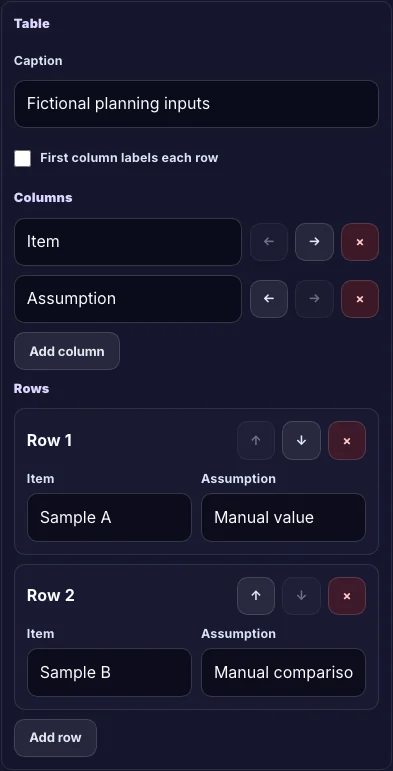
Actual Stanza Table block caption, columns and two rows of fictional manual inputs
Table is available in the block picker. These caption, column and row controls contain sample text; no generation or exported-file result is claimed.
Evaluate the handoff, not only the first slide

Use the trial to inspect structure, editability, evidence, and export fidelity.

The 14-day Starter trial includes AI generation and clean hybrid PPTX/PDF export. Stable layouts become editable text and shapes; complex slides may preserve fidelity as images. After the trial, existing decks remain reviewable, presentable, and downloadable — hybrid export included.

From source material to presentation handoff

Build the deck, review it, and evaluate the exported handoff in one workspace.

Start a 14-day, no-card Starter trial to generate and review decks and evaluate clean hybrid PPTX and PDF exports. Existing decks remain reviewable after the trial; paid Lumen continues generation and unlocks the delivery paths shown in pricing.

Lumen also includes Stanza, a responsive visual-story mode that turns the same sources into a scrolling web story instead of a slide deck. Start quickly, or plan first and approve the scene plan before generation. Stanza grounds sources through the same pre-authorized search path as Lumen decks, it ships under Lumen access, and a supported Lumen deck can be converted into a separate Stanza story. Review conversion warnings: the original theme and slide imagery are not copied automatically.

Stanza visual-story workspace with the heat-safety story open and its Download menu listing HTML, PDF, and two PowerPoint options
Stanza is included with Lumen: a scrolling web story from the same sources, with downloadable HTML, PDF, and PowerPoint.
Downloaded Stanza PDF scene with a generated picture of a woman and a child beside a fan, and the title and first sentence over it
A page from the Stanza PDF you download: a full-bleed picture and overlay copy in a 16:9 story file.