Gixo Quill · content guide
Blog SEO
Blog SEO is making individual posts rank for the searches they target. The parts that decide it are choosing a query you can serve, matching the format that already ranks, answering early, and linking the post into the rest of the site — not publishing cadence, which is the most over-emphasised variable in the field.
What your plan includes. Writing, checks, exports, public share links and publishing to WordPress, Ghost and Medium are on every plan, from $10 per seat a month. Comments and Brand Voice need Professional; Brand Kit and bulk need Business.
What decides whether a post ranks
- Whether the query is servable by a blog post. If the results are all product pages or comparisons, a post will not rank no matter how good.
- Whether the answer appears early. Burying it below context loses to a page that leads with it.
- Whether anything links to it. A post nothing links to is often never found. The most common invisible failure.
- Whether it competes with your own posts. Two posts on one intent means neither ranks well.
- Whether it adds something. If it restates what already ranks, it has no reason to outrank it.
- Not cadence. Publishing weekly does nothing on its own; it matters only because it produces more attempts.
Over-rated and under-rated
| Commonly emphasised | Actually | Under-emphasised |
|---|---|---|
| Publishing frequency | Only matters via volume of attempts | Internal links to new posts |
| Word count | A symptom, not a target | Answering in the first 40 words |
| Keyword density | A legacy practice | Matching the ranking format |
| Fresh publish dates | Only where freshness is a factor | Updating posts that already rank |
| Volume of posts | Splits attention | Merging posts that compete |
Blog SEO checklist
Ten checks, in the order they matter. The first three decide whether the post can rank at all; the rest decide by how much.
- The query is one a blog post can serve. Checked against the actual results rather than assumed. If the first page is product pages or comparison tables, stop here.
- Nothing you already published targets it. Search your own site before writing. Two posts on one intent is the most expensive item on this list, because it costs you a position you already had.
- The answer is in the first forty words. Above the context, above the anecdote, above the definition of a term the reader already knows.
- The title uses the words people type. And the h1 says the same thing. A clever title against a plain query is a mismatch the engine resolves in your disfavour.
- The sub-headings cover the follow-up questions. The people-also-ask entries on the results page are the free version of that research.
- At least three existing pages link to it before publish day. Not after. A post published into nothing is the most common invisible failure on a growing site.
- It links out to the pages it depends on. A cluster only works in both directions.
- Something in it is on no ranking page. A number you measured, a worked example, a test you ran, a position you are willing to defend.
- Images have real filenames and alt text. Five minutes, and the only part of image search you control.
- It returns 200 and appears in the sitemap. Verified rather than assumed — a surprising share of posts that never ranked were never fetchable.
A post that fails the first item cannot be rescued by the other nine, which is the most common way a genuinely good piece of writing gets wasted.
How Gixo Quill handles this
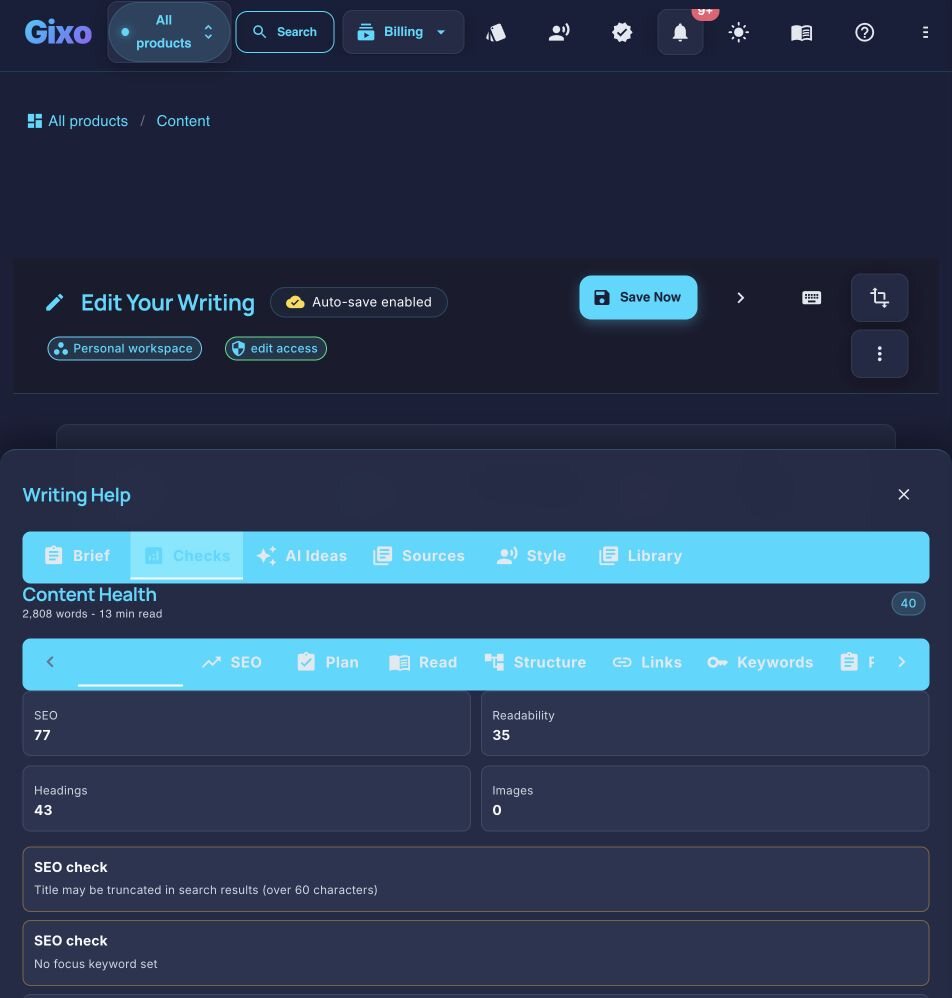
Quill produces the post in the format the intent demands and runs deterministic checks before publishing — answer extractability for the early-answer requirement and overlap for self-competition — then publishes directly to WordPress or Ghost or hands a draft to Medium.
Frequently asked questions
How do I make blog posts rank?
Choose a query a blog post can actually serve, match the format that already ranks, answer in the first 40 words, and link the post from existing pages.
How often should I publish to rank?
Frequency is over-emphasised. It matters only because it produces more attempts, and publishing weak posts to hold a cadence costs more than an empty week.
How long should a blog post be?
As long as the query needs. Length correlates with ranking because thorough answers tend to be longer, not because length is rewarded.
Why do my posts not get indexed?
Most often because nothing links to them. An orphaned post can go unfound indefinitely regardless of quality, and it is invisible in any on-page audit.
Should I update old posts or write new ones?
Update the ones already ranking. A post holding a position is evidence the structure works, and improving it is cheaper than winning a new position.
What is blog SEO?
Making individual posts rank for the searches they target. In practice it comes down to four decisions: whether a blog post is the format that query rewards, whether the answer appears early enough, whether anything on your own site links to the post, and whether it says something the pages already ranking do not.
Related content guides
Publish into a structure, checked
Quill matches format to intent, checks the post deterministically, and publishes straight to your CMS.
Inside Quill
Review concrete content and SEO signals before delivery