Gixo Quill · content guide
Internal Links for SEO
Internal links tell search engines which of your pages matter and what they are about. They are the highest-leverage on-site work available because they cost nothing to add and a page nothing links to is frequently never found at all.
What your plan includes. Writing, checks, exports, public share links and publishing to WordPress, Ghost and Medium are on every plan, from $10 per seat a month. Comments and Brand Voice need Professional; Brand Kit and bulk need Business.
What internal links do
- They enable discovery. An orphaned page — one nothing links to — may never be crawled, however good it is.
- They signal importance. Pages you link to often, from many places, read as your significant pages.
- They pass topical context. Anchor text and surrounding words tell the engine what the target page is about.
- They shape clusters. Clusters linking up to a pillar and back down is what makes the structure work rather than just a set of related posts.
- They are entirely under your control, unlike external links — which is why they are underused relative to their value.
- Anchor text distributes, it does not accumulate. Forty links using one identical anchor add far less than forty pages that each describe the destination in their own words.
- An orphan is invisible to on-page audits. Every check you run against the page itself passes. The only way to find one is to compare the list of pages you think exist against a crawl that follows links alone.
Patterns that work, and anti-patterns
| Do | Instead of | Why |
|---|---|---|
| Descriptive anchor text | Click here, read more | The anchor describes the target |
| Link from body content | Only from footers and nav | Body links carry more context |
| Link new pages from existing ones | Publishing and waiting | This is what gets it found |
| Cluster up to pillar, pillar down to clusters | One direction only | Both directions make the structure |
| A few relevant links | Twenty per paragraph | Dilution and poor readability |
How to find orphan pages on your own site
An orphan passes every on-page check there is, which is why it can stay broken for years. Finding one is a comparison rather than an inspection.
- List every URL you believe exists. From the sitemap, or from the route table if the site is generated from code. The second is more honest, because a sitemap can be wrong in the same direction as the site.
- Crawl from the homepage, following links only. One entry point, no sitemap loaded. This produces the set of pages a crawler can actually reach.
- Diff the two lists. Anything in the first and not the second is an orphan. The set is usually larger than anyone expects and disproportionately made of recent pages, because linking is the step that gets skipped when publishing is rushed.
- Check the index as well. A page with impressions and no internal links is an orphan that got found once. It will decay rather than grow.
- Fix it from a page that already ranks. Not from a new page created for the purpose — a link from a page nothing links to passes very little on.
Run it again after any migration, any bulk publish and any navigation redesign. Those three are what create orphans in the first place.
How Gixo Quill handles this
This is where a lot of content work quietly fails: pages get written and published with nothing linking to them. Quill's cluster-shaped content types make the pillar-and-cluster relationship explicit at the point of writing rather than something to retrofit afterwards.
Frequently asked questions
Do internal links help SEO?
Yes, substantially. They enable discovery, signal which pages matter, and pass topical context — and unlike external links they are entirely under your control.
What is an orphan page?
A page nothing on your site links to. It may never be crawled regardless of quality, which makes it the most common invisible problem on a growing site.
What anchor text should I use?
Text that describes the target page. Click here and read more waste the strongest signal you get to send about what the destination is about.
How many internal links should a page have?
As many as are genuinely relevant, which is usually a handful. Stuffing twenty into a paragraph dilutes each one and reads badly.
Where should internal links sit?
In body content rather than only navigation or footers. Body links carry surrounding context, which is part of what makes them useful.
What is an internal linking strategy?
A stated rule for how pages connect, rather than links added whenever someone remembers. The workable version is short: every page belongs to one cluster, clusters link up to their pillar and the pillar links back down, no page publishes without three links pointing at it, and anchors describe the destination.
Should internal links be nofollow?
No. Nofollow on internal links is a leftover from PageRank sculpting, which stopped working in 2009 — the signal is now discarded rather than redirected somewhere more useful. If you want a page out of the index, use noindex or a robots rule; do not try to hide it by nofollowing the links to it.
Related content guides
Publish into a structure, not into a void
Quill produces pillar and cluster formats as distinct types, so the linking relationship exists from the first draft.
Inside Quill
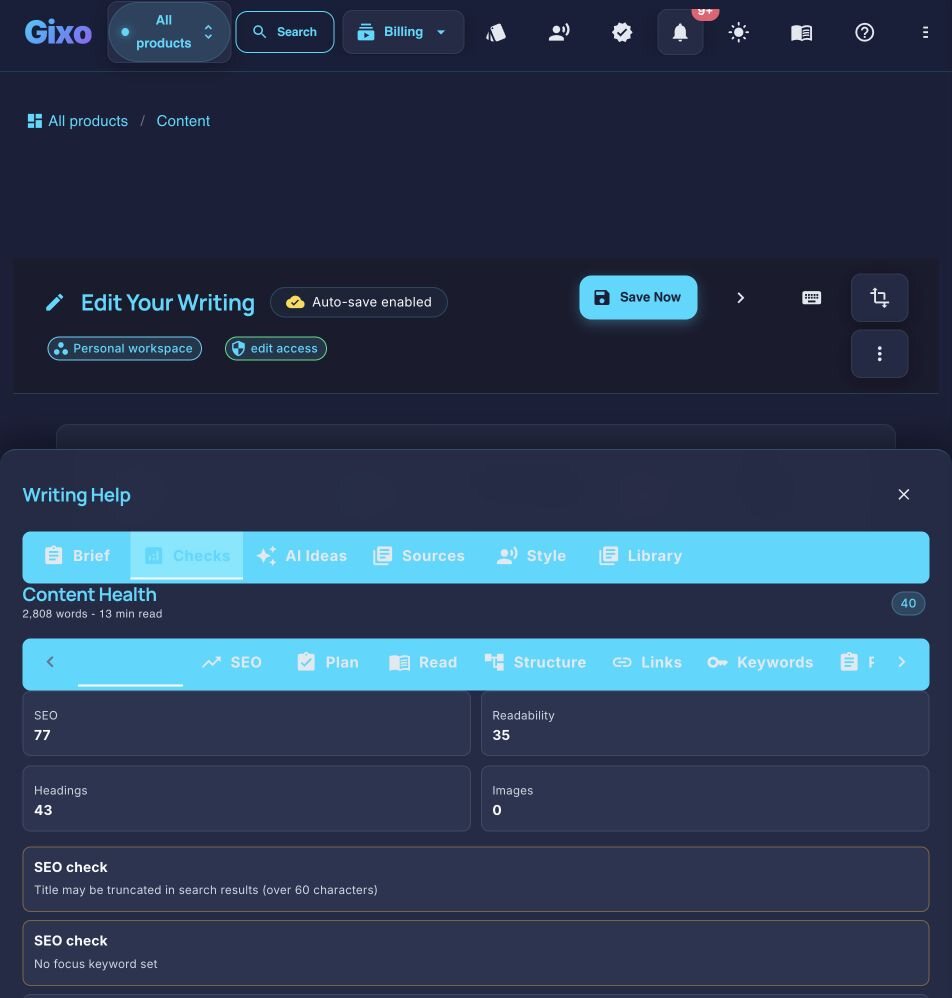
Review concrete content and SEO signals before delivery