Gixo Quill · content guide
What Is a Content Calendar?
A content calendar is the schedule of what publishes when, who owns each piece, and which channels it goes to. Most calendars fail for one reason: they are planned against drafting capacity rather than review capacity, so the backlog is always at the review step.
What your plan includes. Writing, checks, exports, public share links and publishing to WordPress, Ghost and Medium are on every plan, from $10 per seat a month. Comments and Brand Voice need Professional; Brand Kit and bulk need Business.
What a working calendar contains
- Publish date and owner. A named person, not a team. Team-owned items slip indefinitely.
- The stage it is at. Idea, briefed, drafting, in review, scheduled. Without stages you cannot see where the queue is stuck.
- Review owner, separately. The most common bottleneck, and the one least often assigned in advance.
- Target and format. What it is for and what shape it takes, so drafting does not restart the conversation.
- Channel and repurposing. Where else this piece goes after publication.
- Deliberate slack. A calendar booked to 100% has no room for the thing that actually matters this month.
Why calendars fail
| Failure | What it looks like | Fix |
|---|---|---|
| Planned to drafting capacity | Backlog piles up in review | Plan to review capacity instead |
| No named owner | Items slip with nobody accountable | One person per item |
| Fully booked | No room to react | Leave 20 percent unplanned |
| No stages | Cannot see where work is stuck | Track stage, not just date |
| Cadence as the goal | Publishing weak pieces to keep a streak | Let a slot go empty |
How Gixo Quill handles this
Quill affects the two stages where calendars actually break — drafting and review. It produces the piece in the right format and runs deterministic checks before publishing, then publishes directly to WordPress or Ghost or hands a draft to Medium, which shortens the handoff that often sits between 'approved' and 'live'.
Frequently asked questions
What is a content calendar?
A schedule of what publishes when, who owns each piece, what stage it is at, and which channels it goes to.
What should be included in a content calendar?
Publish date, a named owner, the current stage, a separate review owner, the target and format, channels, and some deliberately unplanned slack.
Why do content calendars fail?
Most are planned against how fast the team can draft rather than how fast it can review, so work piles up at the review step and dates slip from there.
How far ahead should a content calendar be planned?
Four to eight weeks in detail, with the quarter sketched at theme level on a roadmap. Detailed plans further out are usually rewritten before they are used.
Should I publish on a fixed schedule?
Consistency helps, but not at the cost of quality. Publishing a weak piece to protect a streak costs more than an empty slot.
Related content guides
Fix the review bottleneck, not the calendar
Quill runs the deterministic checks before a piece reaches a human reviewer, so review is a judgement call rather than a proofread.
Inside Quill
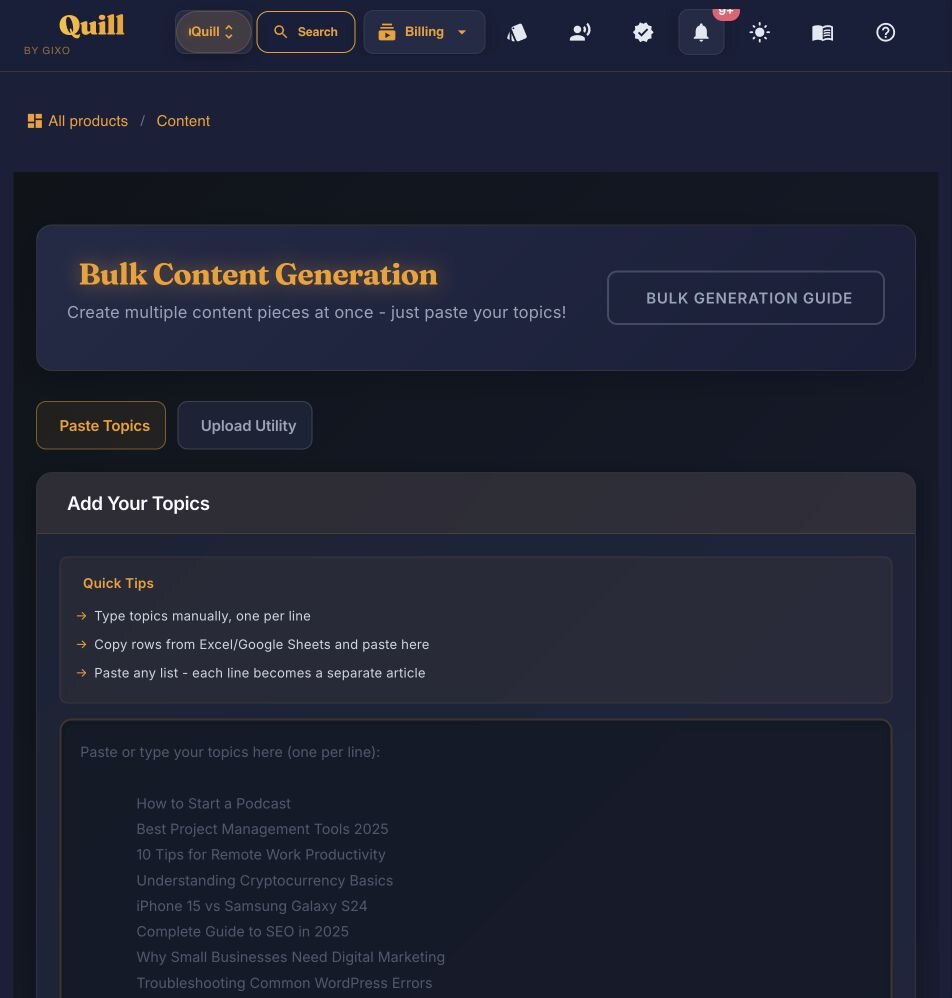
Turn a topic list into a previewable batch