Gixo Quill · content guide
SEO Competitor Analysis
SEO competitor analysis is working out who actually ranks for the searches you want and what they publish to hold those positions. Your search competitors are frequently not your business competitors — the pages beating you are often publishers and comparison sites, not rivals selling what you sell.
What your plan includes. Writing, checks, exports, public share links and publishing to WordPress, Ghost and Medium are on every plan, from $10 per seat a month. Comments and Brand Voice need Professional; Brand Kit and bulk need Business.
What is SEO competitor analysis?
SEO competitor analysis is working out who actually ranks for the searches you want, what they publish to hold those positions, and which of those topics you have no page for. It is a research step that ends in a list of pages to write, or in a decision not to write them.
It belongs before keyword selection rather than after it, because it is the only research that tells you what format the engine expects. Volume tells you a query exists. The results tell you what kind of page is permitted to answer it, which constrains the work far more tightly than any difficulty score.
What the analysis has to answer
- Who ranks, not who competes. Search the terms and record what is actually there. That list is usually a surprise.
- What page types win. If the top results are all comparison pages, a guide will not rank however good it is.
- Which topics they own and you have nothing for. This is the gap that matters — pages they have and you lack.
- Where you already compete and lose. Often cheaper to improve than to write something new.
- What you can honestly add. If every ranking page answers the query well and you have nothing new, the honest call is to spend the effort elsewhere.
- Watch for parasite pages. Some competitors rank on user-generated or off-topic content that is not a strategy worth copying.
Reading the evidence
| Evidence | Tells you | Trap |
|---|---|---|
| Their top pages by traffic | What actually earns, not what they promote | Spam and UGC can dominate the list |
| Their page count by section | Where they invest | Volume is not quality |
| Keywords they rank for and you do not | Topic gaps | Brand terms are not gaps |
| Pages ranking for your target term | The format the engine expects | Ignoring this is why good pages fail |
| Publication and update dates | Whether the topic needs freshness | Old and ranking means structure wins |
Running it
A worked example
The five steps above in one pass, for a query a mid-market payroll product might want: expense policy template.
- Search it and record what is there. Eight of the ten results are HR and finance publishers offering a downloadable template; two are payroll vendors. No accounting firm appears at all. The competitor list is already different from the one the sales team would have written.
- Read the format. Every ranking page carries an actual template, not advice about writing one. That single observation decides the work: a 1,500-word guide to expense policies cannot rank here however good it is.
- Export their inventories and filter. The two vendor pages sit inside a cluster — expense policy template, reimbursement policy, per diem rates, mileage rates, receipt requirements. Strip brand terms and unrelated payroll content and what remains is the map of what you would have to cover.
- Diff against your own routes. You have pricing, a payroll guide, and nothing on expenses. The gap is not one keyword; it is a five-page cluster with a downloadable artefact at the centre of it.
- Test credibility before writing. Does the product touch expenses at all? If it does not, the cluster earns traffic that converts at nothing, and the correct output of the analysis is the decision not to build it.
Under an hour, most of it spent reading results rather than exports. The output is either a five-page plan with a format constraint attached, or a documented reason to spend the quarter somewhere else. Both are successful outcomes; only the spreadsheet with no decision in it is a failure.
How Gixo Quill handles this
Quill's contribution is after the analysis: once a gap is chosen it produces the page in the format the intent demands, and the deterministic overlap check catches the case where the new page would compete with one you already have.
Frequently asked questions
What is SEO competitor analysis?
Identifying who actually ranks for the searches you want, what they publish to hold those positions, and which of those topics you have no page for.
Are my SEO competitors the same as my business competitors?
Often not. The pages outranking you are frequently publishers, comparison sites or marketplaces rather than companies selling what you sell.
What should I look at first?
The actual search results for your target terms. They show which page format the engine expects, which constrains what you should write more than any tool metric does.
How do I find content gaps?
Compare their page inventory to your own routes. A gap is a topic they have a page for and you do not — not simply a keyword where you rank lower.
Should I copy what competitors publish?
Copy the format and the intent, not the content. And check first that their top pages are genuine strategy rather than user-generated or off-topic pages that happen to rank.
How do you find your SEO competitors?
Search your target queries and write down who is actually there. Overlap tools are useful afterwards, but they cannot tell you that the page beating you is a publisher rather than a rival, and that is the finding that changes what you write.
How often should you run a competitor analysis?
Once or twice a year per topic cluster, plus once before committing to any large piece of work. Continuous monitoring produces alerts rather than decisions, and the format a query rewards rarely changes from month to month.
What tools do you need for an SEO competitor analysis?
The search results themselves, and something that exports a competitor's ranking pages. The second is worth paying for at scale. The first is free and carries the constraint — which page format is allowed to rank — that no export will tell you.
Related content guides
Turn the gap into the right page
Quill matches content format to search intent, so a comparison gap becomes a comparison rather than another guide.
Inside Quill
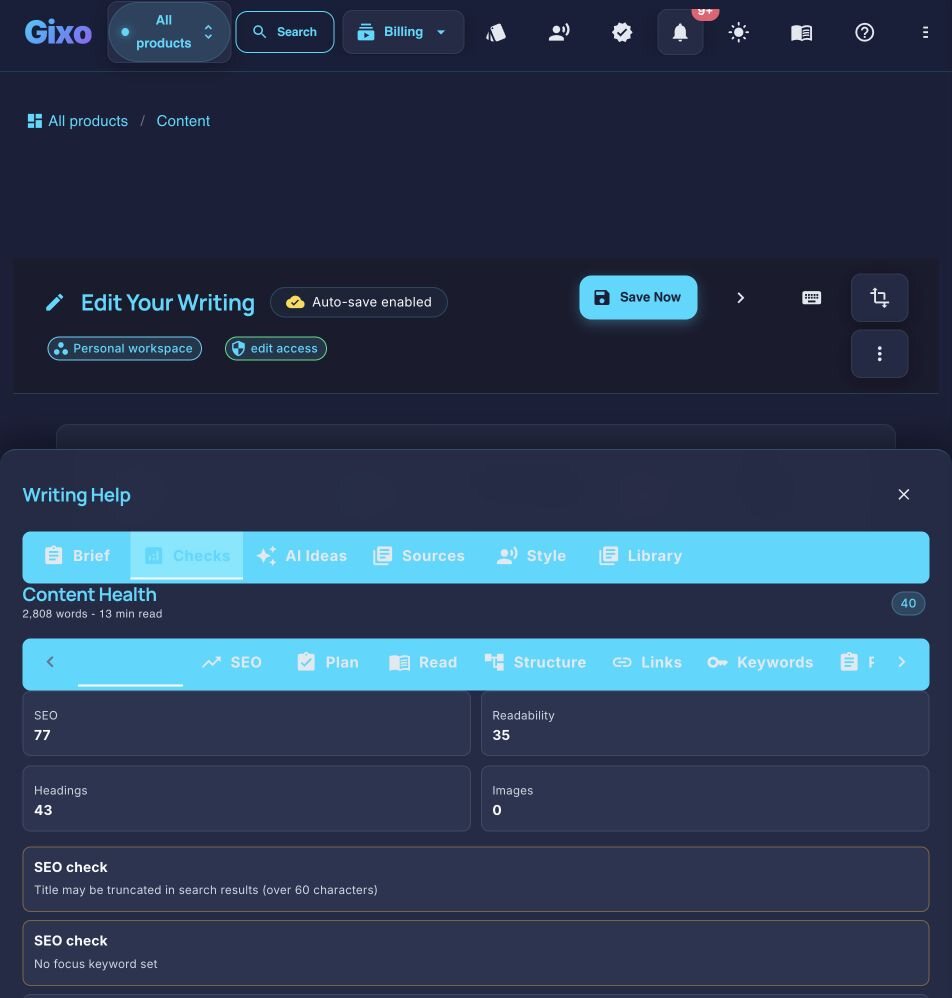
Review concrete content and SEO signals before delivery