
AI Glossary & Definition-Page Generator for Topical Authority
Definition pages are the quiet workhorses of SEO. Each one answers a clear-intent query, and together they tell search engines — and AI answer engines — that you own your domain's vocabulary. Here is how to use a glossary to build topical authority, and how Gixo generates accurate, structured definition pages at scale.
An AI glossary and definition-page generator is a tool that produces accurate, structured definition pages for a domain's core terms at scale, using a dedicated content type that returns a direct definition, context, and related terms in a consistent shape for every term. Each page is generated as a draft — reviewed for accuracy before publishing — because a glossary's value depends on every definition being correct. Generated term-by-term or as a batch across a whole vocabulary, it lets a site cover dozens to hundreds of "what is X" queries with consistent structure and internal linking, which is what builds topical authority for search and AI answer engines.
Why do glossaries build topical authority?
When you publish a clear, accurate definition for every important term in your field, you do two things at once: you capture a stream of high-intent "what is X" queries, and you signal topical depth — that your site understands the subject thoroughly, not superficially. That depth is exactly what modern search and generative engines look for when deciding whom to cite.
Glossaries also compound. Each definition page is an internal-linking anchor that supports your deeper articles, and the set as a whole becomes a reference that other content — and other sites — point back to. It is one of the fastest, most durable ways to establish authority in a niche.
What makes a definition page rank?
What does Gixo's AI glossary and definition generator include?
| Element | What it does |
|---|---|
| Direct, accurate answer | A clear, correct definition in the first lines — the part an AI answer engine lifts verbatim |
| Context and depth | Why the term matters, how it's used, related terms, and an example |
| Consistent structure | Every term page follows the same shape: definition, context, related terms |
| Internal linking | Terms link to related terms and to deeper articles that use them |
| Coverage at scale | Generate term-by-term or as a batch to cover dozens to hundreds of terms |
| Review gate | Every page lands as a draft to review for accuracy before it publishes |
How does content generation work in Gixo's AI glossary and definition generator?
Gixo has a dedicated Glossary content type — a structured template for terms and definitions — so each page comes back in the proven shape: a direct definition, context, and related terms. Generate term by term, or run a list of terms as a batch to cover a whole vocabulary, with your brand voice applied throughout and every page landing as a draft to review before it publishes.
Frequently Asked Questions
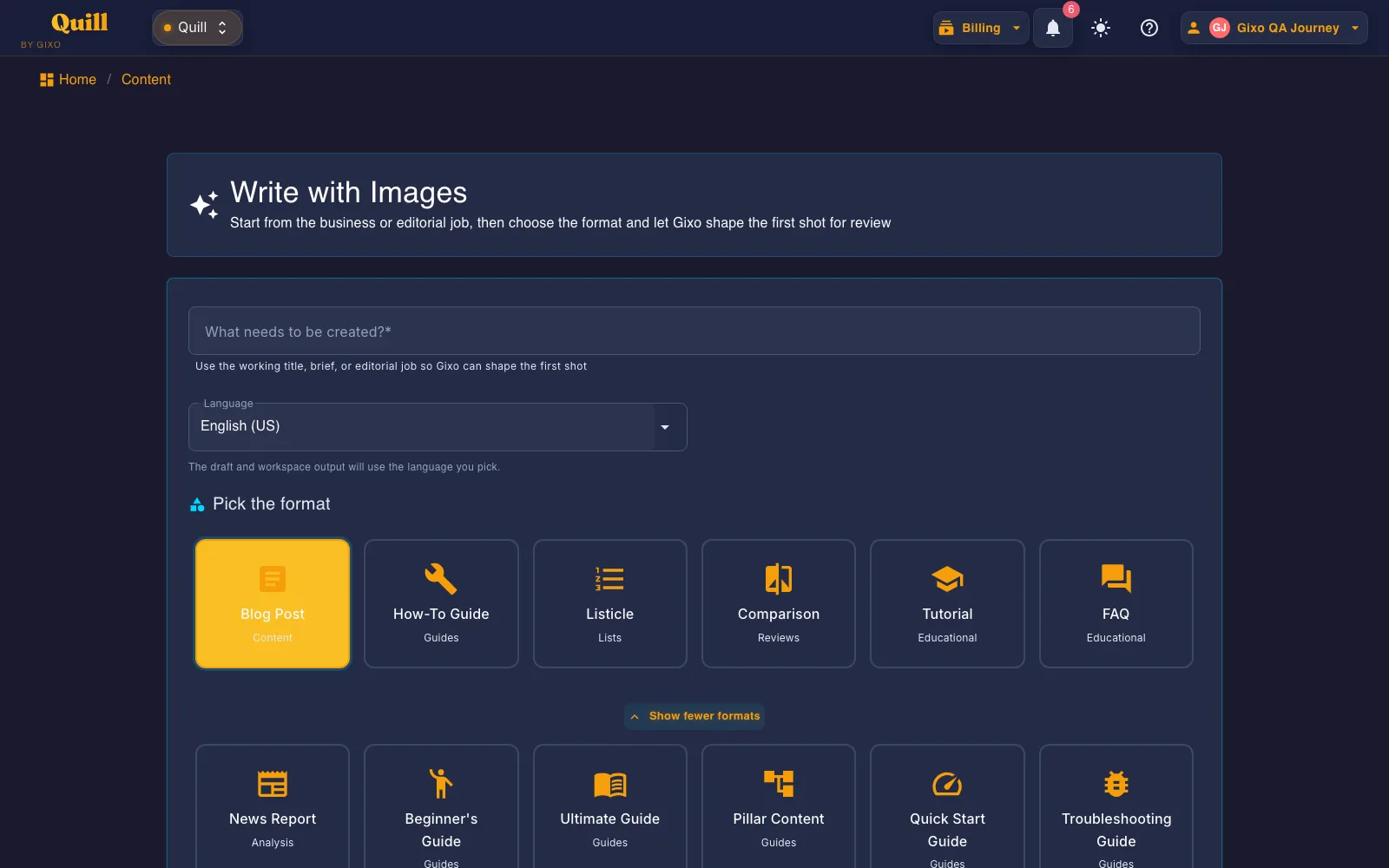
Inside Quill
Choose a content structure before generation
Updated