
Turn your research notes into a polished article
Stop staring at research notes wondering how to start writing. Paste your research, data points, source links, and rough notes into Gixo. AI transforms them into a structured, cited, SEO-optimized article that preserves your findings and adds professional polish.
Turning research into an article means converting research notes, data points, and source links into a structured, cited, SEO-optimized article — without losing the original findings. Gixo does this by letting you paste raw research (notes, tables, URLs, transcripts) and having AI analyze it holistically to propose a logical section structure, preserve source links as formatted citations, and add SEO layers like keyword integration and heading structure. The process takes 10-15 minutes versus 4-8 hours of manual writing, and any supplementary context the AI adds beyond your research is kept distinguishable and removable during review.

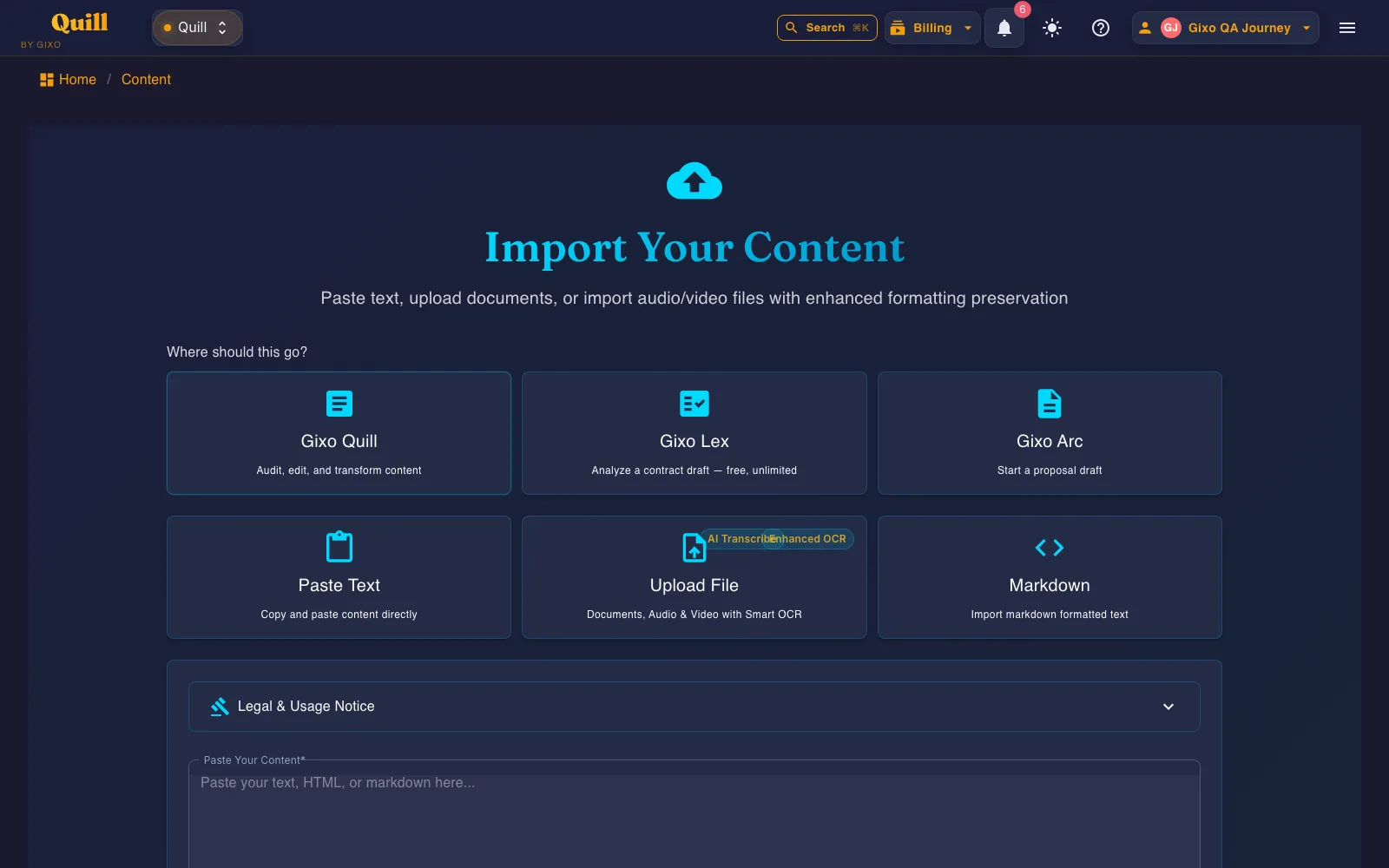
From raw notes and bullet points to published article
Gixo bridges the gap between having great research and publishing a great article.
Drop in research notes, bullet points, data tables, source URLs, or rough outlines. Gixo understands unstructured input and organizes it into a coherent narrative.
AI analyzes your research and creates an optimal article structure with logical flow, proper headings, and smooth transitions between topics.
Source links and references from your research are preserved and properly formatted as citations within the final article. Your credibility is maintained.
Research-based articles get automatic SEO optimization — keyword integration, heading structure, meta descriptions — without diluting your original findings.
Use inline AI editing to expand thin sections, simplify technical language, or adjust the tone for your target audience after the initial generation.
Brand voice settings ensure the article sounds like you wrote it, not a generic AI. Your expertise shines through with professional polish.
Why does the gap between research and writing exist?
Why Market Analysis and Research Notes Stall Before Publication
Researchers, analysts, and subject-matter experts frequently accumulate deep knowledge on topics but struggle to convert that knowledge into publishable articles. The research phase involves collecting data, reading studies, taking notes, and synthesizing findings — all activities that produce raw material, not finished content. The leap from a folder of notes to a polished 2,000-word article requires a different skill set entirely: narrative structure, audience awareness, readability, and SEO knowledge.
This gap costs organizations real money. Internal research that never gets published represents wasted expertise. Market analysis that lives in a spreadsheet cannot attract organic traffic. Conference notes that sit in a document never become the thought leadership articles that build authority. Gixo collapses this gap by handling the transformation automatically, letting researchers focus on what they do best — researching — while AI handles the writing and structuring.
How AI Structuring Differs from Manual Outlining and Applies SEO Best Practices
Manual outlining forces researchers to step back from their material and think about the audience, which is valuable but time-consuming. AI structuring analyzes the research material holistically — identifying themes, grouping related data points, finding the narrative thread, and proposing a logical sequence of sections. The researcher reviews and adjusts rather than building from scratch. This preserves the expert's judgment while eliminating hours of organizational work.
The result is an article that reads naturally, cites its sources properly, and follows SEO best practices for heading structure and keyword placement. Readers get the researcher's insights wrapped in professional formatting that search engines reward with higher rankings.
Who uses it
How do you turn research into an article with Gixo?
Collect your notes, data, source links, and key findings in any format.
Drop everything in and select your target article format and length.
AI organizes your research into a structured article. Adjust the outline if needed.
Export the finished, cited, SEO-optimized article to your blog or CMS.
Tips for better results
How does turning research into an article with Gixo compare to manual writing or ChatGPT?
| Method | Gixo | Manual Writing | ChatGPT |
|---|---|---|---|
| Input format | Any notes, data, URLs | Must be organized | Requires structured prompts |
| Structure quality | AI-optimized flow | Writer-dependent | Often disorganized |
| Citation handling | Auto-preserved | Manual formatting | Often lost or fabricated |
| SEO optimization | Automatic | Manual | None |
| Time to article | 10-15 minutes | 4-8 hours | 30-60 min + editing |
| Brand voice | Trained & applied | Natural but slow | Generic |