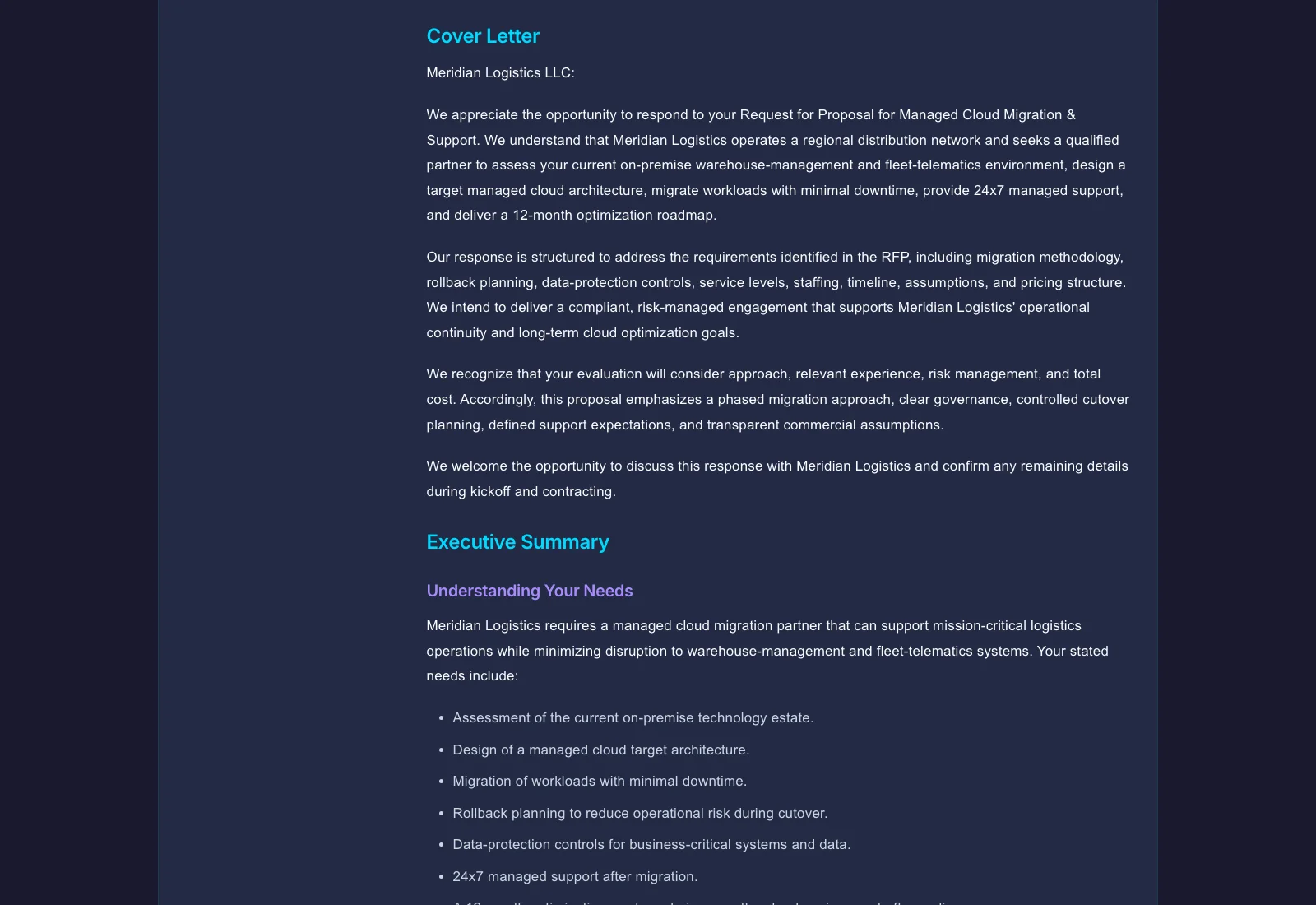
Can it write a project proposal or a research proposal?
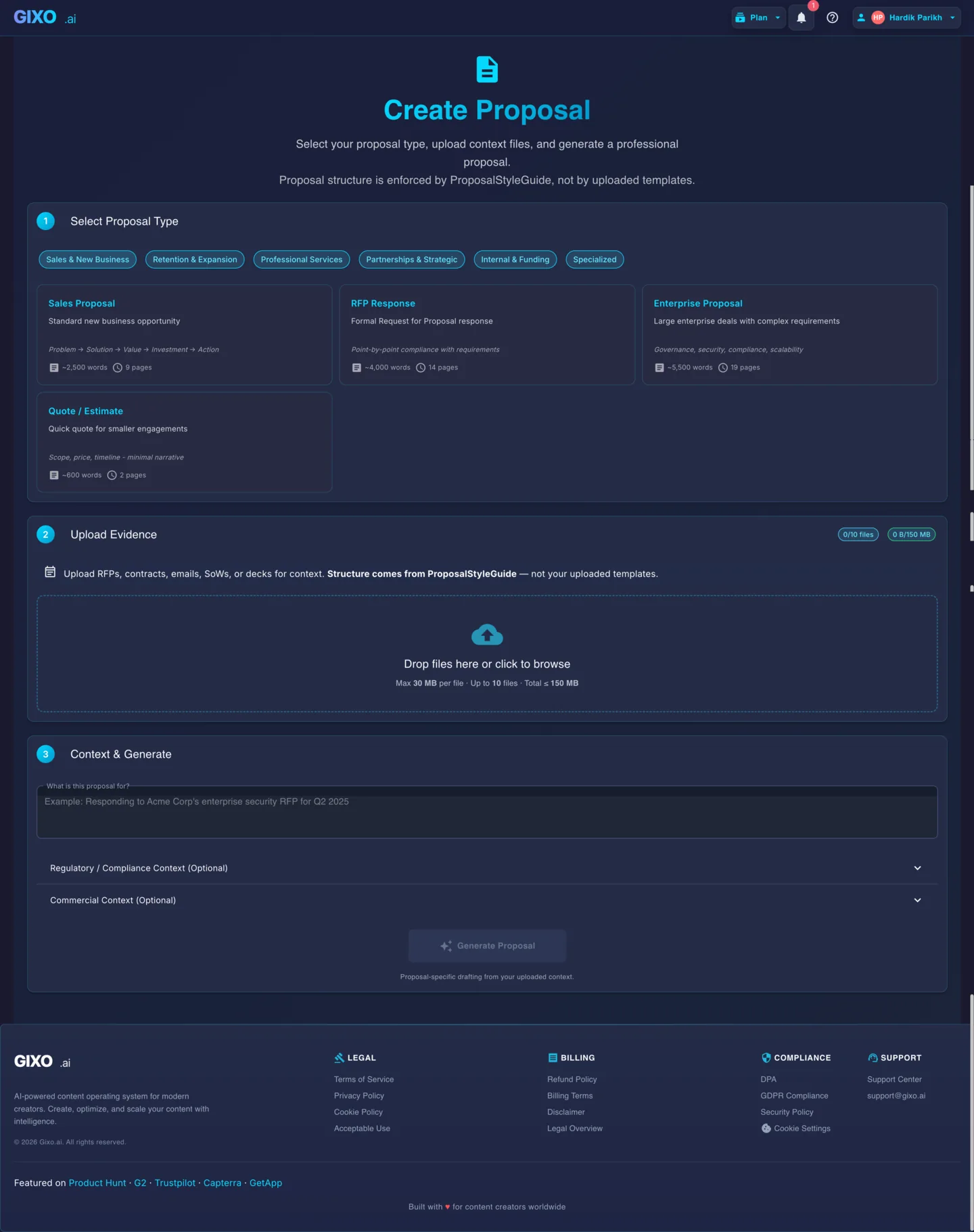
Yes. Arc covers 21 proposal types, including project proposal, research proposal, consulting proposal, grant proposal, sponsorship proposal, sales proposal, partnership proposal, quote/estimate and tech implementation proposal. Each type carries its own drafting structure, so a research proposal opens on the question and method rather than on pricing, and a project proposal leads with scope, milestones and dependencies. You pick the type, supply the source material, and review the draft before it goes anywhere.
What should an AI business proposal generator produce?
It should turn the buyer's request and your supporting evidence into a complete first draft: buyer context, proposed approach, scope, deliverables, timeline, proof, assumptions, commercial terms, and next steps. The team should still confirm every requirement, case study, price, and commitment before the proposal leaves the workspace.
What is the best AI for proposal writing?
The best fit depends on the input and review process. A general assistant is useful for rewriting a paragraph; a business proposal writer should accept the RFP, meeting notes, prior deck, and supporting documents, organize the draft around the buyer's criteria, and leave the result editable and reviewable. Arc is built for that source-to-draft job, not for CRM operations, and it can send the finished proposal for simple electronic signature.
Can Arc fill a buyer questionnaire spreadsheet or Word form?
When the buyer issues a structured questionnaire as an XLSX or DOCX file, Arc deterministically writes the answers from your response workspace into a copy of that file, leaving the file you uploaded unchanged and preserving the workbook formulas, styles, and layout as well as Word content controls and response-table cells. A direct export writes each answered requirement whatever its review status; only an approved release requires every answered active requirement to be approved first. A preflight previews every target before writing and blocks on protected sheets, formula cells, merged cells, dropdown values the buyer does not allow, missing required or scored answers, and conflicting requirements, so a person still runs the final check and submits.
How does Arc deliver a proposal and collect a simple electronic signature?
Arc creates recipient-specific tracked view-only or view-and-download links. You can send the link directly by email from Gixo or copy it to send yourself, and receive alerts when buyers view, download, ask questions, or accept; Arc does not submit the proposal to a procurement portal. Arc includes native simple electronic signature: a frozen PDF snapshot, named signers on tokenized links, typed-name adoption, and a signed PDF with an appended audit certificate. It is not a qualified or certificate-based digital signature.
What types of proposals can Gixo generate?
There are 21 proposal types, including sales, consulting, RFP, renewal, partnership, grant, and business case work.
What should I upload before I start?
Upload the RFP, notes, decks, spreadsheets, or reference files that explain the deal. Gixo uses that material to shape the first draft.
Is Gixo a full proposal operations platform?
No. Gixo is strongest at helping you create and improve the draft. It includes simple electronic signature with a signed PDF and audit certificate, but it is not trying to replace CRM or proposal ops platforms.
How does Gixo compare to template-first tools?
Template tools are great when every proposal looks almost the same. Gixo is better when the source material is messy and you need help shaping it into a clear first draft.
Can several people work on one proposal?
Yes, by taking turns. In a shared team proposal everyone can see who else has it open and comment instead of passing versions back and forth. Edits are not merged, so agree who works on which section at a time; if two saves conflict, Arc asks you to compare the versions and choose what to keep.
What export formats are available?
You can export proposals as PDF, DOCX, or HTML while keeping the structure and formatting intact.
Can I make the proposal sound more formal or more direct?
Yes. You can adjust tone and detail level so the draft better matches procurement, consulting, technical, or sales conversations.
What happens after the first draft is generated?
You can edit the draft, improve weak sections, bring in reviewers, and export the final version when it is ready.
What is an AI proposal generator?
An AI proposal generator is a tool that turns source material you already have -- an RFP, notes, a deck, or account context -- into a structured proposal draft, instead of starting from a blank page or a fixed fill-in-the-blank template. Gixo's version reads your uploaded files, applies one of 21 proposal-type structures, and produces a first draft you can edit, review with your team, and export as PDF, DOCX, or HTML.
How does an AI proposal generator work?
You upload the files tied to the deal (RFP, notes, deck, spreadsheets, reference material) and choose a proposal type. Gixo reads that context and generates a structured first draft with the sections buyers and approvers typically expect. From there you tighten specific sections with inline AI help, bring in reviewers, and export the final version.
Are there document generation tools that turn meeting notes into proposals?
Yes. Gixo's AI proposal generator (Arc) accepts meeting notes as one of its uploaded source files alongside RFPs, decks, spreadsheets, and other reference material, and turns that content into a structured first draft using one of 21 proposal-type structures, which you can then edit, review with your team, and export as PDF, DOCX, or HTML.
What is proposal automation software?
Proposal automation software reduces repetitive work across source intake, proposal structure, first-draft creation, review, and document export. Gixo Arc focuses on source-grounded drafting and collaborative improvement, and includes simple electronic signature for the finished proposal; it does not replace CRM, qualified or certificate-based signing, pricing approval, legal review, or a full proposal management platform.
How can you create a business proposal with AI?
Start with a proposal brief and the buyer's requirements, then upload discovery notes, the RFP, approved service information, case studies, scope details, and other relevant sources. Choose a proposal type, generate the first draft, validate every claim and commitment, improve weak sections, and export only after accountable reviewers approve it.
How should you choose the best proposal automation software?
Match the tool to the job. For source-to-draft work, assess source-file intake, grounding, proposal structures, editing, collaboration, reviewability, and export. Arc also covers simple electronic signature on the finished proposal. If you also require CRM synchronization, approval routing, qualified or certificate-based e-signature, engagement analytics, or a governed content library, evaluate a broader proposal management system alongside the writing tool.