
Bring useful inputs
Set the reader, purpose, required points, sources and section budgets. Review extracted material from an upload, paste or URL before using it as grounding.
Quill blog post templates and formats
Quill supports 49 direct-create content formats, including reusable blog post templates alongside checklists, FAQs, troubleshooting guides, comparisons, buying guides, and product descriptions. Inspect the section shape first, then open the selected format in the self-service workflow.
These cards preview format structure, not pre-written customer content.
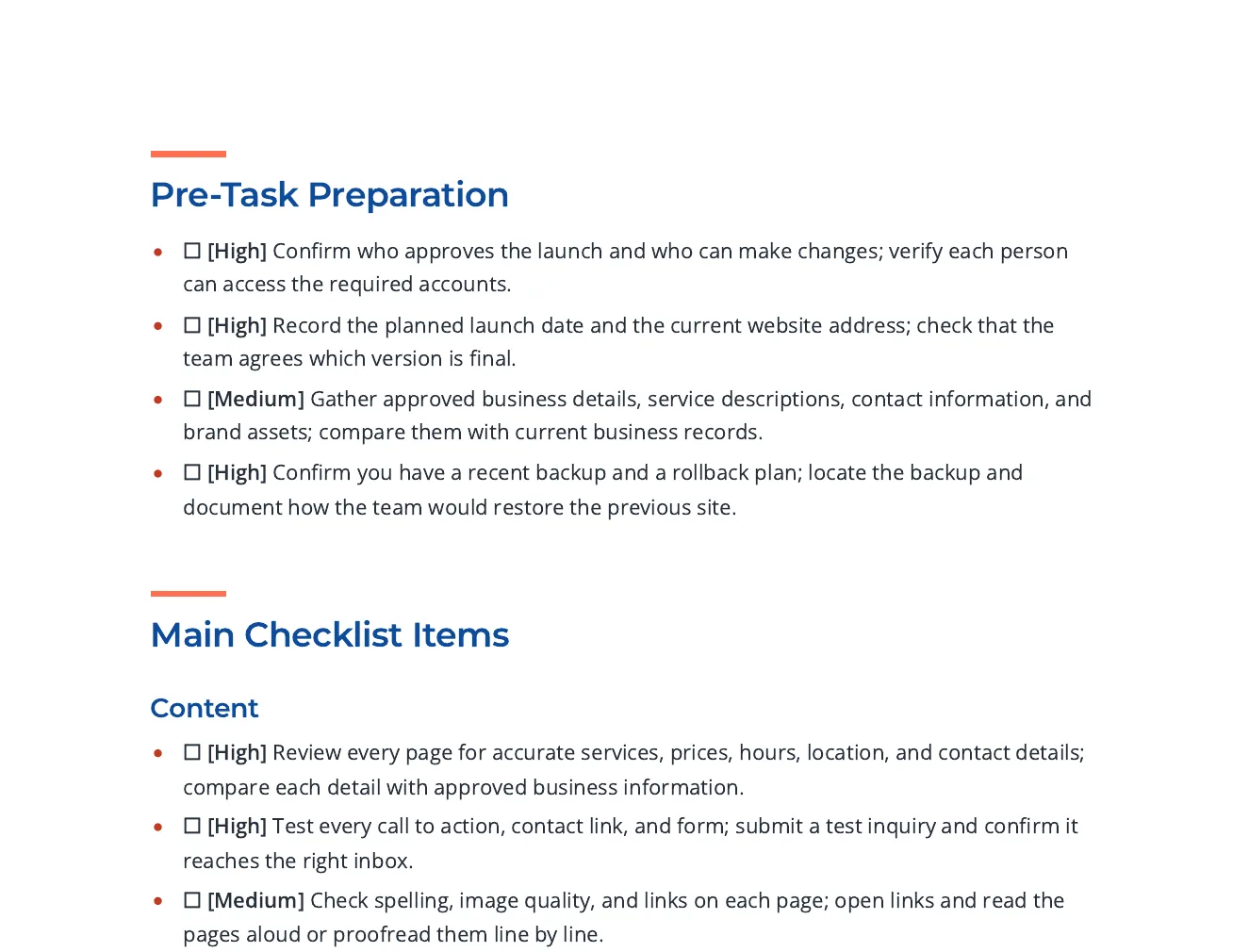
This is an actual Quill export, with the input brief available alongside it. Use the workflow below to connect source material, structure, editing and delivery.
Checklist items grouped by phase, each with a priority tag and a way to check it, with links to Google, W3C, web.dev and FTC guidance for search, accessibility, performance and security.
Write an actionable checklist for a small business about to launch a new website. Group the items under content, search visibility, accessibility, performance, security and privacy, analytics, and what to verify on launch day. Each item should be a single action someone can tick off and should say how to check it. Cite published guidance for the search, accessibility and security items.
Open the full export and compare its statements with the cited sources before reuse.
Set the reader, purpose, required points, sources and section budgets. Review extracted material from an upload, paste or URL before using it as grounding.
Review the outline, then the draft. Add structured blocks, edit selected passages and use Image Studio for permitted generation, photo selection and responsive insertion; retain attribution where required.
Review citations, wording and metadata. Use the supported export or connected destination for the current account; Markdown handoff and a live publishing connection are different delivery paths.
Power Edit starts from an active selection. You can give iterative or voice-transcribed instructions, choose a reply language, stop a streamed response, inspect the result and explicitly replace the selected range. Full-document context is reference material. Structured blocks have typed fields, item-level regeneration and previews; their AI field assistance is separate from their layout.
Use builder or advanced prompts with the subject and document context. Shape style, mood, lighting, palette, composition, camera and supported image dimensions. Inspect generated alternatives or a selected real photo, retain required source attribution and edit alternative text before insertion. Finishes and prompt edits create a new result; compare it with the original instead of assuming an edit is lossless.
Import options depend on the source type: pasted text, Markdown or HTML; document extraction; spreadsheet cells; image OCR; and supported media transcription. Review extracted material before drafting. Export settings include the supported format, theme, author, spacing, headers, footers and page appearance. Inspect the actual download because HTML, print PDF and editable Word represent structure differently.
A source-led draft needs human review. HTML, PDF and editable Word have different layout fidelity; connected publishing support is destination-specific.
Inside Quill
Curated starting points
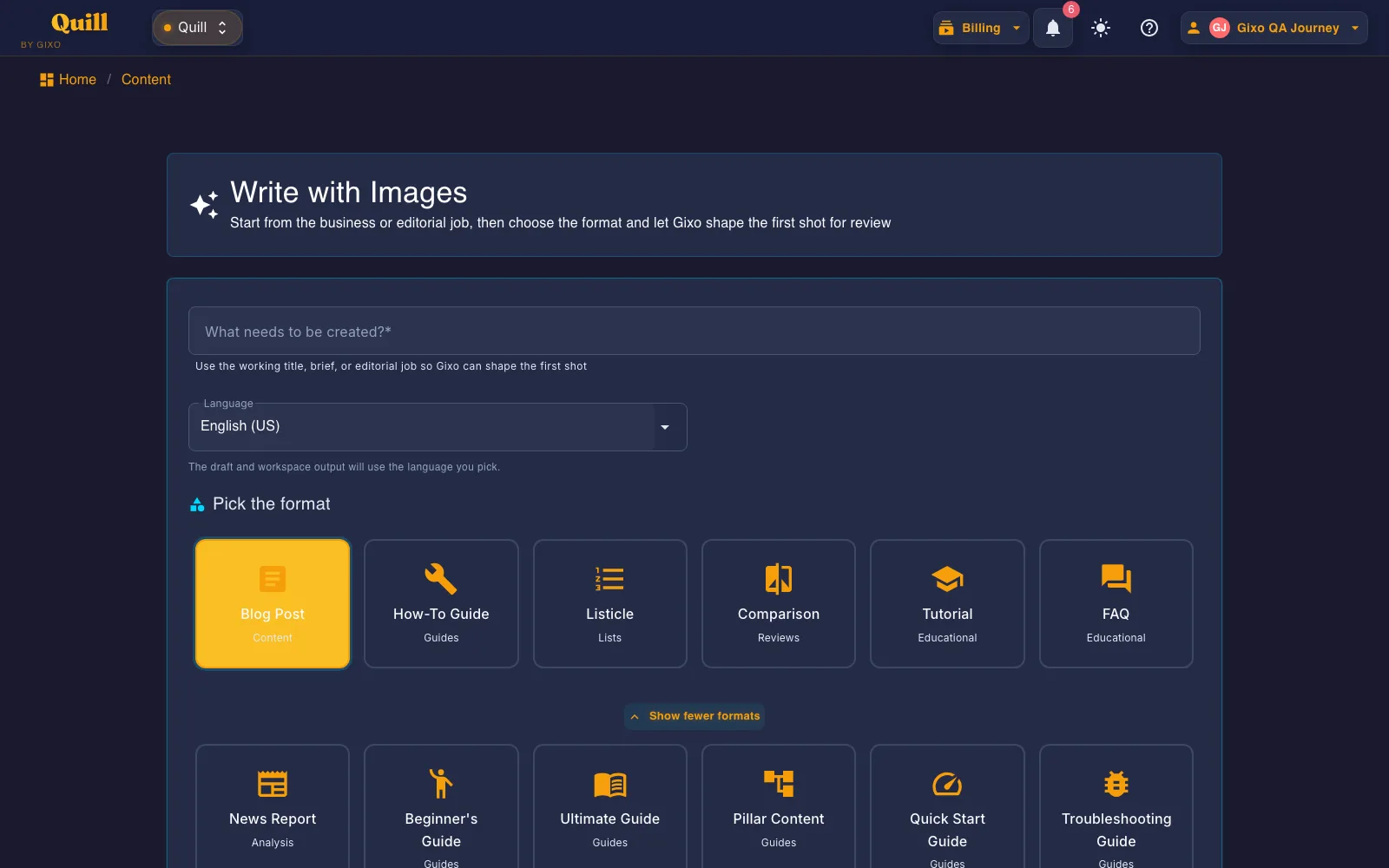
Start from a blog post template — such as Blog post, What-is article, How-to guide, Beginner's guide, Pillar content, or Ultimate guide — or jump directly to non-blog formats including Checklist, FAQ, Troubleshooting guide, Comparison, Buying guide, and Product description. To begin, filter by reader job, expand Preview reusable brief to inspect the starting topic and review check, then click Use format and starting topic to open Quill with the structure prefilled. Generation access follows the current Quill plan.
Showing 2 formats for readers who need to make a decision. Expand a card to inspect its brief shape, then open Quill with the format and starting topic prefilled.
Best for: A buyer or operator weighing criteria, trade-offs, and fit.
Best for: A category-level decision aid before a reader evaluates individual products.
Choose by reader job
Pick the structure that matches what the reader needs to understand or decide. Keep editorial blog post templates separate from operational or commerce formats like checklists and product descriptions; you can still change headings and sections in the Quill editor.
Use a how-to guide when order, prerequisites, and verification steps matter more than exhaustive topic coverage.
Use pillar content when the page must orient readers, define the topic, and connect to a broader supporting cluster.
Use a comparison when criteria, trade-offs, source quality, and fit matter more than declaring one universal winner.
After drafting, choose a web layout and visual theme independently: compare Reader and Guide blog HTML templates, compare the six blog layouts and eight themes, inspect the portable HTML samples, or follow the responsive HTML export guide.
Self-service from first draft to delivery
Start a 14-day, no-card trial to use Quill's generation and review workflow. Prefer to inspect first? The Content Health Check stays free and anonymous.
Updated