
Make Confident Decisions with Structured Briefs
Generate decision-support documents with structured options analysis, pros and cons evaluation, risk assessment, and clear recommendations. Make better decisions faster with evidence-based frameworks.
An AI tool for decision briefs generates structured, evidence-based decision documents in minutes: it lays out options analysis, a Pros/Cons framework, risk assessment, and structured recommendations, running each brief through a multi-stage pipeline with automatic [1],[2] citations and number checks against the source documents you uploaded. Gixo is one such tool, adding a 20+ semantic block editor (Comparison Table, KPI, Pros/Cons blocks) and Brand Dictionary term checks so briefs are board-ready on export to PDF.
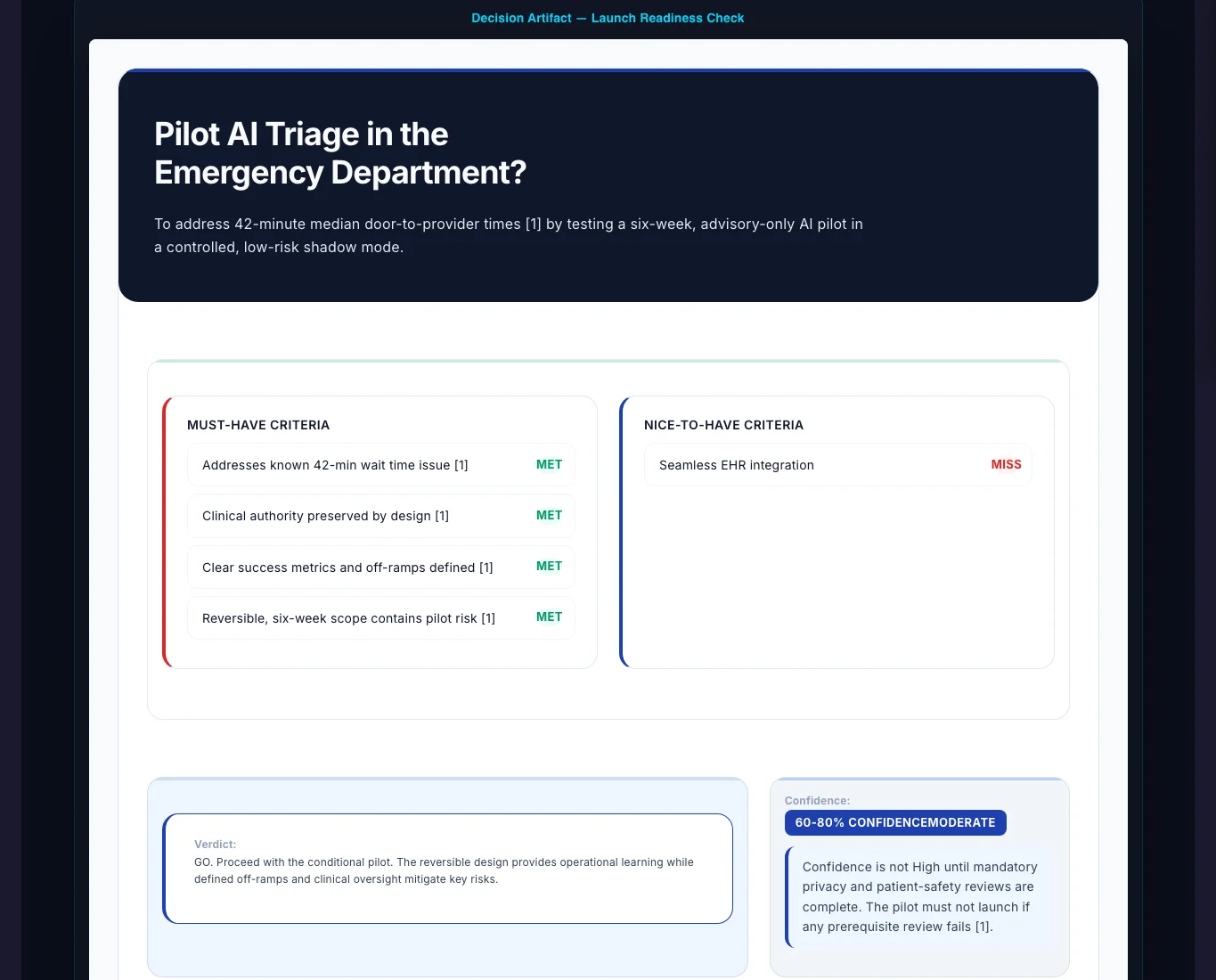
What Is an AI Tool for Decision Briefs?
Transform complex business decisions into structured analyses. Gixo generates the framework, evidence, and options so you can focus on judgment and execution.
Present multiple options with detailed analysis of each alternative. Gixo's number-check stage checks your cost, timeline, and resource figures against the source documents you uploaded so your analysis traces back to your data.
Structured evaluation of advantages and disadvantages using dedicated Pros/Cons blocks in the block-based editor. Weight factors by importance and present a balanced view that supports informed decision-making.
Identify and categorize risks for each option using Pros/Cons blocks. Evaluate likelihood, impact, and mitigation strategies with source-grounded data so decision-makers understand the full risk landscape before committing.
Generate clear, evidence-backed recommendations with rationale. Use Quick AI for six instant rewrite actions or Power Edit for a full AI chat dialog to refine the recommendation before presenting to stakeholders.
Analyze potential impact across financial, operational, strategic, and organizational dimensions using KPI and Comparison Table blocks. Brand compliance applies your Brand Dictionary's preferred and banned terms so the output uses your organization's terminology; voice is yours to review.
Ground recommendations in cited evidence, with inline [1], [2] references to the files you upload and a Sources section. Gixo's multi-stage pipeline includes dedicated citation and number-check stages so decision-makers can trace a cited claim to its source.
Why Most Decision Documents Fall Short
Business decisions stall when the supporting documents lack structure. Executives receive dense email threads, slide decks with buried conclusions, and verbal recommendations with no paper trail. The result is delayed action, revisited discussions, and decisions made on incomplete analysis that costs organizations time and credibility.
Structured Decision Briefs Change the Outcome
A well-structured decision brief forces clarity. It names the options, weights the criteria, identifies the risks, and presents a recommendation with supporting evidence. Gixo runs every brief through a multi-stage pipeline that, when you upload source documents, includes number checks against them and automatic citations, so the data behind your recommendation traces back to your sources. When every stakeholder reviews the same structured document, alignment happens faster, objections surface earlier, and the decision itself becomes defensible long after the meeting ends.
How It Works: From Options Analysis to Recommendation
Describe the decision you need to make, the options on the table, and the criteria that matter most. Specify the audience — board, executive team, or department leadership.
Gixo runs the brief through a multi-stage pipeline -- generating content, checking your figures against the source documents you uploaded, adding automatic [1], [2] citations, applying your Brand Dictionary terms, and checking word count and structure.
Edit with 20+ semantic blocks including Pros/Cons, KPIs, and Comparison Tables. Use Quick AI for instant rewrites or Power Edit for deeper AI-assisted revisions. Save the brief to a workspace for real-time collaboration with your team.
Export the decision brief as a professional PDF. Present a structured, evidence-based analysis that gives stakeholders confidence in the decision-making process.
How Does an AI Tool for Decision Briefs Compare to ChatGPT or a Consulting Firm?
| Capability | Gixo | Manual Analysis | ChatGPT | Consulting Firm |
|---|---|---|---|---|
| Structured decision framework | Built-in | Manual | Unstructured | Yes |
| Options analysis | Comprehensive | Time-intensive | Surface-level | Deep |
| Auto [1],[2] citations | Multi-stage pipeline | Manual research | No citations | Manual |
| Number checks | Yes | Manual | No | Yes |
| Semantic block editor | 20+ blocks | None | None | N/A |
| Time to deliver | Minutes | Days | 30 min | Weeks |
| Quick AI + Power Edit | Built-in | None | None | N/A |
| Brand compliance | Brand Dictionary terms | Variable | No | Yes |
Who Should Use an AI Tool for Decision Briefs?
Teams across industries rely on structured decision documents to move faster and reduce risk.
Get Sharper Recommendations Every Time
Frequently Asked Questions
Updated