
How many words are in a book?
Most adult novels run between about 80,000 and 100,000 words, the range Reedsy and Writer's Digest both centre on; fantasy and science fiction often reach 100,000 to 115,000, young adult 55,000 to 80,000, and middle grade 20,000 to 55,000. Nonfiction commonly runs 50,000 to 80,000 words. A novella is 17,500 to 39,999 words and a short story under 7,500. These are publishing conventions, not rules — the sources below disagree at the edges, so each figure is attributed.
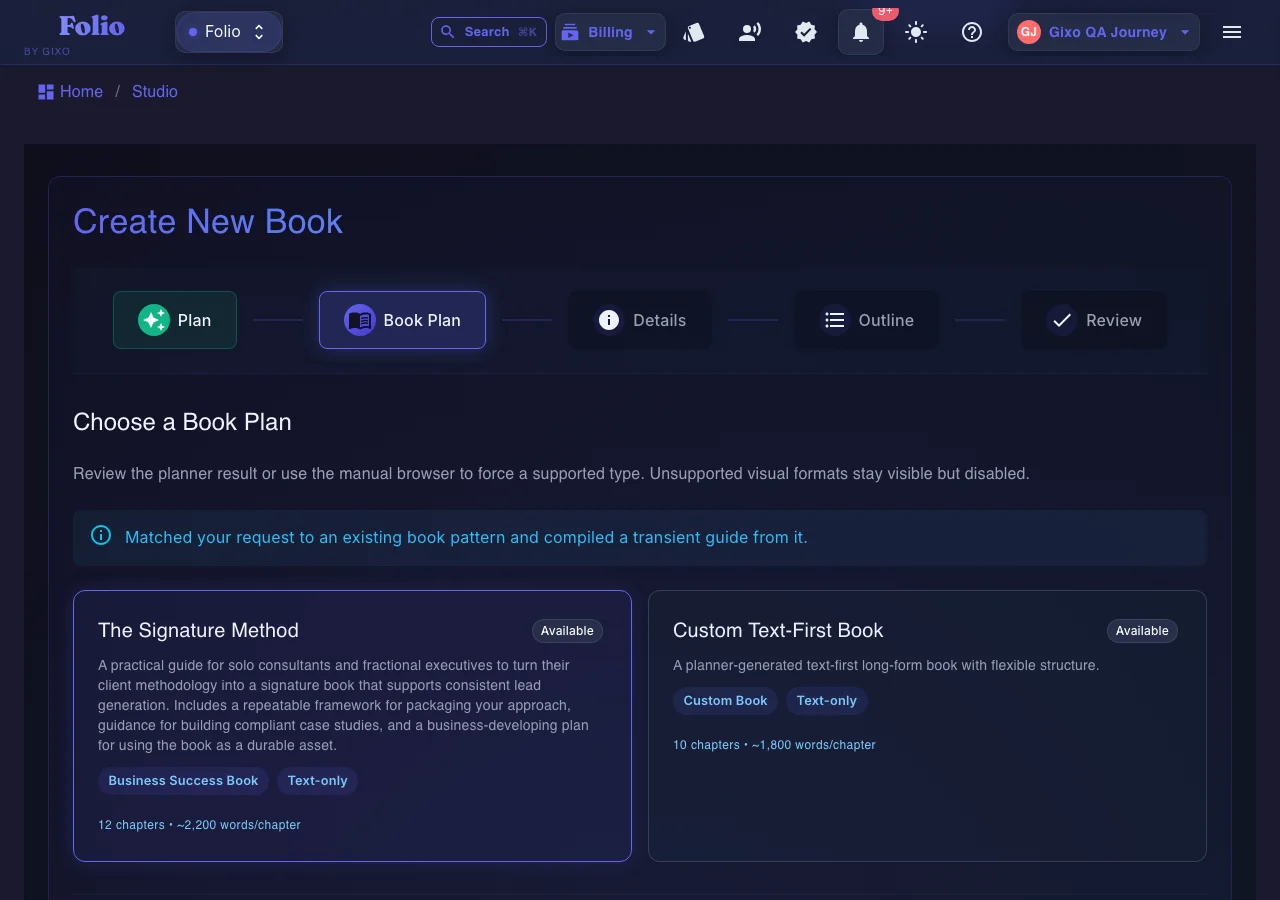
Use the persistent book workspace when the outcome is a real guide, authority book, training manual, client asset, or exportable edition.
If your manuscript is already finished and you only need specialist formatting or a dedicated fiction system, a focused tool may be the simpler choice.
Word counts by genre, from three publishing sources
Figures read from each source on 25 September 2026. They are conventions for a debut or typical book; established authors and some imprints run outside them.
| Category | Reedsy | Writer's Digest (Chuck Sambuchino) | Jericho Writers |
|---|---|---|---|
| Adult novel | 80,000–100,000 (literary) | 80,000–89,999 as the safe range | 70,000–120,000; about 90,000 on average |
| Fantasy and science fiction | 100,000–115,000 | 100,000–115,000 | Up to 180,000–200,000+ only if exceptional |
| Romance | 80,000–100,000 | Within the 80,000–89,999 range | 50,000–60,000 for category romance; 75,000–100,000 longer |
| Thriller and mystery | 80,000–100,000 | Within the 80,000–89,999 range | 75,000–120,000 |
| Young adult | 55,000–80,000 | 55,000–79,999 | 50,000–70,000 |
| Middle grade | 20,000–55,000 | 20,000–55,000 | Not stated |
| Memoir | 80,000–90,000 | 80,000–89,999 | 70,000–120,000 |
| Nonfiction | 50,000–80,000 | Not stated | 70,000–120,000 for popular nonfiction |
| Novella | 17,500–40,000 | Not stated | Not stated |
| Short story | Under 7,500 | Not stated | Not stated |
Reedsy's figures are from its guide to novel word counts and its chapter-length guide; Writer's Digest's are from Chuck Sambuchino's word-count post; Jericho Writers' are from its novel word-count guide; the novella and short-story thresholds match the Science Fiction and Fantasy Writers Association's Nebula Award categories. All were read on 25 September 2026.
Reedsy's guidance for adult fiction is 2,000 to 4,000 words per chapter, and the novels it analysed ranged from about 2,000 to 5,000. Nonfiction chapters vary more, because each chapter's length follows the job it does; a practical guide often uses shorter chapters so each can be read in one sitting.
Consistency matters more than the number. A chapter less than half the average length, or nearly twice it, is worth a second look — the free Chapter Balance Checker flags those.
At about 300 words a printed page for a 6 × 9 paperback — Reedsy's rule of thumb — 80,000 words is about 267 pages and 100,000 about 334. At a smaller 5 × 8 trim, nearer 250 words fit on a page, so the same 80,000 words is about 320 pages. The page count calculator does this for any word count and trim.
Choose the range for your category, divide it by a sensible chapter length, and you have a chapter count to outline against. Gixo Folio plans a book this way before drafting — a chapter list with a target length for each — so the draft lands inside the range instead of discovering its length at the end.
Frequently Asked Questions
Tools and guides for planning length
Turn a word count into pages, chapters and a plan.
More Gixo Folio pages
Related book writing, publishing, and alternative pages.