
AI Content Platform Pricing Models Explained (2026)
Per-word, per-article, subscription, and credit-based — the four ways AI content platforms charge, how each really works, and the trap that makes the cheapest headline price the most expensive choice. Because the real cost of content is in the finishing, not the first draft.
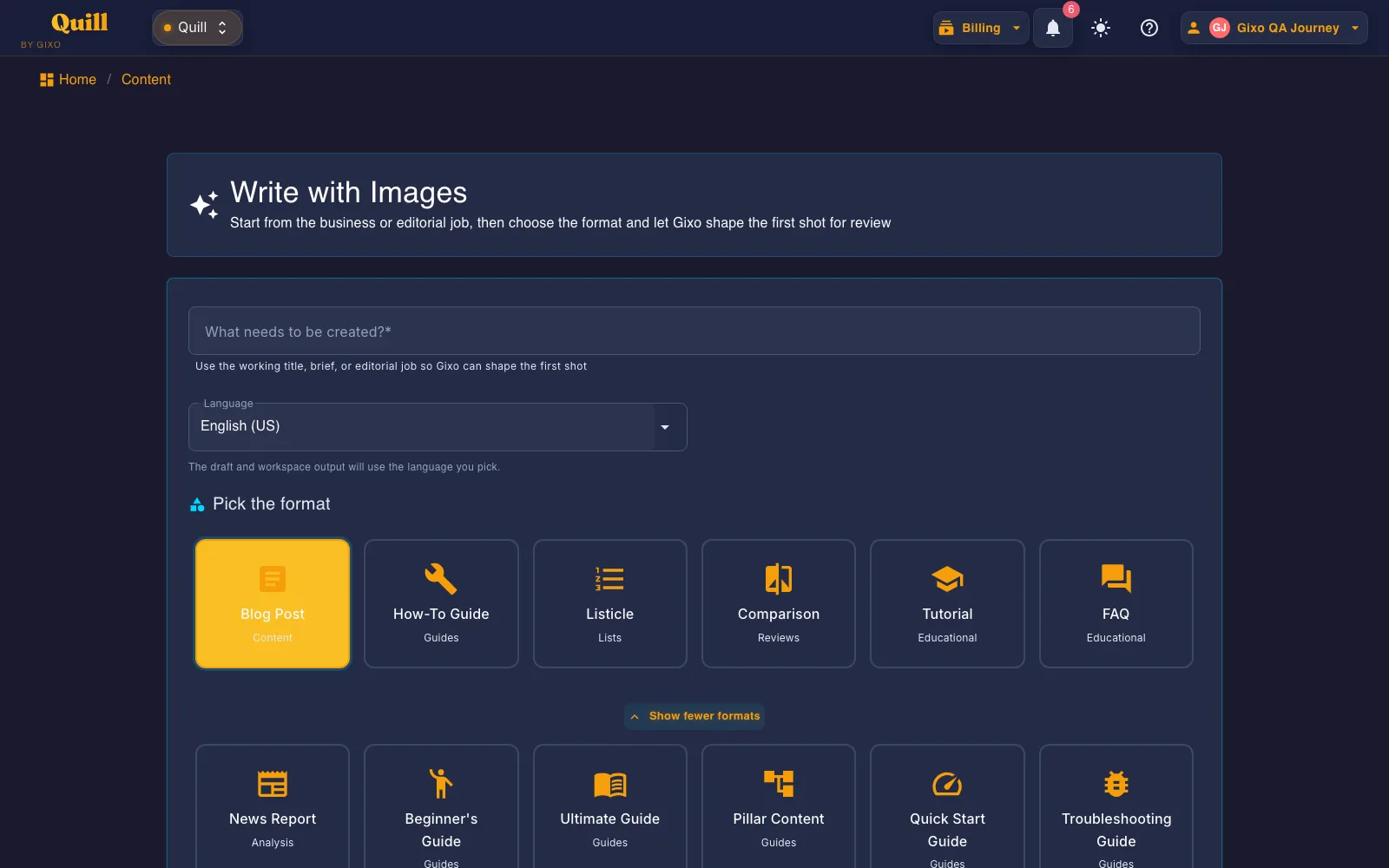
AI content platforms charge in one of four ways: per word, per article, per subscription tier with a monthly allowance, or per credit. All four resell the same underlying unit — the token, which runs about 750 words per 1,000 tokens in English — so the model you choose changes your risk profile more than it changes the cost of generation. Gixo Quill uses subscription pricing: five paid plans at $10, $59, $79, $99, and $129 per seat per month, with a 14-day no-card trial and no free tier. The number that decides your real spend is cost per published asset, not price per word, because human review is usually the larger line item.
What you are actually paying for
Under every pricing model is the same raw unit: the token. A token is roughly three-quarters of a word in English, and platforms pay their model providers per token for both your prompt and the output. They then translate that token cost into something easier to buy — a price per word, a monthly word limit, or a pool of credits.
On top of the raw token cost sits the platform value layer: the editor, brand-voice controls, SEO tooling, collaboration, and publishing. When you subscribe to a content platform you are not paying for words on a page — you are paying for the system that turns a generation into a finished, publishable asset. That distinction is the key to comparing prices honestly.
The four pricing models
How the four pricing models compare
The same four rows, side by side: what each model bills you for, who it suits, and where the bill surprises people.
| Pricing model | What you are billed for | Best fit | Main risk | Usual cause of a surprise bill |
|---|---|---|---|---|
| Per-word | Each word (in practice, each token) the model generates | Sporadic or unpredictable volume | Treats content as a commodity and prices only the draft | Prompt and system text counted alongside output |
| Per-article | A flat price for each finished piece | Steady output of similar-length pieces | "An article" is defined differently by every vendor | Short pieces billed at the same rate as long ones |
| Subscription / tiered | A recurring seat or plan fee with a monthly allowance | Predictable, ongoing production | Features and seats are gated to higher tiers | Allowance resets monthly; unused volume is forfeited |
| Credit-based | Credits spent per action, at different rates per action | Mixed workloads across many content types | What one credit buys varies by platform and action | Regeneration and revisions each spend credits again |
The per-word trap
The most common pricing mistake is choosing on price-per-word alone. A cheap rate looks like a win until you add the part no one quotes: the cost of human oversight. A draft that needs heavy fact-checking, rewriting, and formatting before it is publishable can cost far more in labor than a slightly pricier tool that ships review-ready work.
So compare total cost of ownership, not the sticker. Estimate pieces per month and average length, convert to tokens or credits, and then add the real line item: the hours your team spends finishing each piece. The cheapest generation is rarely the cheapest finished asset.
How Gixo thinks about pricing
Gixo is priced around finished work, not raw words — the workspace, evidence grounding, review workflow, and publishing that take a generation to a publishable asset. That is deliberate: per-word pricing optimizes the cheap half of the job (the draft) and ignores the expensive half (the finish).
Plans are organized by the volume and capabilities a team needs rather than a per-word meter. Quill publishes five paid rungs, all billed per seat per month, with a 14-day no-card trial and no standing $0 plan. For what each tier includes, see Gixo Quill or the pricing page.
| Quill plan | Price per seat / month | Seat minimum | Annual list price per seat | How you buy it |
|---|---|---|---|---|
| Lite | $10 | 1 seat | $90 | Self-serve checkout |
| Starter | $59 | 1 seat | $599 | Self-serve checkout |
| Professional | $79 | 3 seats | $799 | Self-serve checkout |
| Business | $99 | 5 seats | $999 | Self-serve checkout |
| Enterprise | $129 | 10 seats | $1,299 | Azure Marketplace or private offer |
There is no free Quill tier. Evaluation runs on a 14-day trial with no credit card; after it ends, continued generation needs a paid plan and existing work stays viewable in your workspace. Quill covers 48 direct-create content formats plus 2 transformation-only formats, 90 language and locale options, and export in HTML, Markdown, and PDF, so a seat is priced against that finished-work surface rather than a word meter.
Frequently Asked Questions
Inside Quill
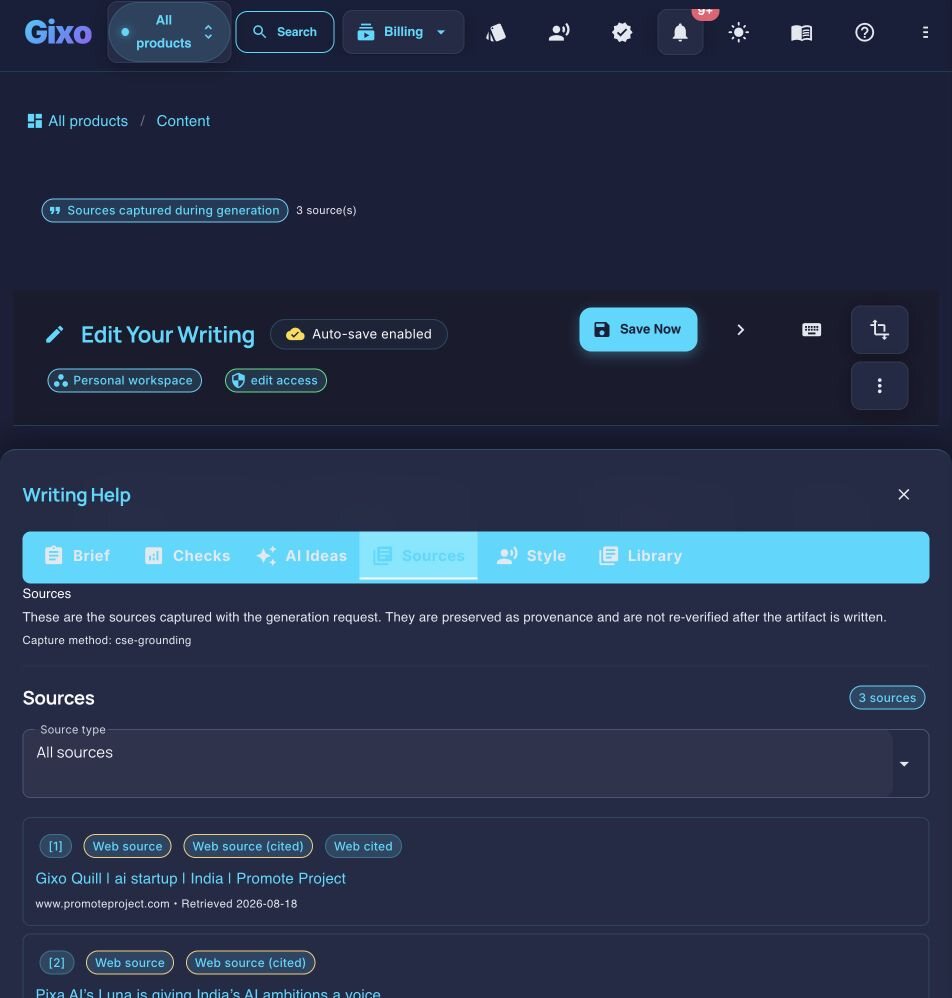
Inspect captured sources beside the working draft
Updated