
Skip to content
Sign In Try Free
Workflow-specific products Content, decks, briefs, proposals, legal, and sales each have a clearer buying path.
Review before delivery Draft, edit, collaborate, approve, and export in the same workspace.
Security + procurement path Security policy, support, and Azure Marketplace buying are public.

AI Briefs for Startup Founders — Investor-Ready Research Without the Consulting Bill

Build investor-ready market analyses with sourced numbers, inline citations, and polished formatting — without a consulting budget. Every brief passes a multi-stage pipeline, and when you upload source documents it checks the figures in its paragraphs and lists against them and adds source references, so your data is easier to defend under investor scrutiny.

Generate Founder Brief View pricing

AI briefs for startup founders are investor-ready market analyses — market sizing, competitive intelligence, and go-to-market research — generated through a multi-stage pipeline that checks your figures against the source documents you uploaded and adds inline [1][2] citations with a Sources section. The draft uses structured blocks such as KPIs, steps and pros/cons. Inspect market definitions, reporting periods and source-file citations before sharing it. A generated brief does not establish the same research coverage or judgement as a commissioned consulting engagement.
6+Pipeline Stages
CitedTo Your Uploaded Files
20+Semantic Blocks
MinutesNot Weeks
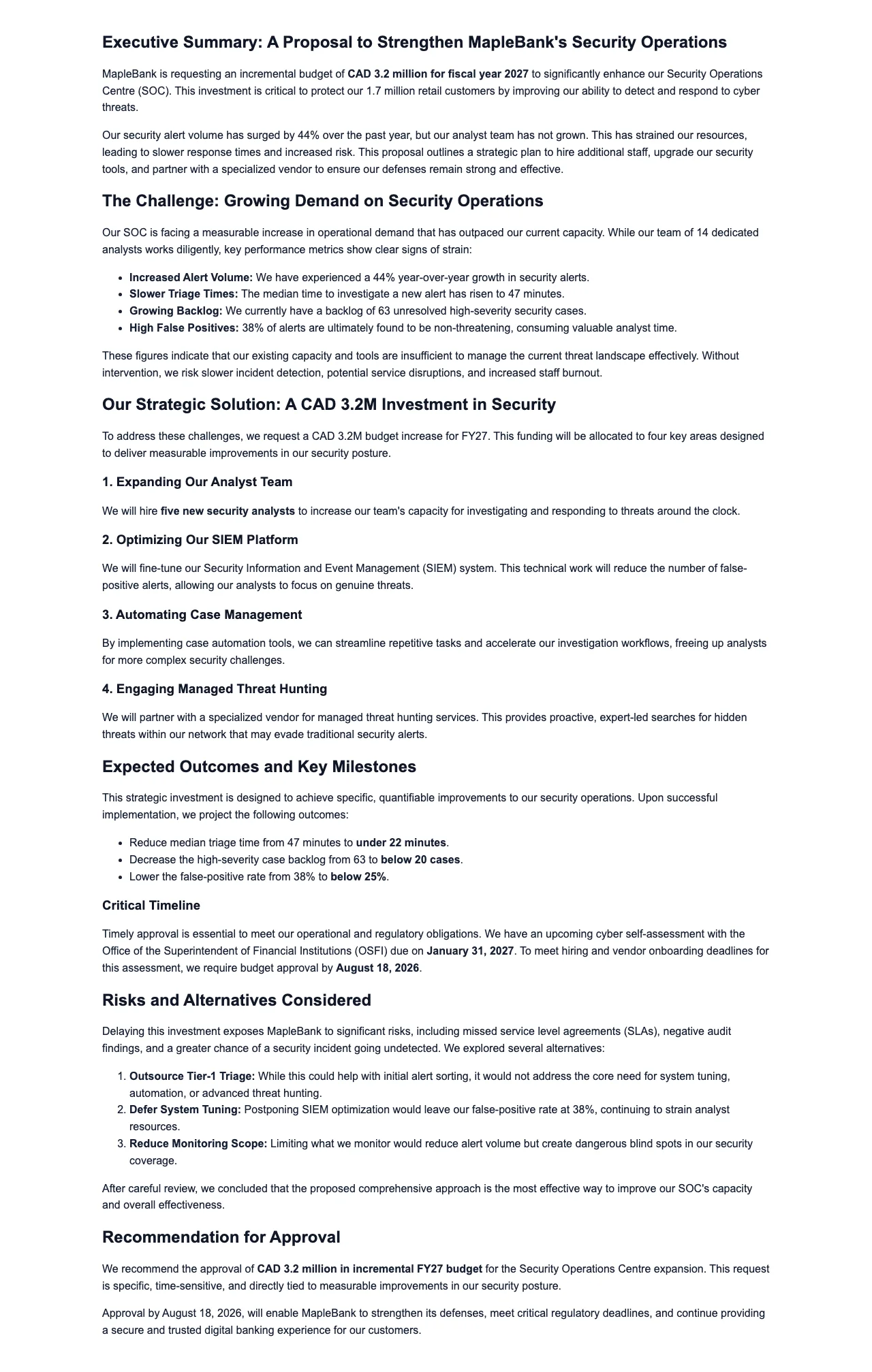
Gixo Business workspace showing a real Business Brief — a budget request note for a security operations investment
A real Gixo Business workspace — a Business Brief — a budget request note for a security operations investment. Generated from uploaded source material for review, not a final or certified recommendation.

What Does an AI Business Intelligence Toolkit for Founders Include?

From pre-seed to Series A, generate investor-ready research with sourced numbers, automatic citations, and a block editor for polished output.

Number Checks for Investor Materials

Market sizes, growth rates, and financial figures in paragraphs and lists are checked against the source documents you uploaded; figures in tables are not. When a VC challenges your TAM number, you can point to the cited source — not just an AI estimate.

Automatic Citations

Inline [1], [2] references to the files you upload, with a complete Sources section. Show investors that the claims you took from your sources are backed by traceable evidence, not just plausible AI-generated text.

Block-Based Editor

Structure your materials with 20+ semantic blocks — KPIs, checklists, steps, pros/cons, CTAs, and more. Output looks professionally formatted, not like raw AI text pasted into a document.

Saved Workspaces

Save your industry reports, competitor data, and market research into workspaces. Reuse the same source documents across your pitch deck appendix, board brief, and strategy plan without re-uploading.

Inline AI Editing

Quick AI gives you 6 instant actions — expand, shorten, rephrase, and more. Power Edit opens a full AI dialog for deeper rewrites. Polish your investor materials without leaving the editor.

No Consulting Budget Needed

Get the same multi-stage pipeline — number checks and citations when you upload sources, plus Brand Dictionary term checks — that would cost $50,000+ from a consulting firm. For early-stage founders, this is analytical depth without the enterprise price tag.

The Research Gap That Kills Early-Stage Startups

Most startups fail not because the product is bad but because the founder misread the market. The irony is that market research exists that could prevent these failures, but it sits behind consulting firm paywalls. Generic AI tools are no substitute — they produce plausible-sounding numbers with no verification and no source trail. Gixo closes this gap with a multi-stage pipeline: drafting, word-count and structure checks, your Brand Dictionary terms, number repair when the brief has sources, readability optimization, a chart-data check, citations and a Sources section when you upload files, a normative references appendix when you name rules or standards, and an evidence check after generation. Market figures in its paragraphs and lists are checked against the source documents you uploaded, and the claims it takes from them get inline citations. Founders get the same analytical rigor that established companies pay consulting firms to deliver.

How Cited Research Accelerates Fundraising

Investors evaluate founders partly on how well they understand their market. A pitch deck appendix filled with uncited numbers signals carelessness. When you upload your research, Brief Mode in Gixo Business writes the brief to cite the TAM estimates and growth rates it takes from those files, with inline [1], [2] references and a complete Sources section; the model places the markers, so check for any it missed. The block-based editor with 20+ semantic blocks gives your appendix materials professional formatting — KPI blocks for key metrics, step blocks for go-to-market plans, pros/cons blocks for competitive positioning. Save your research documents in workspaces and reuse them across your pitch appendix, board brief, and strategy plan. Founders who present cited, source-grounded analyses consistently report stronger investor confidence and faster fundraising timelines.

How Founders Use AI Briefs

1
Upload sources and pick a recipe

Upload industry reports and competitor data into a saved workspace. Choose from market analysis, competitive landscape, or go-to-market recipes. Your sources persist for reuse across briefs.

2
Generation with citations

The multi-stage pipeline generates your brief, checks your figures against the source documents you uploaded, and inserts inline [1], [2] citations. Market sizes and growth rates arrive with a traceable evidence trail.

3
Polish in the block editor

Structure your output with KPI blocks, step blocks, and pros/cons blocks. Use Quick AI for instant edits or Power Edit for deeper rewrites. The result looks professionally formatted, not like raw AI text.

4
Export and share with investors

Export to PDF as investor appendix materials. The sourced numbers, inline citations, and structured formatting give VCs confidence that your thesis is backed by real data, not founder optimism.

How Does Gixo Compare to Hiring a Consultant?

FactorGixo AIConsulting FirmDIY Research
CostAffordable$30,000-$100,000Founder time
TurnaroundMinutes4-8 weeksWeeks
Number checksChecked against your sourcesManual reviewNo
CitationsInline [1],[2] + SourcesYesScattered
Document structure20+ semantic blocksProfessionalAd hoc
Source reuseSaved workspacesPer-engagementManual
Editing toolsQuick AI + Power EditManualManual
PDF exportYesYesManual

Which Brief Do You Need at Each Stage of Startup Growth?

From initial idea validation to post-funding board reporting, every stage benefits from structured business intelligence.

Idea Validation (Pre-Seed)
Generate market sizing briefs with TAM numbers checked against your sources and inline citations. Validate that the opportunity is large enough before writing a single line of code — with sourced figures you can defend to advisors and potential co-founders.
Fundraising Preparation (Seed)
Produce investor appendices with the figures in their paragraphs and lists checked against your sources and the claims taken from them cited. Save your industry reports and competitor data in a workspace and reuse them across your pitch deck appendix, data room, and follow-up materials.
Go-to-Market Planning (Post-Seed)
Build go-to-market strategy briefs using step blocks, KPI blocks, and pros/cons blocks for professional formatting. Use Quick AI to expand thin sections or Power Edit for deeper strategic rewrites as your thesis evolves.
Board Reporting (Series A+)
Generate quarterly board briefs with sourced market data and automatic citations. Collaborate with your co-founder in real time using remote cursors. Export to PDF for board packages that demonstrate analytical rigor with traceable evidence.

Make Every Brief Count with Your Investors

Let number checks catch mismatches before investors do. The pipeline checks your figures against the source documents you uploaded. When a VC asks where your TAM number comes from, you can point to the citation and the cited source — not a guess.
Build a workspace per fundraising round. Upload your key industry reports and competitor data into a saved workspace. As you generate your pitch appendix, data room materials, and follow-up briefs, each one draws from the same source pool — consistent numbers across all documents.
Use semantic blocks for investor-ready formatting. KPI blocks for key metrics, step blocks for go-to-market plans, pros/cons blocks for competitive positioning — these give your appendix materials the structured look investors expect without spending hours on formatting.
Iterate fast with inline AI editing. As your thesis evolves through customer discovery, use Quick AI to rapidly adjust sections or Power Edit for deeper strategic rewrites. Your workspace sources stay consistent while the narrative adapts to new insights.

Frequently Asked Questions

Is this useful before I start fundraising?
Yes. Generate market analysis briefs with sourced numbers and inline citations to validate your opportunity before fundraising. When you approach investors with data that has been checked against the source documents you uploaded, it builds conviction from the first meeting.
Can I include these briefs in my investor materials?
Absolutely. The automatic citations and sourced numbers make Brief Mode in Gixo Business ideal for pitch deck appendices. Claims taken from your uploaded files include an inline reference that investors can trace back to the source. Edit in the block editor and export to PDF for polished investor packages.
How do number checks work?
Where a brief has sources - files you upload or connect, pages you add, or the search results web research drew on - a repair stage compares the figures in the paragraphs and lists of the draft, not its tables, with the numbers in those sources, and rewrites any sentence whose figure it cannot find there, substituting the source value or dropping the claim. That is reconciliation against your own sources, not an independent fact-check, and it is silent: nothing is marked up in the delivered brief, and a sentence it cannot repair, or a draft it cannot finish, keeps its original figures. For a brief written from sources you upload, the Evidence tab under Checks in the brief editor lists up to five sentences whose wording or figures it could not match to those sources, for you to check. It matches wording and exact figures, not meaning: a faithful paraphrase, or $8.1M where the source says 8,100,000, can fail to match while being true, so an unmatched sentence is a place to look, not an error, and a matched one is not confirmed either, because this is a comparison with your own sources, not a fact-check. It reads only part of a long source (24 passages of up to 1,600 characters), cannot see web research, so for a brief with web research turned on the list is advisory, and it checks the draft as generated, not your later edits. Treat every figure as needing review until you have confirmed it at the source. For market sizes and growth rates that confirms at most that a figure matches your source, not that the source is right, so read the draft against your sources before it reaches investors.
What are saved workspaces?
Workspaces let you save source documents — industry reports, competitor data, market research — and reuse them across multiple briefs. Upload once for your fundraising round, then generate your pitch appendix, board brief, and strategy plan from the same source pool.
Can I use this for board reporting after fundraising?
Yes. Generate quarterly board briefs with sourced market data and automatic citations. Collaborate with your co-founder in real time using remote cursors. The block editor with KPI and step blocks gives board packages the professional structure directors expect.
How accurate is the market sizing data?
Figures in paragraphs and lists pass through a number check that reconciles them against your uploaded source documents; figures in tables do not. The inline citations let you and your investors trace each cited number to its origin. Because the check compares figures to your sources rather than to ground truth, treat the numbers as unverified until you review them. For the most defensible numbers, upload primary research alongside public reports so the pipeline can check against both.
Can I customize briefs for different investor audiences?
Yes. Generate a core brief from your saved workspace, then use Quick AI and Power Edit to adjust emphasis for each audience. Some VCs prioritize market size while others focus on competitive differentiation. The inline AI editing tools make these adjustments fast.
Is this suitable for non-tech startups?
Absolutely. Gixo includes 59 curated business recipes across 6 domains. Whether you are in retail, healthcare, fintech, manufacturing, or consumer goods, the multi-stage pipeline produces cited, source-checked briefs for any industry from the sources you upload.
How do I handle proprietary market data?
Upload your proprietary reports into a saved workspace alongside public sources. The pipeline checks numbers against all uploaded documents. After generation, use the block editor to add interview findings and internal metrics that you do not want in the source pool.
What is an AI brief for startup founders?
An AI brief is an investor-ready market analysis or competitive intelligence document generated through Gixo's multi-stage pipeline (drafting, word-count and structure checks, your Brand Dictionary terms, number repair when the brief has sources, readability optimization, a chart-data check, citations and a Sources section when you upload files, a normative references appendix when you name rules or standards, and an evidence check after generation). Market figures in its paragraphs and lists are checked against the source documents you uploaded and the claims it takes from them carry inline [1],[2] citations, so founders start from a sourced draft instead of a blank page.
What's the difference between an AI brief and a regular AI-generated report?
A regular AI-generated report produces plausible-sounding numbers with no source trail. An AI brief from Gixo checks your figures — market size, growth rate, and financial figures — against the source documents you upload, and attaches inline citations with a Sources section, so the numbers are traceable rather than estimated.

Build Your Startup Intelligence

Sourced numbers. Automatic citations. Saved workspaces. Investor-ready in minutes.

View pricing

Updated