
Material this fictional team would prepare
- Account discovery notes
- Current-use summary
- Expansion scope
- Pricing assumptions
Fictional proposal example
A fictional software team is proposing a controlled expansion from one operating unit to three. The preview shows how account evidence, scope assumptions, and commercial inputs can become a reviewable sales-proposal structure.
This scenario and every passage below are fictional and illustrative. They demonstrate a reviewable proposal structure, not customer work or a promised result.
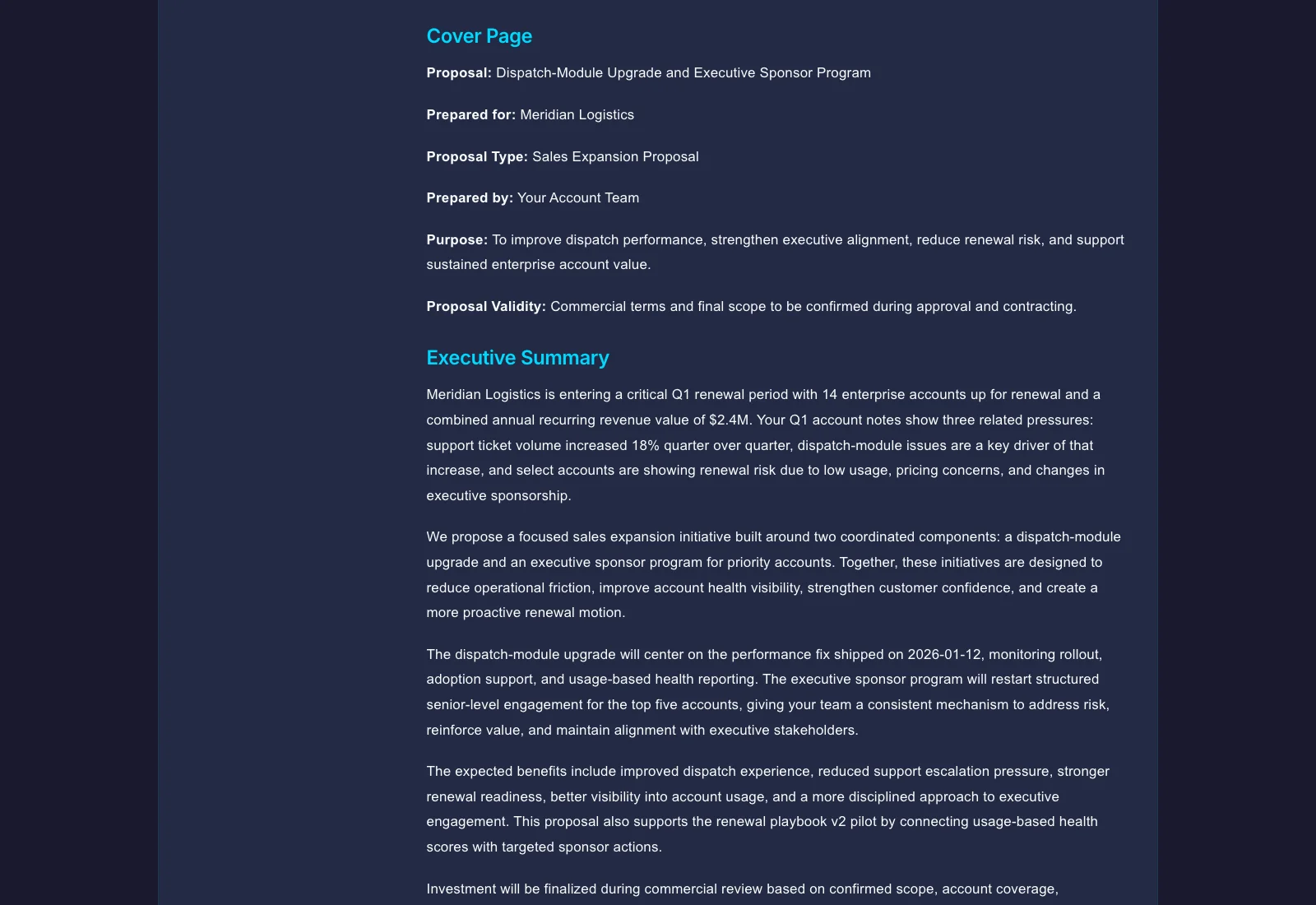
Illustrative Arc screen
The image is a product specimen for evaluating layout and structure. It is not proof that a customer used Arc or achieved a particular outcome.
Illustrative example
Before drafting
The quality of a proposal draft depends on the material supplied and the reviewers accountable for its claims.
Illustrative section preview
The passages below describe what each section should accomplish. They are not complete proposal language and should never be copied as factual evidence.
Northstar has completed a limited first phase and is evaluating a broader rollout. This draft frames the decision, the teams in scope, and the assumptions that still need account-owner confirmation.
The proposal groups the work into discovery, configuration, enablement, and measured adoption. Named owners, dates, and system dependencies remain editable review fields.
The value section connects the proposed scope to buyer-supplied operating goals. It avoids invented savings and identifies which baseline measures the buyer should confirm.
Pricing, payment schedule, validity, and exclusions are presented as explicit assumptions for commercial review rather than inferred commitments.
The closing section records the approval path, open questions, and next meeting without implying that the deal is already agreed.
Replace this fictional structure with the actual buyer request, approved evidence, scope, pricing, risks, exceptions, and reviewer decisions for the opportunity.
Arc will start with the same proposal kind. Upload the real opportunity inputs and replace every illustrative assumption with approved evidence, scope, pricing, and commitments.
Inspect CivicCloud RFP response
Inspect Harbor market-entry engagement
Inspect Claims-workflow business case
Inspect ERP migration implementation proposal
Your material, your review, your decision
Arc prepares a structured first draft from the material you provide. Your reviewers still own the facts, scope, pricing, commitments, and final approval.