
Material this fictional team would prepare
- Buyer RFP
- Approved capability statement
- Implementation plan
- Security response notes
Fictional proposal example
A fictional public-services buyer has issued an RFP for a cloud operations program. The preview demonstrates requirement-led organization, evidence placeholders, exceptions, and human approval gates.
This scenario and every passage below are fictional and illustrative. They demonstrate a reviewable proposal structure, not customer work or a promised result.
Illustrative Arc screen
The image is a product specimen for evaluating layout and structure. It is not proof that a customer used Arc or achieved a particular outcome.
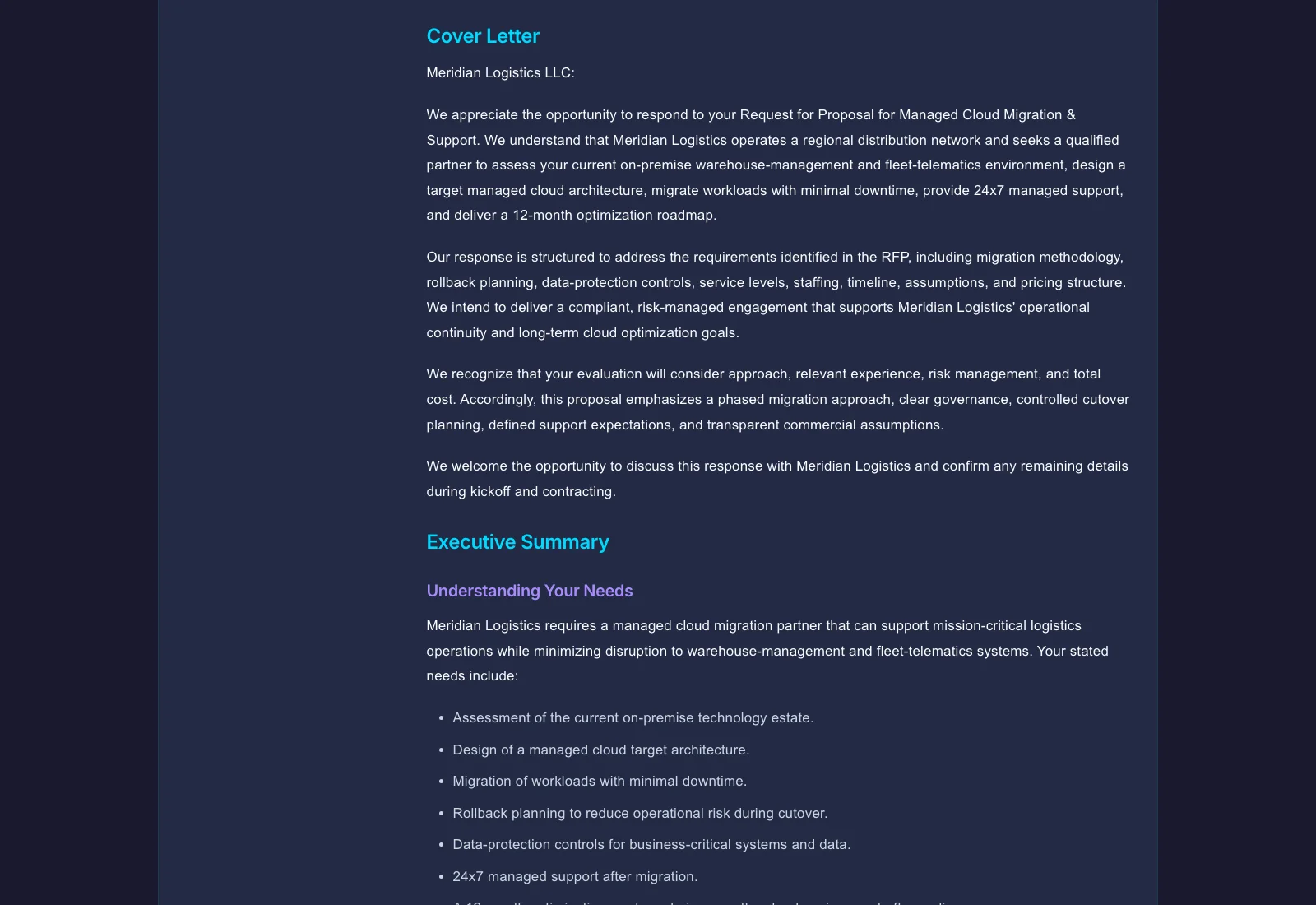
Illustrative example
Before drafting
The quality of a proposal draft depends on the material supplied and the reviewers accountable for its claims.
Illustrative section preview
The passages below describe what each section should accomplish. They are not complete proposal language and should never be copied as factual evidence.
This section restates the buyer's requested outcome and identifies the response scope. It is a drafting aid, not a claim that every RFP requirement has been satisfied.
Each requirement is paired with a direct answer, source reference, owner, and review status. Missing evidence stays visible instead of being filled with a guess.
The draft separates mobilization, migration, operations, reporting, and service review into buyer-readable phases.
Named decision forums, escalation paths, dependencies, and proposed mitigations are grouped for operational and procurement review.
Open assumptions, requested clarifications, commercial exceptions, and attachments are collected before final submission approval.
Replace this fictional structure with the actual buyer request, approved evidence, scope, pricing, risks, exceptions, and reviewer decisions for the opportunity.
Arc will start with the same proposal kind. Upload the real opportunity inputs and replace every illustrative assumption with approved evidence, scope, pricing, and commitments.
Inspect Northstar account-expansion proposal
Inspect Harbor market-entry engagement
Inspect Claims-workflow business case
Inspect ERP migration implementation proposal
Your material, your review, your decision
Arc prepares a structured first draft from the material you provide. Your reviewers still own the facts, scope, pricing, commitments, and final approval.