
Material this fictional team would prepare
- Client brief
- Discovery notes
- Market research
- Team biographies
- Fee assumptions
Fictional proposal example
A fictional consumer-products company needs a market-entry decision, not a generic strategy deck. The preview shows a consulting proposal organized around questions, workstreams, deliverables, governance, and fee assumptions.
This scenario and every passage below are fictional and illustrative. They demonstrate a reviewable proposal structure, not customer work or a promised result.
Illustrative Arc screen
The image is a product specimen for evaluating layout and structure. It is not proof that a customer used Arc or achieved a particular outcome.
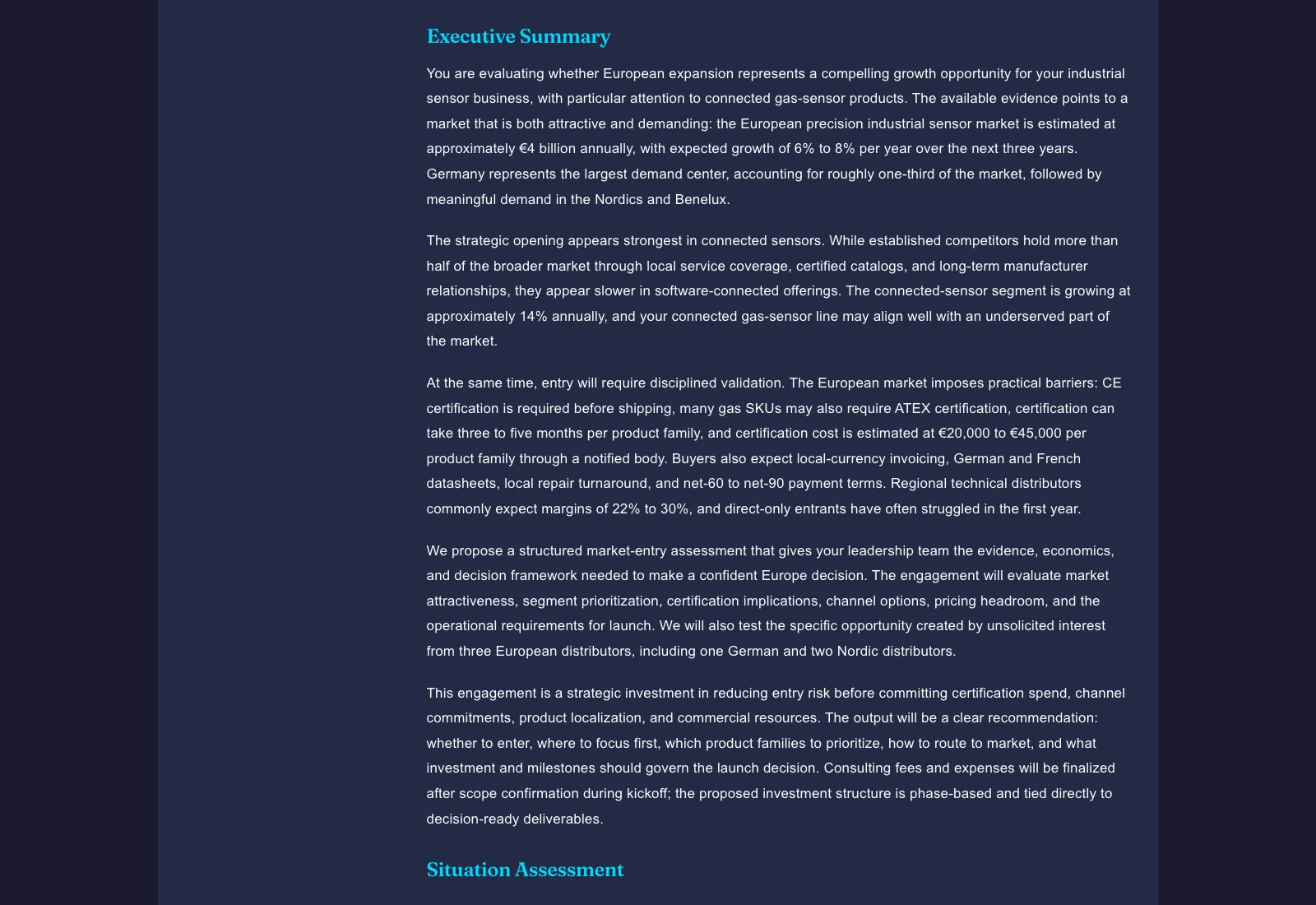
Illustrative example
Before drafting
The quality of a proposal draft depends on the material supplied and the reviewers accountable for its claims.
Illustrative section preview
The passages below describe what each section should accomplish. They are not complete proposal language and should never be copied as factual evidence.
Harbor must decide which segment and route to market merit a controlled launch. The proposal keeps that decision visible instead of hiding it beneath a broad methodology.
Customer demand, channel economics, competitive position, operating readiness, and launch design are treated as linked workstreams with explicit questions.
The draft names the expected artifacts and review points while leaving client-specific quantities and acceptance criteria for confirmation.
Cadence, steering roles, client inputs, access requirements, and decision rights are stated before the timeline.
Fee structure, expenses, taxes, payment timing, and change-control assumptions remain visible for partner and client review.
Replace this fictional structure with the actual buyer request, approved evidence, scope, pricing, risks, exceptions, and reviewer decisions for the opportunity.
Arc will start with the same proposal kind. Upload the real opportunity inputs and replace every illustrative assumption with approved evidence, scope, pricing, and commitments.
Inspect Northstar account-expansion proposal
Inspect CivicCloud RFP response
Inspect Claims-workflow business case
Inspect ERP migration implementation proposal
Your material, your review, your decision
Arc prepares a structured first draft from the material you provide. Your reviewers still own the facts, scope, pricing, commitments, and final approval.