
Material this fictional team would prepare
- Current-process notes
- Volume baseline
- Option estimates
- Risk register
- Pilot constraints
Fictional proposal example
A fictional operations team is evaluating whether to pilot an assisted claims workflow. The preview separates known baseline data, assumptions, options, pilot measures, risks, and the decision requested.
This scenario and every passage below are fictional and illustrative. They demonstrate a reviewable proposal structure, not customer work or a promised result.
Illustrative Arc screen
The image is a product specimen for evaluating layout and structure. It is not proof that a customer used Arc or achieved a particular outcome.
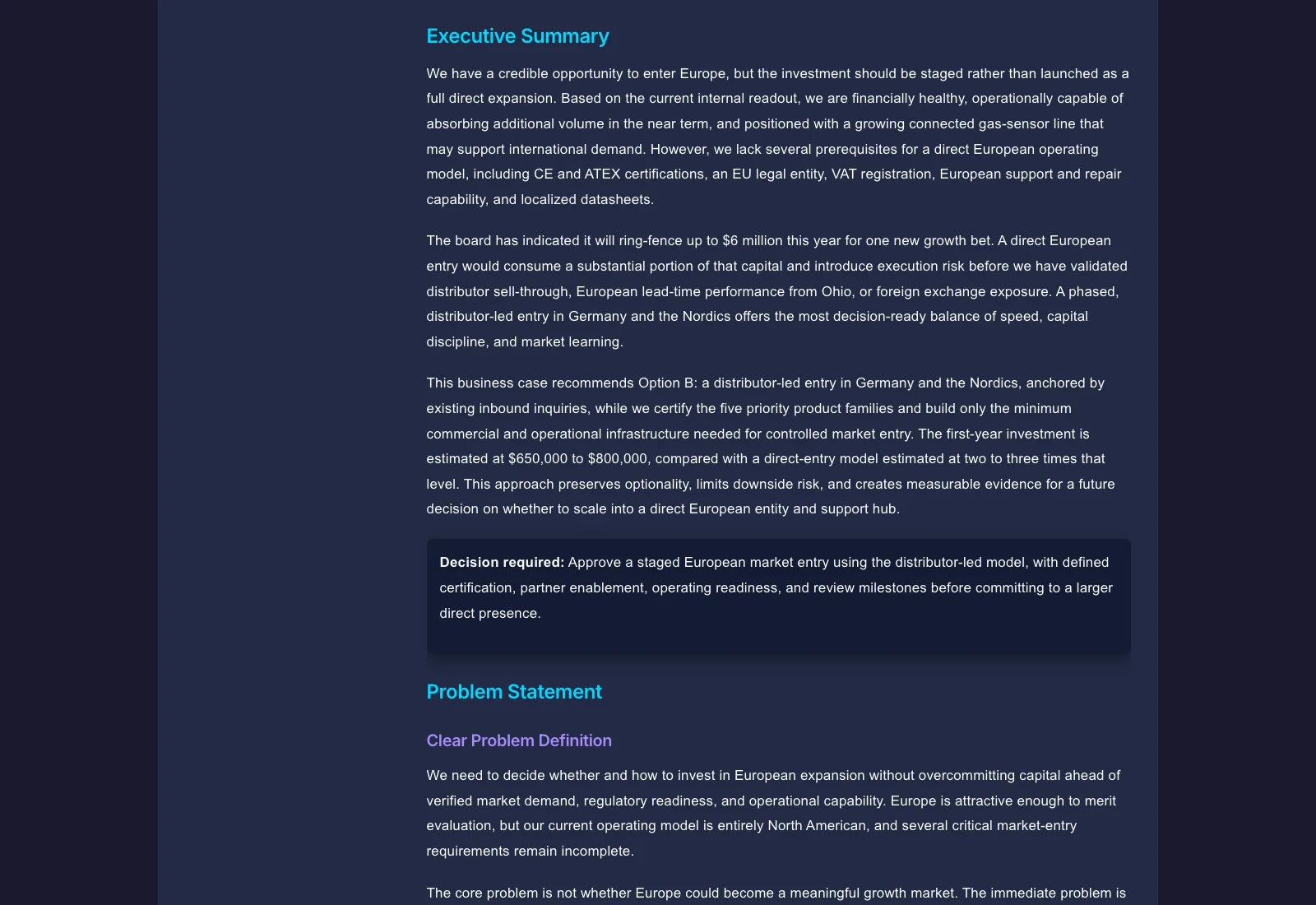
Illustrative example
Before drafting
The quality of a proposal draft depends on the material supplied and the reviewers accountable for its claims.
Illustrative section preview
The passages below describe what each section should accomplish. They are not complete proposal language and should never be copied as factual evidence.
The draft summarizes the documented workflow, handoffs, volume, and quality concerns. Unsupported efficiency numbers are left out.
Maintain, improve, pilot, and replace options are compared using buyer-defined criteria rather than a predetermined recommendation.
The proposed pilot states scope, exclusions, owners, duration, and stop conditions so the decision can be reversed if evidence is weak.
Costs, benefits, and capacity effects are expressed as variables linked to the team's own baseline data and controlled-pilot results.
The closing section specifies the approval, budget envelope, named owner, and next review gate required to proceed.
Replace this fictional structure with the actual buyer request, approved evidence, scope, pricing, risks, exceptions, and reviewer decisions for the opportunity.
Arc will start with the same proposal kind. Upload the real opportunity inputs and replace every illustrative assumption with approved evidence, scope, pricing, and commitments.
Inspect Northstar account-expansion proposal
Inspect CivicCloud RFP response
Inspect Harbor market-entry engagement
Inspect ERP migration implementation proposal
Your material, your review, your decision
Arc prepares a structured first draft from the material you provide. Your reviewers still own the facts, scope, pricing, commitments, and final approval.