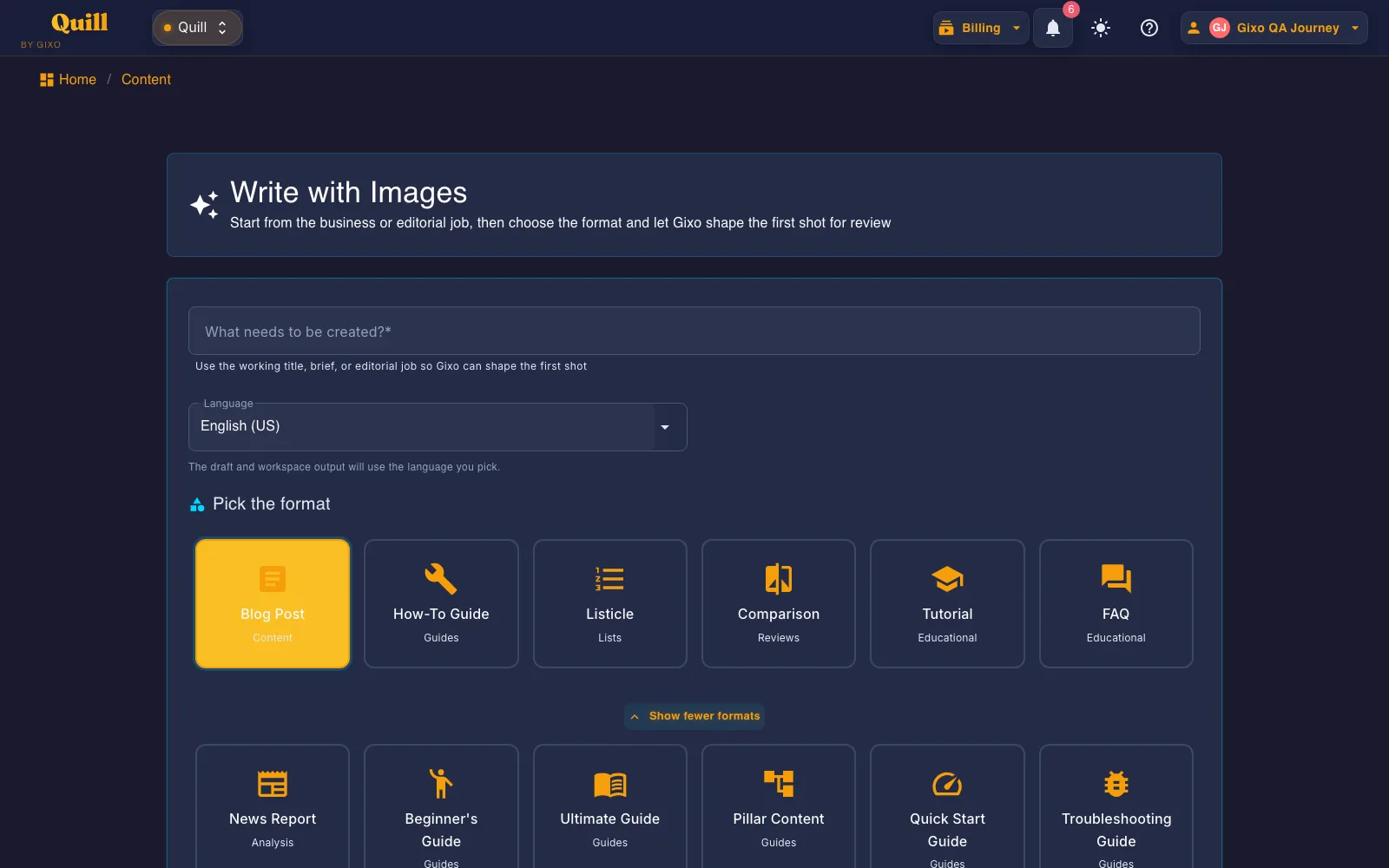
Create a podcast script with an episode hook, segment plan, host cues, transitions, evidence, timing, CTA, and editable delivery notes. The active guide targets 3,000 words, asks the model for 10 structural elements and then checks the draft for them, binds sources after generation, and keeps review before export.
~3000
Target word count
10
Required elements
4
Citation styles bound post-gen
2
One-click CMS publish targets
Details
Podcast Script format details
See the expected length, required sections, citation options, and publishing paths for this format.
Topic
Details
What to know
Target length
Approximately 3,000 words
Designed for the depth and reading experience expected from this format.
Required structure
10 required elements
Requested in the prompt, then reported as detected or missing on the workspace checklist.
Tone and voice
Conversational, intimate, and story-driven; Active voice
Keeps the writing style aligned with the selected format.
Shapes the draft for the people most likely to read and use it.
Source handling
Post-generation claim extraction and source binding
Lets you review claims and connect citations without inventing sources in the draft.
Delivery
2 direct publishing targets; PDF, DOCX, HTML, Markdown, TXT, and JSON
Export the finished content or publish it through a connected destination.
What should I provide to the AI Podcast Script Generator?
Provide the show format, audience, episode goal, target duration, host and guest roles, source material, recurring segments, tone, sponsor or CTA requirements, and pronunciation notes.
What structure does a Gixo Podcast Script follow?
The active guide targets approximately 3,000 words and injects 10 required structural elements using a conversational, intimate, and story-driven tone for podcast listeners, audio learners, commuters, dedicated subscribers..
Can I review and publish the generated Podcast Script?
Yes. The Podcast Script opens in the Quill workspace for editing and team review. You can bind sources after generation, render APA, MLA, Chicago, or Harvard citations, export in PDF, DOCX, HTML, Markdown, TXT, and JSON, or publish to a supported CMS destination.
What is an AI Podcast Script Generator?
An AI podcast script generator turns an episode idea and source set into a spoken-word structure. It coordinates the opening hook, segment flow, host or guest cues, transitions, evidence, timing, recap, and closing action.
What to provide: Provide the show format, audience, episode goal, target duration, host and guest roles, source material, recurring segments, tone, sponsor or CTA requirements, and pronunciation notes.
Podcast Script is one of the 48 direct-create formats generated from this same screen — a shared workspace, not a separate tool per format.
Podcast script or transcript? They solve different jobs.
A podcast script is the plan and spoken wording prepared before recording: hook, segment beats, host or guest cues, transitions, evidence, timing, and the closing action. A transcript is the record of what was actually said after recording. This generator creates the former; it does not turn an audio file into a verbatim transcript.
Script
Prepared before recording. Includes production cues, questions, pauses, pronunciation notes and a target runtime.
Transcript
Created after recording. Preserves the spoken words and speaker sequence for editing, captions, or a show-notes workflow.
Example brief: “A 25-minute interview for operations leaders: open with the cost of manual review, ask three questions, add one verified customer example, and close with one practical next step.” Replace the example with your own source material and claims.
What is instructed, what is enforced, and what you check
The Podcast Script style guide below is read from the Gixo source at request time. Most of it is written
into the generation prompt to steer the draft. A smaller part is enforced by code after the model answers.
The editorial judgments stay with you — so they are listed separately rather than folded into one promise.
1 · Written into the prompt — steers the draft
These are instructions, not checks. They shape what the model is asked to produce; nothing afterwards
verifies that the tone landed or that the draft suits the audience. That is what step 3 is for.
Structure
Cold Open/Teaser, Introduction & Host Welcome, Sponsor Message, Main Topic Introduction, Segment 1: Deep Dive, Segment 2: Examples/Stories, Segment 3: Expert Insights, Audience Q&A, Key Takeaways, Closing & Next Episode
Tone & voice
Conversational, intimate, and story-driven · Active voice
Write for audio-only, include pauses and emphasis, create natural transitions, build narrative arc.
Required structural elements
Episode teaser
Host introduction
Sponsor scripts
Topic transitions
Interview questions
Story beats
Time markers
Music cues
Formatting preferences
[MUSIC CUE]
[PAUSE]
Emphasis on:
Transition:
[SPONSOR]
Time markers
2 · Enforced by code, after the draft comes back
Too short is regenerated. A draft under the floor for this format is sent back for another pass, not padded.
Too long is reported, not cut. For this format a structurally complete draft is allowed to ship above the target.
Brand compliance. The draft is passed through your brand rules and you get a report of what changed.
Structure sanitising. Malformed or unsafe markup is cleaned before the draft reaches the editor.
3 · Checked, then handed to you
The workspace runs a checklist over the finished draft and shows you the result. It reports; it does not
gate. Publishing remains your decision.
Required elements — each is marked detected or not detected in the headings and body text. This is a presence test on wording, not a judgment that the section is any good.
Word-count target — flagged for review outside roughly 1,950-5,250 words, rather than forced to a number.
Quality checklist — the items this format carries are always marked for manual review, because no machine check stands behind them.
How a Gixo Podcast Script is built
Every generation passes through a deterministic 7-stage pipeline.
The publishing pipeline
Plan — Token allocation, section count, structural completeness target. GenerationPlanner.cs
Render — APA / MLA / Chicago / Harvard inline citations injected at export. CitationHtmlRenderer.cs
Publish — Send approved work to connected WordPress and Ghost sites, hand a draft to Medium, or export it for other destinations. Export in PDF, DOCX, HTML, Markdown, TXT, and JSON.
Generate a Podcast Script now
Start in the real Quill writing workflow. No credit card required.
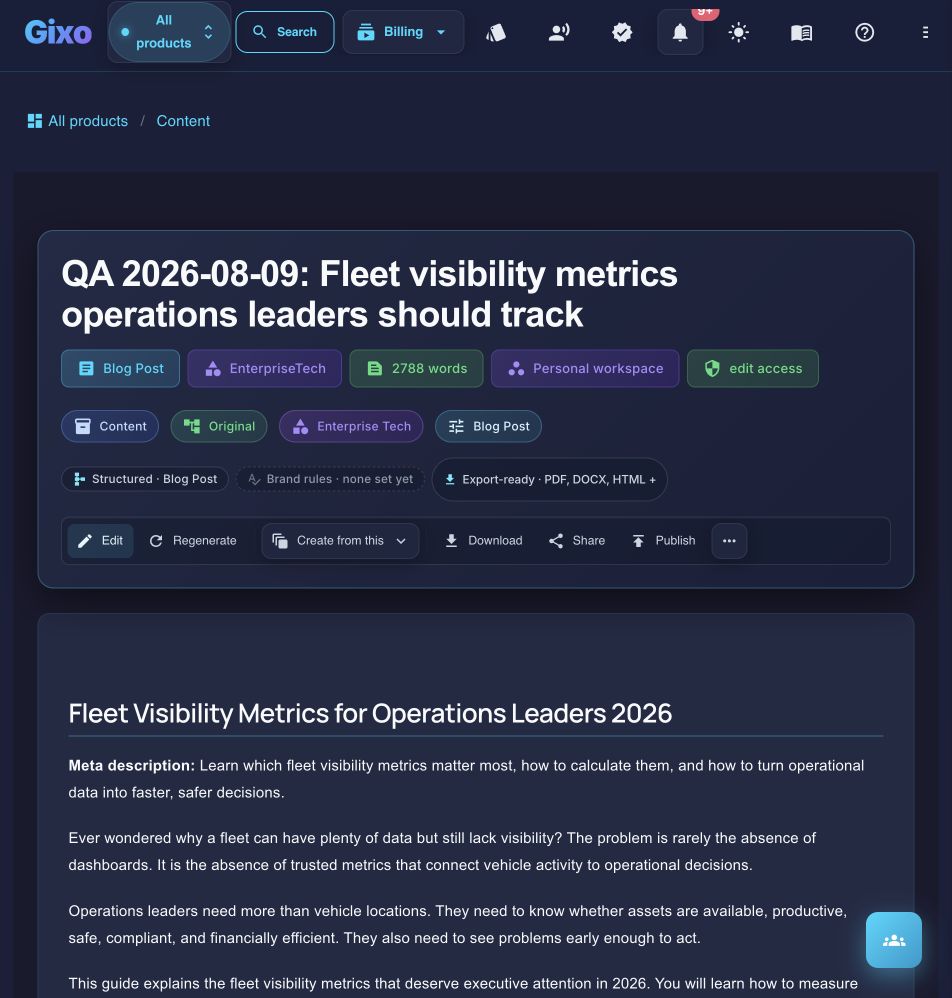
Keep the finished draft and its next actions together
Current Quill draft view using a QA-labelled article rather than customer work. Format, workspace, export, editing, repurposing, sharing, and publishing controls remain attached to the artifact.
Cookie
We value your privacy
We use cookies to improve the product, measure site usage, and keep settings in sync.
Choose which categories you want to allow.