
Can you reuse a contract template across clients?
Short answer: yes — reusing vetted templates saves time and can keep terms consistent. The danger is doing it by "Save As," which can carry over the last client's names, negotiated terms, and confidential details. Start from a clean template, use approved references for the new draft, and verify every client-specific fact before use.
Yes, you can reuse a contract template across clients — but only if you draft from a vetted master template with placeholders for client-specific facts, not by "Save As"-ing the last client's signed contract. The danger isn't reuse itself, it's copy-paste reuse, which quietly carries over the last client's names, negotiated terms, and confidential details. Reuse is safe for simple, repeatable, low-value deals; high-value, cross-jurisdiction, or IP-heavy deals call for custom drafting instead.
Template, form, precedent — and the trap
Reuse is normal and sensible; it is the mechanism of reuse that creates risk. A blank-field form is low risk. A template with vetted boilerplate plus optional clauses is the workhorse. A precedent — a past executed contract — is the most tempting and the most dangerous to reuse directly, because it is full of one specific client's facts. The trap is treating last week's signed deal as this week's template.
What goes wrong when you reuse a contract by copy-paste?
The "Save As, find-and-replace" habit is the single most common and damaging way reuse fails. Three ways it bites:
A name in an appendix, a pricing term negotiated for the last client, or — worst — confidential information that belonged to them. Find-and-replace almost always misses something.
A template that was fine last year may be out of date now. Reusing it unchanged quietly ships outdated terms — faster.
A clause that fits one client's jurisdiction, industry, or deal shape may not fit the next. Generic reuse assumes portability that does not exist.
When should you reuse a template vs. draft custom?
Reuse is a tool for efficiency in predictable, low-risk deals. Custom drafting is for precision when value, complexity, or stakes are high. The signals below tell you which side of the line you are on — never default to a template out of convenience when the deal calls for bespoke attention.
| Reuse a template | Draft custom | |
|---|---|---|
| Speed | High | Lower |
| Upfront cost | Low | Higher |
| Risk fit | Standardized | Tailored to the deal |
| Best for | Simple, repeatable, lower-value transactions | Complex, high-value, or unique deals |
the value is low, the term is short, the subject is standardized (a routine NDA), the parties have roughly equal bargaining power, or it is an internal agreement. The potential loss is smaller than the cost of custom work.
the deal is high-value or strategic, involves IP creation or licensing, has unusual commercial terms, crosses borders or jurisdictions, involves more than two parties, or sits in a regulated industry such as healthcare or finance. A common rule of thumb is to escalate anything above a set value threshold, or with cross-jurisdiction exposure, to a custom draft.
How do you reuse a contract template safely?
Keep a clean master template, deliberately written for reuse, separate from any client's executed deal. Draft the new one from that base.
Names, amounts, dates, and negotiated terms should be placeholders to fill — not values carried over. This is what stops the last client's details from leaking into the next document.
Boilerplate is not all immutable. Choice of law, venue, liability, and assignment clauses change with the deal and the jurisdiction; treat them as live, not settled.
Confirm every clause the document type needs is present and that defined terms are consistent, before a reviewer spends time on it.
Reuse speeds up the first draft; a qualified reviewer still confirms the result fits this client and this situation.
How Gixo helps you reuse safely
Gixo Lex is built for reference-informed reuse — drafting from your own references rather than editing the last client's file.
Upload your approved prior agreements and clause language as references. Gixo drafts the new document using them as reference input, instead of you opening and editing a past client's contract.
Prepare compliance drafts designed to surface missing facts as review items. Reviewers still verify every fact and conclusion before action.
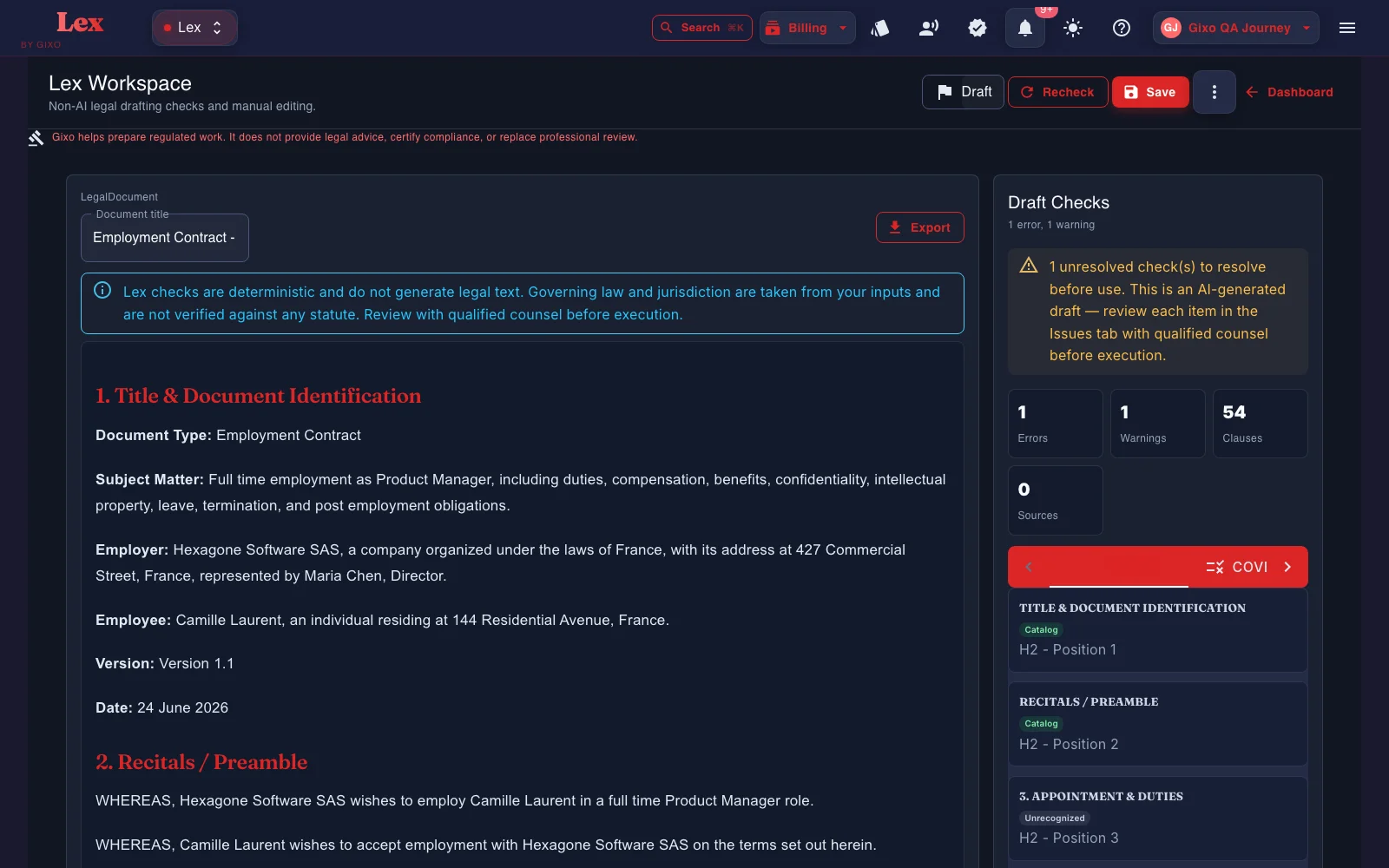
Before review, Gixo Lex runs a draft analysis pass: a clause inventory, missing-clause coverage, defined-term consistency, cross-reference validation, and execution-readiness checks, so reviewers start from a cleaner draft instead of hunting for gaps.
This page is general information, not legal advice. Whether a particular document can be reused safely depends on its terms, your jurisdiction, and the situation — confirm with qualified legal counsel. Gixo helps prepare regulated work. It does not provide legal advice, certify compliance, or replace professional review.
Frequently Asked Questions
Updated