Best AI Writing Tools Compared (2026)

We tested 15 AI writing tools on real content tasks. This guide compares each platform across content generation quality, SEO optimization, pricing, editing capabilities, and publishing workflows so you can find the right tool for your specific needs.

15Tools Reviewed
10+Features Scored
50+Hours Testing
2026Latest Updates

What Separates the Best AI Writing Tools

The best AI writing tools combine generation quality with workflow features that professional writers actually need.

Inline AI Editing

The best tools offer context-aware inline editing where you can refine individual sentences without losing your overall narrative flow.

SEO Awareness

Professional writing tools should understand search optimization and build it into the writing process, not treat it as an afterthought.

Accuracy & Citations

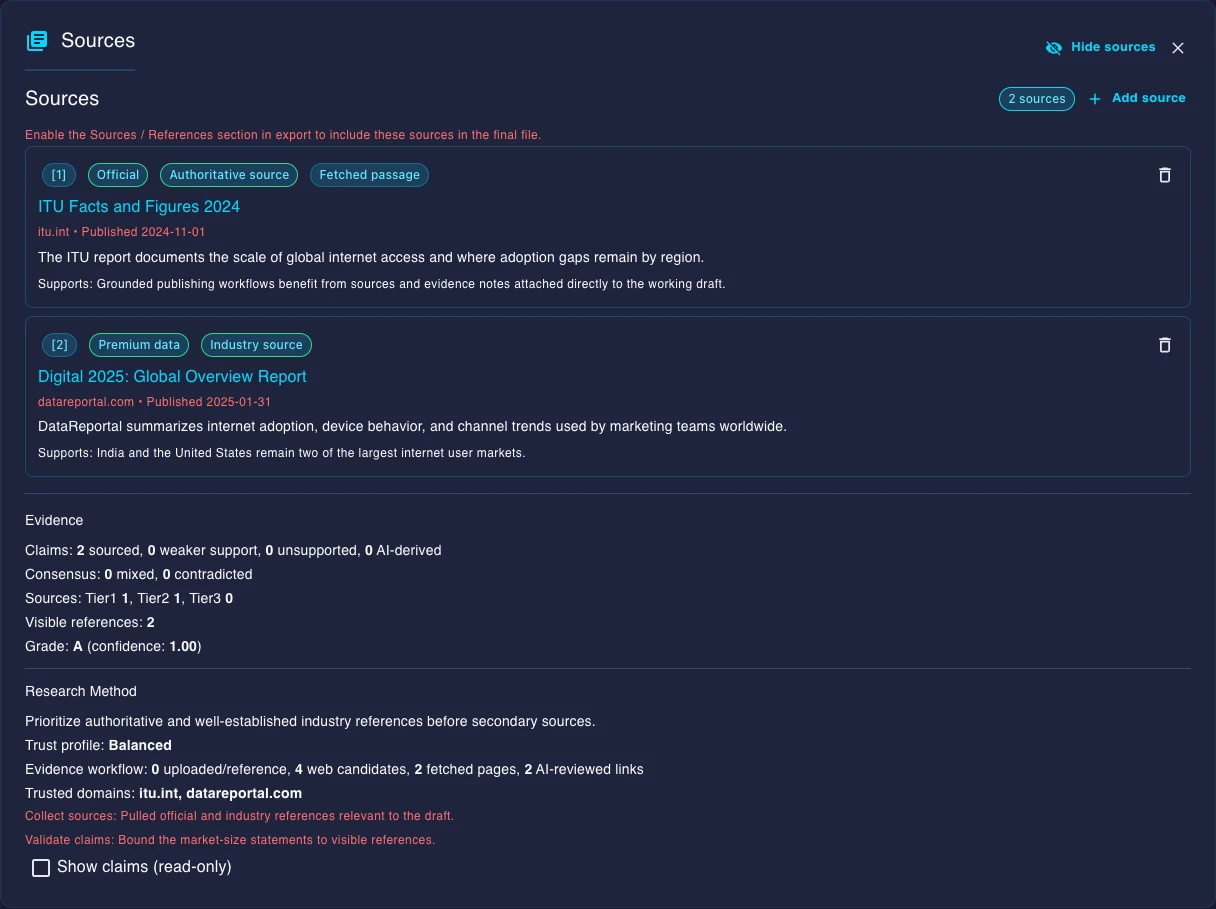
Content credibility depends on verifiable claims. Tools that auto-source citations produce more trustworthy content.

Voice Consistency

Maintaining a consistent voice across all content requires brand training, not just tone selection from a dropdown.

Publishing Workflow

From draft to published content should be seamless. The best tools integrate with CMS platforms and support multiple export formats.

Team Collaboration

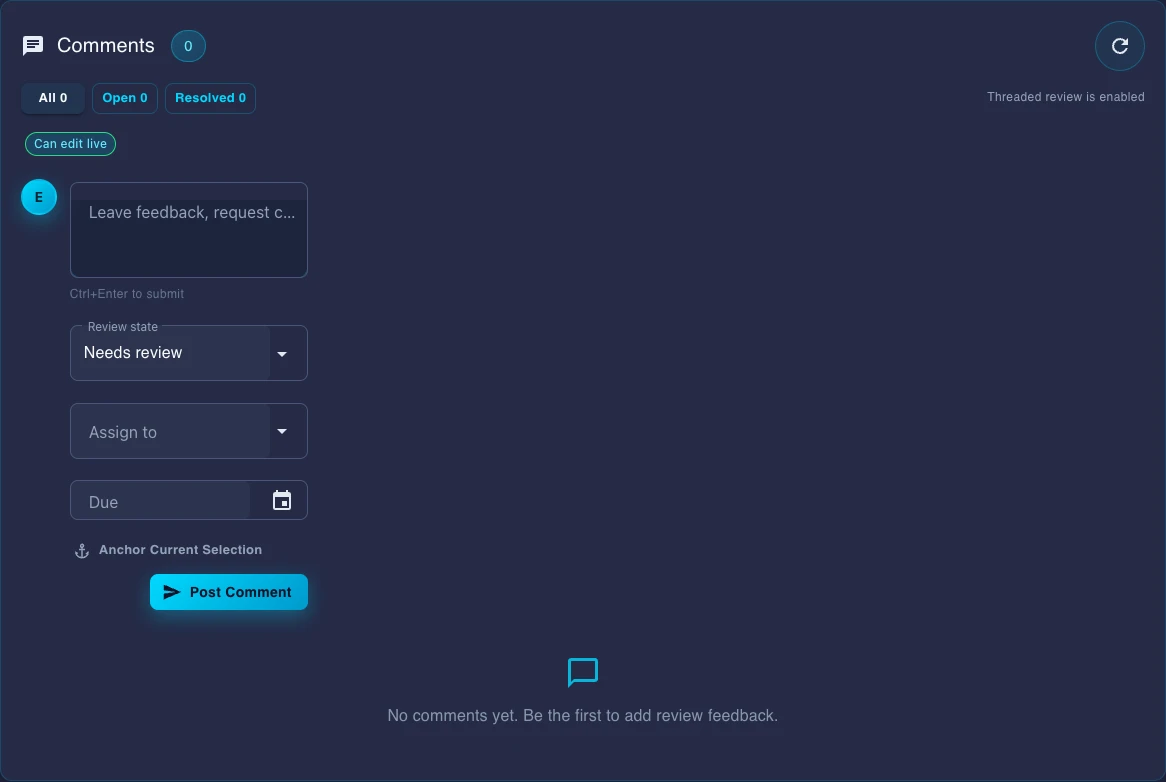
Professional writing is collaborative. Look for shared workspaces, review workflows, and role-based access.

How It Works

1
Define Criteria

List your must-have features: SEO, citations, editing, publishing, team collaboration.

2
Test Each Tool

Use free trials to evaluate each platform with your real content requirements.

3
Compare Output

Generate the same content type in each tool and compare quality, structure, and formatting.

4
Choose & Scale

Select the tool that best matches your workflow and scale your content production.

15 AI Writing Tools Reviewed In Depth

We used each tool to generate long-form articles, blog posts, and SEO content. Here is what we found across content quality, features, usability, and value for money.

1. Gixo
Best for: All-in-one SEO content creation and professional publishing
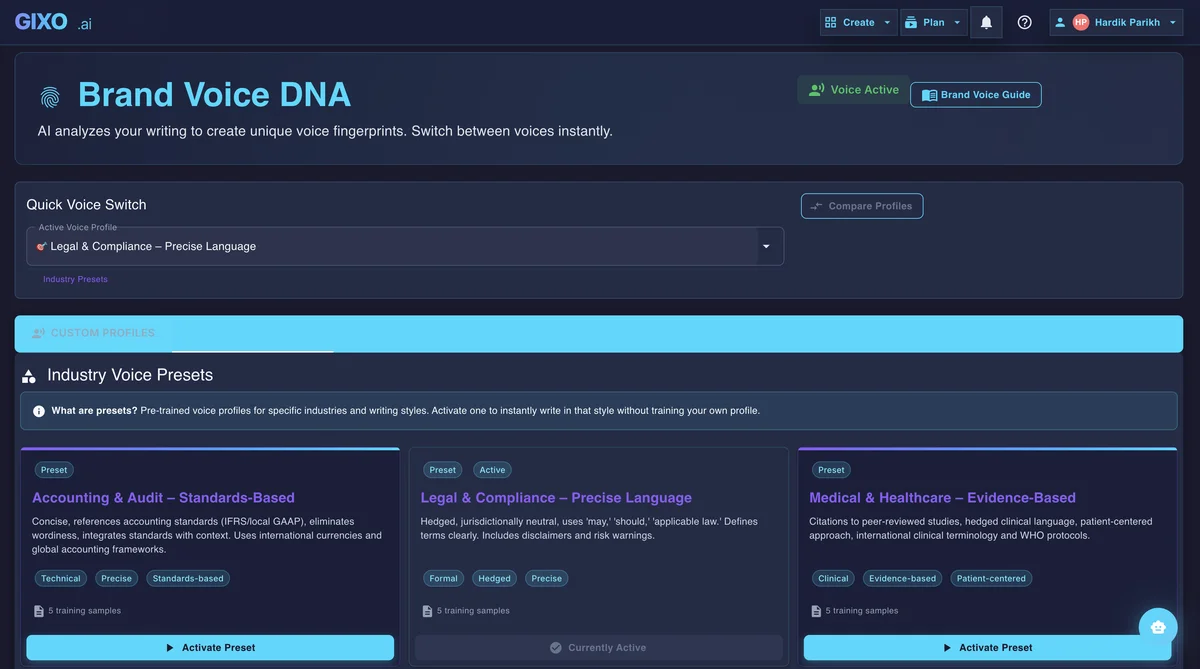
Gixo is a full-stack content platform that generates long-form articles, business briefs, presentations, and infographics with built-in SEO optimization. Unlike most AI writers that output raw text, Gixo produces publish-ready content complete with heading structures, meta descriptions, and internal link suggestions. Its evidence engine automatically sources citations from the web and attaches them to factual claims, which is a significant differentiator for teams that need trustworthy, authoritative content.
Key strengths: Native SEO scoring during generation (not after), automatic evidence-based citations, brand voice training that persists across all content types, multi-format output including presentations and infographics from the same brief, and competitive pricing that undercuts most alternatives.
Limitations: Newer to market than established competitors like Jasper, so third-party integrations are still expanding. The breadth of features can feel overwhelming for users who only need a simple blog writer.
Starting price: $9.99/mo
2. Jasper
Best for: Marketing teams that need templates and brand consistency
Jasper has established itself as one of the most popular AI writing platforms, especially among marketing departments. It offers over 50 content templates covering everything from Facebook ads to product descriptions to long-form blog posts. The brand voice feature lets you upload style guides and past content so Jasper learns your tone. For teams with established marketing workflows, Jasper slots in well because of its collaborative workspace and campaign management features.
Key strengths: Extensive template library for marketing use cases, strong brand voice training, team collaboration features with approval workflows, and a well-designed interface that reduces onboarding time for non-technical users.
Limitations: No native SEO optimization; you need a separate Surfer SEO subscription ($89/mo extra) for keyword scoring. Pricing is significantly higher than many competitors, and the word count limits on lower tiers can be restrictive for high-volume teams.
Starting price: $49/mo
3. Writesonic
Best for: Budget-conscious content marketers who need variety
Writesonic bundles an article writer, blog post generator, ad copy creator, and Chatsonic (its conversational AI) into a single affordable package. The Article Writer 6.0 can produce complete blog posts with outlines, introductions, and conclusions. Chatsonic adds real-time web access similar to Bing Chat, which is useful for writing about current events or trending topics. For freelancers and small teams that need a versatile tool without a steep price tag, Writesonic is a solid choice.
Key strengths: Affordable pricing for the feature set, Chatsonic provides real-time web data, good variety of content templates, and the Photosonic image generator is included for visual content.
Limitations: Article quality can be inconsistent on complex or technical topics, requiring more manual editing. The SEO capabilities are basic compared to dedicated SEO writing tools. Output sometimes has a recognizably AI-generated tone.
Starting price: $16/mo
4. Copy.ai
Best for: Sales teams and short-form marketing copy
Copy.ai started as a short-form copywriting tool and has evolved into a go-to-market (GTM) platform. Its strength is generating high-converting sales emails, product descriptions, social media posts, and ad copy quickly. The Workflows feature lets you build multi-step automated pipelines for things like generating prospect outreach sequences. However, if your primary need is long-form blog content or SEO articles, Copy.ai is not the strongest choice in this list.
Key strengths: Excellent for short-form sales and marketing copy, Workflows automation for GTM teams, generous free tier with 2,000 words/month, and the interface is intuitive for quick copy generation.
Limitations: Long-form content generation is noticeably weaker than competitors like Jasper or Gixo. No built-in SEO features. The focus on sales copy means blog writers and content marketers may find the tool limiting.
Starting price: $49/mo (free tier available)
5. Surfer SEO
Best for: SEO-first content optimization and SERP analysis
Surfer SEO is not a traditional AI writing tool but rather a content optimization platform. Its Content Editor analyzes top-ranking pages for your target keyword and gives you a real-time SEO score as you write. The tool identifies NLP terms, ideal word count, heading structure, and image recommendations based on what is already ranking. Many content teams pair Surfer with a generation tool (like Jasper or ChatGPT) and then optimize the output in Surfer's editor. It also has its own AI writing feature called Surfer AI, which generates SEO-optimized drafts directly.
Key strengths: Industry-leading SERP analysis and content scoring, NLP-based keyword recommendations go beyond simple keyword density, the audit tool identifies optimization gaps in existing content, and the integration with Google Docs and WordPress makes workflow seamless.
Limitations: Expensive compared to standalone writing tools, especially since it works best as a complement to another AI writer. The AI writing feature (Surfer AI) costs extra credits on top of the base subscription. Not a content management solution; it is purely an optimization layer.
Starting price: $89/mo
6. Frase
Best for: Research-driven content with question-based outlining
Frase combines SERP research, content outlining, and AI writing in a single interface. What makes it stand out is how it approaches content from a research-first perspective. You enter a keyword, and Frase analyzes the top 20 search results, extracts key topics and questions, and helps you build an outline before any writing happens. The AI writer then generates content section by section within that research framework. For teams that value thoroughness and topical coverage, this research-driven approach produces more comprehensive articles.
Key strengths: Excellent SERP research and competitor content analysis, question-based outlining surfaces topics your competitors are covering, affordable entry point compared to Surfer SEO, and the content brief feature is one of the best for editorial planning.
Limitations: The AI writing quality itself is decent but not best-in-class; it works better as a research and optimization tool with AI assist. The interface can feel cluttered with data, and the learning curve is steeper than simpler tools like Rytr or ChatGPT.
Starting price: $15/mo
7. Scalenut
Best for: Long-form SEO content with keyword cluster planning
Scalenut positions itself as an end-to-end SEO content platform. Its standout feature is Cruise Mode, which takes you from keyword to complete blog post in about five minutes. You provide a keyword, Scalenut analyzes SERP data, generates an outline, and then writes the full article with SEO recommendations baked in. The keyword cluster tool helps you plan content strategies around topic clusters rather than individual keywords, which is valuable for teams building topical authority. The SEO audit feature also helps optimize existing pages.
Key strengths: Cruise Mode is genuinely fast for producing SEO-optimized drafts, keyword cluster planning supports content strategy beyond individual articles, real-time SEO scoring during writing, and the pricing is reasonable for the feature set.
Limitations: Cruise Mode output often needs substantial editing for quality and readability. The platform is less polished than competitors like Jasper or Surfer. Limited template variety for non-blog content types like ads or social posts.
Starting price: $39/mo
8. ChatGPT
Best for: Versatile general-purpose writing and brainstorming
ChatGPT is the most widely used AI writing tool in the world, and for good reason. It handles virtually any writing task: blog posts, emails, scripts, social media, technical documentation, creative fiction, and more. The GPT-4o model produces high-quality prose, and the conversational interface makes it easy to iterate and refine output. Custom GPTs let you create specialized writing assistants, and the web browsing feature provides access to current information. For many writers, ChatGPT is the first stop for drafting content.
Key strengths: Unmatched versatility across content types, very strong prose quality with GPT-4o, conversational refinement lets you iterate quickly, enormous user community with shared prompts and techniques, and the free tier is genuinely useful.
Limitations: No built-in SEO tools, keyword optimization, or content scoring. No content management, organizing past work requires manual effort. No publishing integrations, brand voice memory resets between sessions (though custom GPTs partially address this), and citations are often unreliable or fabricated.
Starting price: Free (Plus at $20/mo)
9. Rytr
Best for: Budget users who need basic AI writing across many use cases
Rytr is one of the most affordable AI writing tools on the market, making it a popular choice for freelancers, students, and solopreneurs. It offers 40+ use cases including blog posts, emails, product descriptions, and social media captions. The interface is simple and beginner-friendly. You select a use case, provide some context, choose a tone, and Rytr generates a draft. For basic content needs where speed and cost matter more than maximum quality, Rytr delivers reasonable output at a fraction of what competitors charge.
Key strengths: Extremely affordable with a usable free tier, 40+ pre-built use cases cover most common content types, simple interface with minimal learning curve, and built-in plagiarism checker on paid plans.
Limitations: Output quality is noticeably below Jasper, Gixo, or ChatGPT, especially for long-form content. Limited customization and no real brand voice training. No SEO capabilities or SERP analysis. Content often requires significant editing to reach publishable quality.
Starting price: $9/mo (free tier available)
10. GrowthBar SEO
Best for: SEO-focused blog writing with built-in keyword research
GrowthBar combines AI blog writing with SEO research tools in a single platform. You enter a keyword, and GrowthBar provides a content outline based on SERP analysis, then generates the full article with internal linking suggestions and optimized headings. It also includes a keyword research tool, competitor analysis, and a Chrome extension for checking domain stats on the fly. For bloggers and small content teams that want SEO and writing in one place without the higher cost of Surfer, GrowthBar is a practical alternative.
Key strengths: SEO research and AI writing combined in one tool, competitive pricing compared to Surfer SEO, the Chrome extension is handy for quick SERP insights, and AI-generated outlines based on competitor analysis save planning time.
Limitations: The AI writing quality is acceptable but not exceptional; articles often need editing. The SEO data is less granular than Surfer or Ahrefs. Limited to blog and article formats, so it is not useful for sales copy, social media, or other content types.
Starting price: $36/mo
11. Content at Scale
Best for: High-volume bulk article production with auto-publishing
Content at Scale is designed for teams that need to produce large volumes of long-form content quickly. Its AIO (AI Optimization) model generates full-length articles (often 2,000 to 4,000+ words) from a keyword, URL, video, or podcast input. The tool also handles auto-publishing to WordPress and includes a built-in AI content detector so you can check how "human" the output reads. For content operations that measure success in volume of published pages per month, Content at Scale is purpose-built for that workflow.
Key strengths: Produces genuinely long-form articles in a single generation pass, multiple input types (keyword, URL, video, podcast), auto-publishing to WordPress saves manual upload time, and the built-in AI detection score helps you assess humanlikeness before publishing.
Limitations: Expensive compared to other tools, with the base plan starting at $250/mo. Volume-focused approach means individual article quality can be inconsistent. The content sometimes feels formulaic across multiple articles. Limited template variety outside of blog posts.
Starting price: $250/mo
12. Koala Writer
Best for: Affiliate content and product-focused articles
Koala Writer (KoalaWriter) is a specialized AI writing tool that generates SEO-optimized articles using real-time SERP data. What sets it apart is its integration with Amazon product data, making it particularly strong for affiliate marketers who write product reviews and comparison posts. You enter a keyword, Koala analyzes the current search results, and produces an article structured to compete for that term. The tool also supports GPT-4o and Claude models for generation, giving you some control over output style.
Key strengths: Real-time SERP data integration produces articles that align with current ranking factors, Amazon product data integration is excellent for affiliate and review content, affordable entry price, and the ability to choose between GPT-4o and Claude models is a nice flexibility.
Limitations: Best suited for blog posts and review content; limited use cases for other formats. The interface is minimal and lacks workspace features for managing large content libraries. No brand voice training or team collaboration tools.
Starting price: $9/mo
13. Byword AI
Best for: Programmatic SEO and bulk article generation at scale
Byword AI is built for programmatic SEO, where the goal is to generate hundreds or thousands of articles targeting long-tail keywords. You upload a CSV of keywords, and Byword generates a unique article for each one. It supports multiple languages and integrates with WordPress for auto-publishing. The tool is designed for a specific use case: sites that need massive keyword coverage across many similar topics (think city pages, product category pages, or FAQ-style articles).
Key strengths: Purpose-built for programmatic SEO at true scale (hundreds or thousands of articles), CSV upload for batch generation is efficient, supports 50+ languages, and direct WordPress integration simplifies publishing large volumes.
Limitations: Not designed for crafting individual high-quality articles; the focus is quantity. Output quality for any single article is typically below what you would get from Gixo, Jasper, or even ChatGPT with a good prompt. The $99/mo starting price only includes 25 articles, which can feel expensive per article if you are not using it at scale.
Starting price: $99/mo (25 articles)
14. Grammarly
Best for: Editing, proofreading, and tone refinement
Grammarly is the most widely used writing assistant in the world, but it is important to understand what it is and what it is not. Grammarly is primarily an editing and proofreading tool. It catches grammar mistakes, spelling errors, punctuation issues, and tone inconsistencies with excellent accuracy. The Premium plan adds clarity suggestions, vocabulary enhancements, and tone detection. GrammarlyGO provides some generative AI capabilities, but it is designed for short rewrites and suggestions, not for creating content from scratch.
Key strengths: Best-in-class grammar and spelling correction, works everywhere via browser extension, desktop app, and mobile keyboard, tone detection and audience-aware suggestions are genuinely useful, and the free tier is one of the most functional freemium products in any software category.
Limitations: Not a content generation tool. You cannot give Grammarly a keyword and get back a blog post. No SEO features, no keyword research, no content strategy capabilities. If you need to create content, you need Grammarly plus a separate writing tool.
Starting price: Free (Premium at $12/mo)
15. Wordtune
Best for: Rephrasing, rewriting, and improving existing text
Wordtune by AI21 Labs is a rewriting tool that helps you rephrase sentences, adjust tone, shorten or expand text, and improve clarity. It sits in a similar category to Grammarly but focuses more on rephrasing and rewriting rather than grammar correction. The Wordtune Read feature summarizes long documents, which is useful for research. Like Grammarly, Wordtune is not a full content generator; it improves text you have already written rather than creating new content from scratch.
Key strengths: Excellent at rephrasing sentences in multiple tones (formal, casual, shortened, expanded), the document summarization feature saves time on research, affordable pricing, and the browser extension works across most writing platforms.
Limitations: Not a content creation tool. Cannot generate articles, blog posts, or any long-form content from a prompt. No SEO, no keyword research, no content management. For most content teams, Wordtune is a supplementary tool rather than a primary platform.
Starting price: Free (Premium at $9.99/mo)

AI Writing Tool Comparison Matrix

A side-by-side look at key features across all 15 tools. Scroll horizontally on mobile to see all columns.

ToolContent GenerationSEO Built-inCitationsBrand VoiceLong-formBulk GenerationCMS PublishingTeam FeaturesFree TierStarting Price
GixoFull articlesYesAutomaticDeep trainingYesYesWP, Ghost, MediumYesYes$9.99/mo
JasperTemplatesNo (add-on)NoYesYesLimitedLimitedYesNo$49/mo
WritesonicArticle WriterBasicNoBasicYesLimitedWordPressLimitedYes$16/mo
Copy.aiShort-form focusNoNoBasicWeakWorkflowsNoYesYes$49/mo
Surfer SEOSurfer AI (extra)Industry-leadingNoNoVia Surfer AINoGoogle Docs, WPYesNo$89/mo
FraseAI assistSERP-basedNoNoYesNoNoLimitedNo$15/mo
ScalenutCruise ModeYesNoNoYesLimitedWordPressLimitedYes$39/mo
ChatGPTAny formatNoUnreliablePer-sessionYesNoNoNoYesFree/$20
RytrBasic draftsNoNoTone onlyLimitedNoNoNoYes$9/mo
GrowthBarBlog articlesYesNoNoYesLimitedWordPressLimitedNo$36/mo
Content at ScaleFull articlesYesNoNoYesYesWordPressLimitedNo$250/mo
Koala WriterSERP-basedReal-time SERPNoNoYesLimitedWordPressNoNo$9/mo
Byword AIProgrammaticBasicNoNoYesYes (CSV)WordPressNoNo$99/mo
GrammarlyEditing onlyNoNoTone detectNoNoNoYesYesFree/$12
WordtuneRewriting onlyNoNoNoNoNoNoLimitedYesFree/$9.99

Best AI Writing Tool By Use Case

Different content goals call for different tools. Here are our recommendations based on specific use cases.

Best for SEO Content
Gixo
Built-in SEO scoring, keyword optimization, meta descriptions, and internal link suggestions are all native to the writing process. No add-ons or separate subscriptions required for complete SEO-optimized content.
Best for Marketing Teams
Jasper
Jasper's template library, brand voice training, and team collaboration features make it the top choice for marketing departments that need consistent output across multiple campaigns and team members.
Best on a Budget
Rytr
At $9/mo with a usable free tier, Rytr covers 40+ use cases for freelancers and solopreneurs who need basic AI writing without a significant financial commitment. Quality is lower, but the price-to-value ratio is hard to beat.
Best for Editing
Grammarly
Nothing comes close to Grammarly for grammar, spelling, and tone correction. The browser extension works everywhere, and the free tier is genuinely excellent. Pair it with a generation tool for a complete workflow.
Best for Bulk Content
Content at Scale
If you measure content output in hundreds of articles per month, Content at Scale's AIO model and WordPress auto-publishing are purpose-built for volume operations. The $250/mo price reflects the enterprise-scale use case.
Best All-in-One Platform
Gixo
Gixo uniquely combines content generation, SEO, evidence citations, presentations, infographics, brand voice, and multi-format export in a single platform at $9.99/mo. No other tool covers this many content types natively.

How We Tested These Tools

To keep this comparison useful and fair, we followed a structured testing methodology across all 15 tools. Here is how we approached it.

Test Content

We used the same three prompts across every tool that supports content generation: a 1,500-word blog post on a B2B SaaS topic, a product comparison article, and a how-to guide with step-by-step instructions. This gave us comparable output across different content types and complexity levels.

Evaluation Criteria

Each tool was scored across ten dimensions: content generation quality, SEO capabilities, citation and fact accuracy, brand voice consistency, long-form writing ability, bulk generation support, CMS/publishing integrations, team collaboration features, pricing/value, and ease of use. We weighted content quality and SEO capabilities most heavily since those are the primary reasons content teams adopt AI writing tools.

Pricing Verification

All prices listed were verified as of January 2026. AI tool pricing changes frequently, so we recommend confirming current rates on each tool's website before making a purchase decision. Where tools offer annual discounts, we listed the monthly rate to keep comparisons consistent.

Disclosure

Gixo is our product, and we believe it is the strongest option for SEO-focused content creation. However, we have made a genuine effort to be objective in this comparison. Where competitors are stronger in specific categories (Jasper for marketing templates, Surfer for SERP analysis, Grammarly for editing), we say so. Our goal is to help you find the right tool for your use case, even if that tool is not Gixo.

Frequently Asked Questions

What is the best AI writing tool in 2026?
It depends on your use case. For SEO content creation with built-in optimization, Gixo provides the most complete feature set. Jasper is the strongest choice for marketing teams that rely on templates and brand consistency. ChatGPT offers the most versatility for general-purpose writing. Grammarly remains unmatched for editing and proofreading. There is no single best tool for everyone.
Which AI writing tool has the best SEO features?
Surfer SEO offers the most granular SERP analysis and NLP-based optimization, but it is primarily an optimization layer, not a full writing tool. Gixo combines content generation with built-in SEO scoring, making it the best option if you want SEO and writing in one platform. Frase, Scalenut, and GrowthBar also offer solid SEO-integrated writing experiences at various price points.
Is Grammarly an AI writing tool?
Grammarly is primarily an editing and proofreading tool, not a content generator. While GrammarlyGO adds some generative capabilities for short rewrites and suggestions, you cannot use Grammarly to write complete articles or blog posts from a prompt. For full content creation, pair Grammarly with a generation tool like Gixo, Jasper, or ChatGPT.
Can AI writing tools replace human writers?
AI tools are best understood as accelerators, not replacements. They handle first drafts, research synthesis, and structural optimization faster than any human. But the best results consistently come from AI generation followed by human editing for nuance, expertise, and strategic direction. Teams that use AI as a starting point and layer in human judgment produce significantly better content than those relying on either approach alone.
What is the cheapest AI writing tool worth using?
Rytr at $9/mo and Koala Writer at $9/mo are the most affordable paid options. Both include usable free tiers. ChatGPT's free plan is also surprisingly capable for drafting content. If you need SEO features included, Gixo at $9.99/mo offers the best value at a similar price point. Frase at $15/mo is the cheapest option with strong SERP research capabilities.
Are AI writing tools worth the cost for small businesses?
For businesses that publish content regularly, the ROI is typically very fast. If a blog post takes a writer three hours and costs $150 to produce, an AI tool that cuts that to one hour (including editing) saves $100 per article. At even five articles per month, that is $500 in savings against a $10-50 monthly subscription. The math works for any team producing more than a few articles per month.
How do I choose between so many AI writing tools?
Start with your primary use case. If you need SEO-optimized blog content, look at Gixo, Surfer, or Scalenut. For marketing copy and ad creative, Jasper or Copy.ai are strong choices. For pure editing, Grammarly is the clear leader. For general-purpose writing at scale, ChatGPT Plus is hard to beat. Most tools offer free tiers or trials, so test two or three with your actual content before committing.
Do AI writing tools produce duplicate content?
Modern AI writing tools generate original text for each request; they do not copy from existing web pages. However, because they are trained on similar data, different tools (and different users of the same tool) can sometimes produce content with similar structures or phrasing. Running output through a plagiarism checker is good practice, and most tools score well. The bigger concern is content that reads generically; adding your own expertise and editing is what makes AI content distinctive.
Can I use multiple AI writing tools together?
Yes, and many content teams do exactly this. A common stack is ChatGPT or Gixo for initial drafting, Surfer SEO for optimization scoring, and Grammarly for final editing. Some teams use Frase for research and outlining, then a different tool for writing. The key is to avoid paying for overlapping features. If your primary tool already includes SEO, you likely do not need Surfer on top of it.
Which AI writing tool produces the most human-like content?
ChatGPT (GPT-4o) and Jasper consistently produce the most natural-sounding prose in our testing. Gixo also scores well because its evidence engine and SEO integration add structure and credibility that make content feel more authoritative. Tools that focus on bulk generation (Content at Scale, Byword) tend to produce more formulaic output. Regardless of tool, human editing is what ultimately makes AI content sound genuinely human.

Find Your Ideal Writing Tool

Compare features, test free trials, and choose the AI writing tool that fits your workflow. Start with Gixo's free tier to see built-in SEO, citations, and multi-format publishing in action.

High Contrast Mode Disabled
An error has occurred. This application may no longer respond until reloaded. Reload 🗙