Best AI Content Generator 2026: 12 Tools Compared

We tested every major AI content generator on the market and compared them across SEO depth, citation accuracy, brand voice, long-form output, export flexibility, and total cost. This guide covers 12 tools so you can pick the one that fits your workflow and budget.

12Tools Compared
10Categories Evaluated
2026Latest Features
ProContent Focus

What Makes a Great AI Content Generator

In 2026, the best AI content tools go beyond basic text generation. Here are the criteria that separate professional-grade platforms from basic AI writers.

SEO Integration

The best tools build SEO into the generation process — keyword analysis, heading structure, meta descriptions, and internal linking suggestions. A bolt-on SEO add-on means an extra subscription and a disjointed workflow.

Citation Accuracy

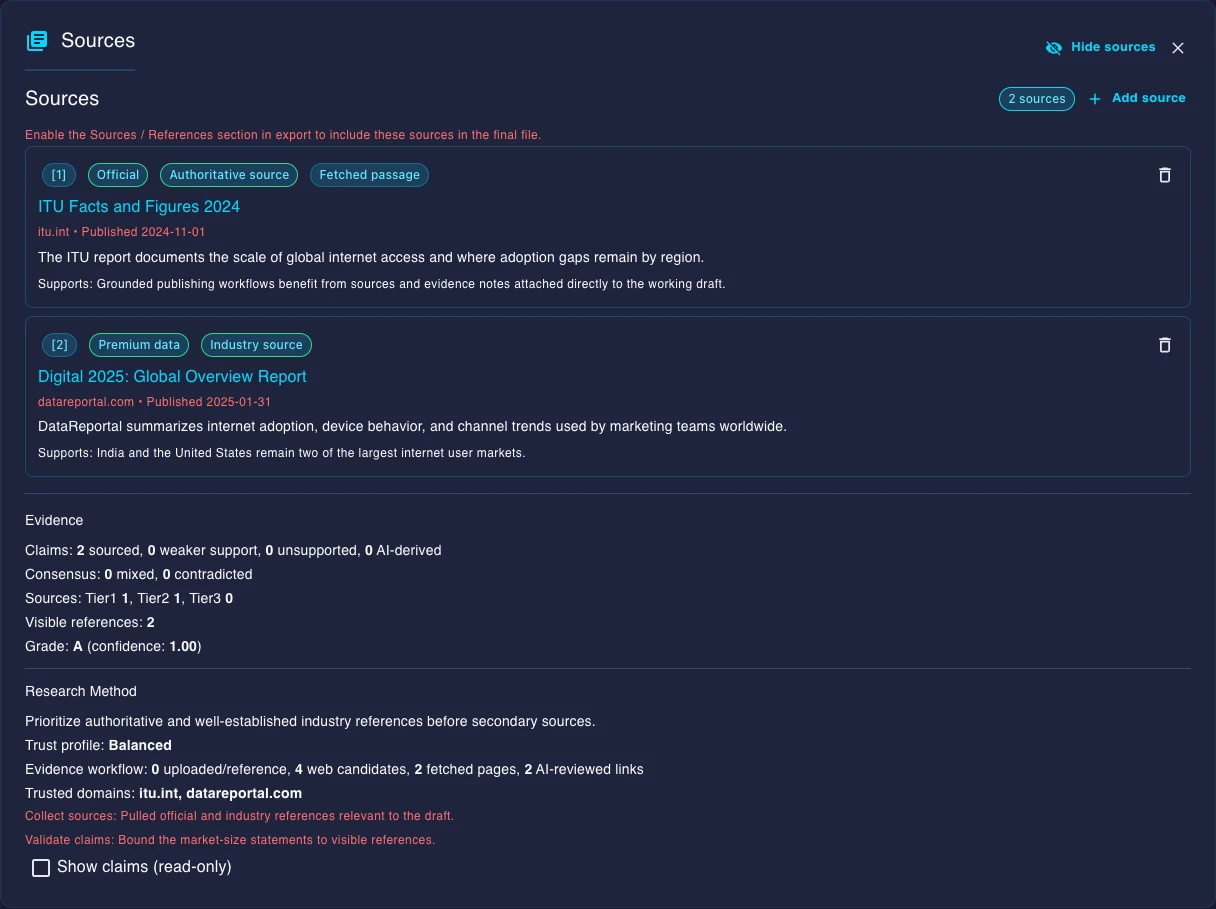
AI content needs verifiable sources. Tools that embed real citations produce content that builds authority and trust with both readers and search engines. Without citations, every claim needs manual fact-checking.

Brand Voice

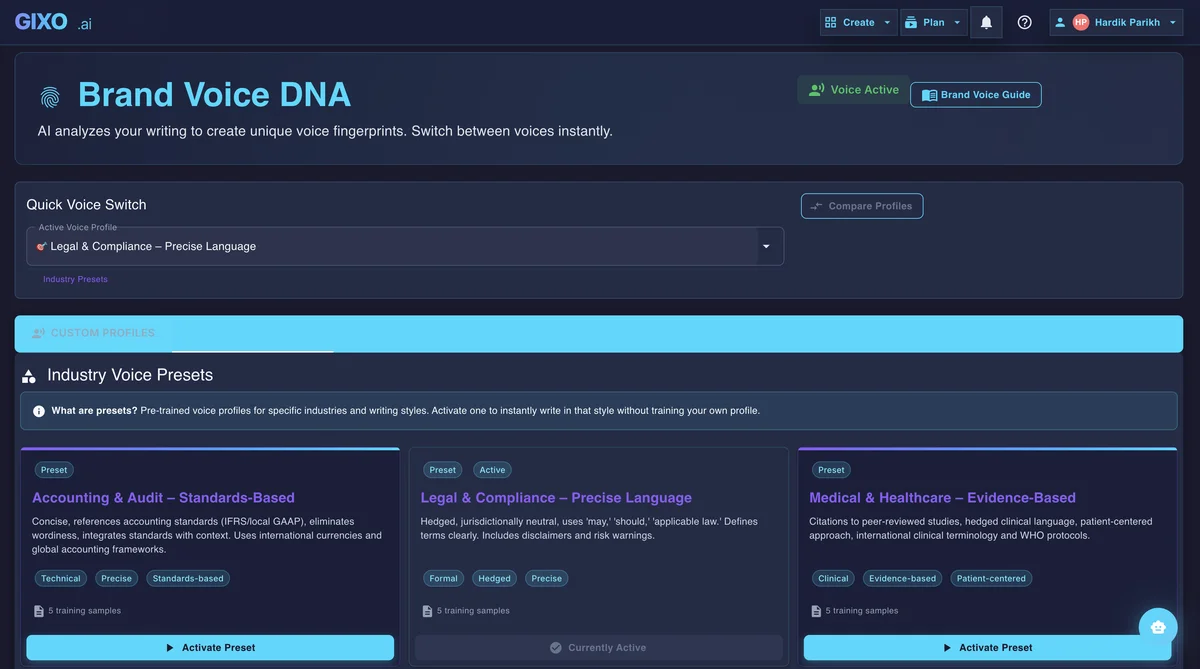
True brand voice matching requires learning from your actual content, not just selecting a tone preset. The best platforms offer deep voice training so every article sounds like your team wrote it.

Export Flexibility

Professional workflows need HTML, Markdown, PDF export and CMS integrations. Copy-paste from a chat window is not a content workflow, especially when you need consistent formatting at scale.

Content Management

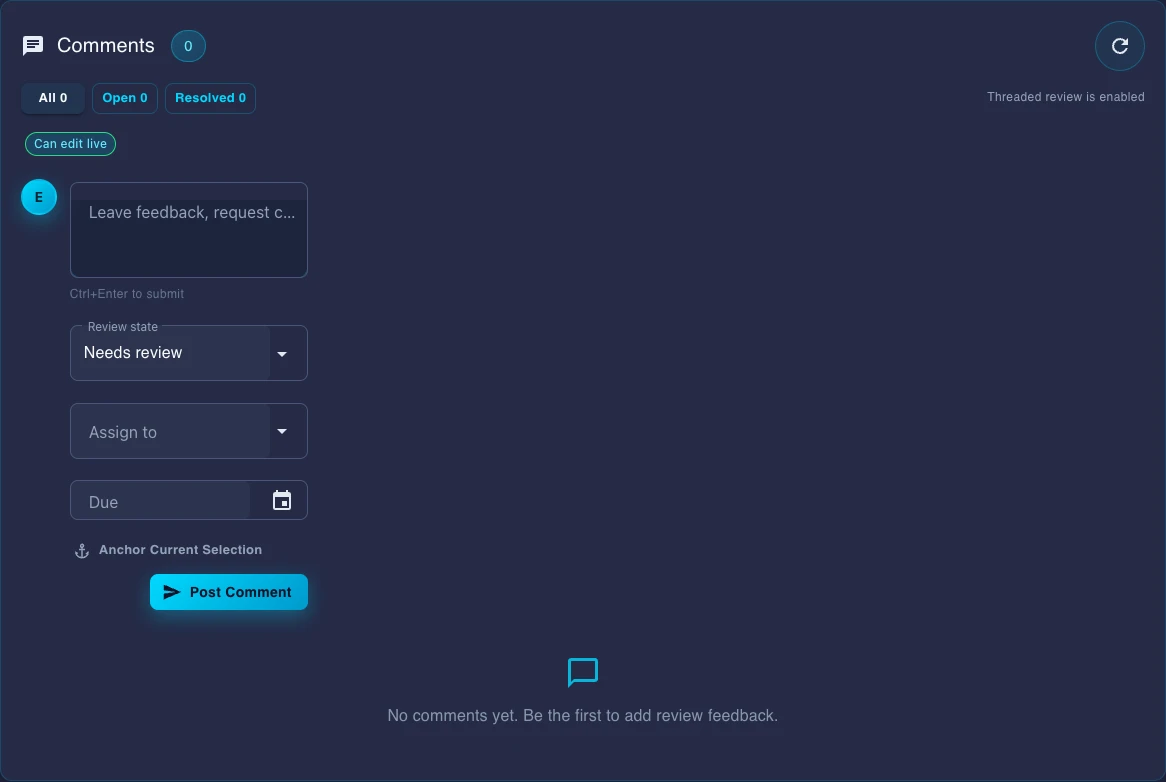
Organizing, versioning, and collaborating on content requires a proper workspace. Scattered chat histories across multiple sessions make it nearly impossible to maintain a coherent editorial calendar.

Value for Money

The total cost includes the platform plus any SEO tools, editing software, and publishing integrations you need. An inexpensive plan that requires three add-ons can cost more than an all-in-one solution.

How to Choose

1
Define Needs

List your content types, volume targets, SEO requirements, and publishing workflow needs before looking at tools.

2
Compare Features

Match your requirements against each platform's capabilities using the detailed reviews and comparison table below.

3
Test Free Tiers

Most platforms offer free trials. Test with your actual content needs, not a generic demo prompt, before committing.

4
Calculate Total Cost

Include add-on tools, SEO subscriptions, and publishing integrations in your cost comparison. Monthly sticker price is misleading.

In-Depth Tool Reviews

We evaluated each tool by generating the same set of test articles — a 2,000-word product roundup, a how-to guide, and a thought leadership essay — then scored the output on SEO structure, factual accuracy, voice consistency, and export quality.

1. Gixo
All-in-one content engine with built-in SEO and citations

Gixo positions itself as a single workspace for long-form content, presentations, business briefs, and legal documents. The standout feature is automatic evidence citations: the platform sources and embeds references inline so you do not have to fact-check every claim manually. SEO analysis runs during generation, not as a post-publish audit, which means headings, keyword density, and internal link suggestions are baked into the first draft.

Best for: Content marketers and solo operators who want SEO-optimized, citation-backed articles without juggling separate tools for research, writing, and optimization.

Strengths: Built-in SEO analysis, automatic evidence citations, brand voice training from your own content, multi-format export (HTML, Markdown, PDF), built-in presentations, content workspace with version history.

Limitations: Smaller template library than Jasper. No native Shopify or e-commerce product description workflows. Younger platform with a smaller community compared to established players.

Starting at $9.99/mo

2. Jasper
Enterprise brand voice and campaign management

Jasper is one of the most mature AI writing platforms and excels at brand voice consistency across large teams. Its campaign workflow lets you generate a blog post, social snippets, and email copy from a single brief. The template library is enormous, covering dozens of use cases from Facebook ads to press releases. However, Jasper does not include native SEO optimization — you need a SurferSEO add-on at extra cost, which adds friction and expense.

Best for: Marketing teams at mid-size and enterprise companies that need strict brand governance and multi-channel campaign output.

Strengths: Deep brand voice profiles, extensive template library, team collaboration features, campaign workflows that produce content across multiple channels from one brief.

Limitations: Expensive at $49/mo per seat. SEO requires separate SurferSEO subscription ($89+/mo). No built-in citations. Long-form output caps around 3,000 words per generation.

Starting at $49/mo

3. Copy.ai
Go-to-market workflows and sales copy automation

Copy.ai has pivoted from a simple copywriting tool into a go-to-market workflow platform. Its chat-based interface lets you chain prompts together to build multi-step content pipelines — for example, researching a competitor, drafting a comparison page, and generating social posts in one sequence. The short-form copy quality is excellent, particularly for sales pages and ad copy. Long-form blog content, however, tends to feel thin compared to dedicated article generators.

Best for: Sales and growth teams that need high-volume short-form copy — email sequences, ad variants, landing page copy, and social captions.

Strengths: Workflow automation with chained prompts, strong short-form output, sales copy specialization, generous free tier for individuals.

Limitations: Weak long-form generation. No built-in SEO tools. No citations or source references. Limited export options beyond plain text.

Starting at $49/mo (Free tier available)

4. Writesonic
Affordable AI writing with Chatsonic assistant

Writesonic is one of the most affordable options with a surprisingly broad feature set. Its Chatsonic assistant connects to real-time web data, which helps with research-heavy content. The article rewriter and blog post generator handle standard content marketing pieces well. At $16/mo, it undercuts most competitors significantly. The trade-off is that SEO features are basic — you get keyword suggestions but not the deep optimization you would find in Surfer SEO or Frase.

Best for: Budget-conscious freelancers and small businesses that need a capable AI writer without enterprise pricing.

Strengths: Low price point, Chatsonic with real-time web access, article rewriter, blog generator, decent output quality for the cost.

Limitations: Basic SEO suggestions only. No citation embedding. Brand voice is limited to tone presets rather than trained models. Long-form capped around 3,000 words.

Starting at $16/mo

5. ChatGPT
General-purpose AI with unmatched versatility

ChatGPT remains the most versatile AI tool available. It can draft blog posts, brainstorm headlines, write code, summarize research, and handle almost any text task. The GPT-4o model produces strong prose quality. However, ChatGPT is a general-purpose chat interface — it has no content workspace, no SEO analysis, no brand voice persistence between sessions, and no structured export. Citations are unreliable unless you use the browsing feature and manually verify links.

Best for: Individuals who need a flexible AI assistant for a wide range of tasks beyond content marketing, or who prefer to manage their own editing and SEO workflow.

Strengths: Highest raw writing quality among general AI models. Extremely versatile. Massive plugin ecosystem. Free tier is genuinely useful. Custom GPTs for repeatable workflows.

Limitations: No content-specific features — no SEO, no workspace, no version history, no CMS publishing. Brand voice resets every session. Citations are often fabricated. Export is copy-paste only.

Free / $20/mo for Plus

6. Surfer SEO
Best-in-class on-page SEO optimization

Surfer SEO is the gold standard for on-page content optimization. Its Content Editor analyzes top-ranking pages for your target keyword and gives you a real-time content score as you write. NLP term suggestions, heading structure guidance, and word count targets make it extremely effective at improving existing content. The catch is that Surfer is primarily an editing and optimization tool, not a generator. Its built-in AI writing (Surfer AI) produces serviceable drafts, but the real value is the optimization layer you apply to content from other sources.

Best for: SEO specialists and agencies who already have writers (human or AI) and need a powerful optimization layer to maximize ranking potential.

Strengths: Industry-leading SERP analysis, real-time content scoring, NLP keyword recommendations, content audit tools, integrations with Google Docs and WordPress.

Limitations: Expensive at $89/mo. AI generation is secondary to optimization. No citations, no brand voice training, no multi-format export. Best used alongside a separate writing tool.

Starting at $89/mo

7. Frase
SERP-driven research and content brief automation

Frase excels at the research phase of content creation. It scrapes top-ranking pages for any keyword, extracts common questions, and generates structured content briefs automatically. The question-based outlining feature is particularly useful for creating FAQ sections and People Also Ask-style content. Frase also includes a basic AI writer, but its primary value is in research and planning. At $15/mo, it is one of the most affordable SEO-adjacent tools on this list.

Best for: Content strategists and editors who need fast SERP research and structured briefs to hand off to writers.

Strengths: Excellent SERP analysis, automated content briefs, question-based outlining, topic clustering, affordable pricing.

Limitations: AI writing quality is average. No brand voice. No citations. Limited export options. Works best as a research companion rather than a standalone generator.

Starting at $15/mo

8. Scalenut
Cruise mode long-form generation with keyword clustering

Scalenut combines AI writing with SEO planning in a single platform. Its Cruise Mode generates full long-form articles from a keyword in minutes — you choose the outline, and the AI fills in each section. The keyword clustering tool groups related terms so you can plan content hubs efficiently. The SEO audit feature scores existing pages against competitors. Scalenut sits in the sweet spot between pure SEO tools and pure AI writers, though it does not excel at either as much as specialists do.

Best for: Content teams that want a combined SEO planner and AI writer in one dashboard, especially for building topical authority through content clusters.

Strengths: Cruise Mode for fast long-form drafts, keyword clustering, SEO audit, topic research, reasonable pricing for the feature set.

Limitations: Writing quality is a step below Jasper or ChatGPT. No citations. Brand voice is basic. Cruise Mode output often needs significant editing for a polished final piece.

Starting at $39/mo

9. Content at Scale
Bulk long-form with auto-publishing to WordPress

Content at Scale is built for volume. Its AIO (AI + Optimization) model generates long-form articles designed to pass AI detection checks, and the platform can publish directly to WordPress with proper formatting. If you need 50 or 100 SEO articles per month, this is one of the few tools built for that scale. The per-article cost decreases dramatically at higher volumes. The trade-off is price — the entry point is steep, and the output, while decent, lacks the nuance you get from more interactive tools.

Best for: Agencies and affiliate marketers running large-scale content operations who need bulk article generation with minimal manual intervention.

Strengths: Purpose-built for volume, auto-publishing to WordPress, AI detection optimization, long-form up to 7,000+ words, bulk processing.

Limitations: Expensive at $250/mo entry. Output quality is adequate but rarely exceptional. No brand voice training. No citations. Limited customization per article at scale.

Starting at $250/mo

10. Koala Writer
Real-time SERP data and Amazon review integration

Koala Writer is a lean, focused tool that punches above its weight. It pulls real-time SERP data to inform article outlines and integrates Amazon product reviews into affiliate content automatically. The outline editor lets you restructure headings before generation, which improves output quality significantly. At $9/mo, it offers remarkable value for bloggers and niche site builders. The interface is minimal — no workspace, no collaboration — but the output-to-price ratio is hard to beat.

Best for: Niche site builders, affiliate marketers, and solo bloggers who want SEO-informed articles at a low price point.

Strengths: Real-time SERP data, Amazon review integration, outline editor, very affordable, solid output quality for the price.

Limitations: Minimal workspace — no collaboration, no version history. No brand voice. No citations. Limited export (mostly WordPress-ready HTML). Not designed for teams.

Starting at $9/mo

11. Rytr
Budget-friendly AI writer with 40+ templates

Rytr is the most budget-friendly option on this list, offering a generous free tier and a paid plan at $9/mo. It includes over 40 content templates covering blog posts, social media, emails, and product descriptions. The writing quality is acceptable for volume-oriented workflows where speed matters more than polish. Rytr is not the tool for flagship thought leadership pieces, but it can reliably produce serviceable first drafts for standard content types at a fraction of the cost of enterprise tools.

Best for: Solopreneurs and small businesses on a tight budget who need basic content generation across many formats.

Strengths: Very affordable, generous free tier, 40+ templates, supports 30+ languages, simple and fast interface.

Limitations: Output quality is noticeably below Jasper, ChatGPT, or Gixo. No SEO tools. No citations. Basic tone settings only. Long-form content often lacks depth and coherence.

Starting at $9/mo (Free tier available)

12. Byword AI
Programmatic SEO and bulk article generation

Byword AI is purpose-built for programmatic SEO. You feed it a spreadsheet of keywords, and it generates a unique article for each one with minimal manual input. The output is surprisingly readable for a fully automated process, and the tool handles internal linking between generated articles automatically. Byword is ideal if you are building a large content library around hundreds of long-tail keywords. It is not designed for individual high-quality pieces — think volume-first strategy.

Best for: SEO agencies and publishers running programmatic content strategies across hundreds or thousands of keywords.

Strengths: True bulk generation from keyword lists, automatic internal linking, programmatic SEO specialization, minimal editing needed for standard informational content.

Limitations: Expensive at $99/mo. No brand voice. No citations. Output is formulaic — fine for informational queries but not for brand storytelling. No workspace or collaboration features.

Starting at $99/mo

2026 AI Content Generator Comparison

How 12 AI content generators compare across 10 professional criteria. Scroll horizontally on mobile to see all columns.

FeatureGixoJasperCopy.aiWritesonicChatGPTSurfer SEOFraseScalenutContent at ScaleKoalaRytrByword
Built-in SEOYesAdd-onNoBasicNoBest-in-classYesYesBasicSERP-drivenNoBasic
CitationsAutomaticNoNoNoUnreliableNoNoNoNoNoNoNo
Brand VoiceDeep learningStrongBasic tonePresetsPer-sessionNoNoBasicNoNoBasicNo
Long-form Limit10,000+ words3,000 wordsSnippets3,000 words2,000 wordsVaries2,500 words5,000 words7,000+ words3,000 words2,000 words3,000 words
CMS PublishingWP, Ghost, MediumLimitedNoLimitedNoWP, DocsNoWPWP auto-publishWPNoWP
Export FormatsHTML, MD, PDFDocsText onlyText, docsCopy onlyHTMLTextHTML, docsHTMLHTMLTextHTML
Content WorkspaceFullYesBasicBasicChat onlyEditorBasicYesDashboardMinimalBasicMinimal
PresentationsBuilt-inNoNoNoNoNoNoNoNoNoNoNo
Bulk GenerationYesCampaignsWorkflowsBasicNoNoNoYesCore strengthBasicBasicCore strength
Starting Price$9.99/mo$49/mo$49/mo$16/moFree / $20$89/mo$15/mo$39/mo$250/mo$9/mo$9/mo$99/mo

Best Tool By Use Case

Different workflows call for different tools. Here is our recommendation for each common scenario.

Best Overall for Content Marketing
Gixo

Built-in SEO, automatic citations, brand voice, presentations, and multi-format export in one platform at an accessible price. Best total package for content marketers who want everything in one place.

Best for Enterprise Teams
Jasper

Jasper's brand governance, team permissions, and campaign workflows are purpose-built for large marketing organizations that need consistency across dozens of contributors.

Best for Sales Copy
Copy.ai

Copy.ai's workflow automation and short-form specialization make it the strongest choice for sales teams generating email sequences, ad variants, and landing page copy at volume.

Best on a Tight Budget
Writesonic or Rytr

Writesonic offers the best quality-to-price ratio at $16/mo, while Rytr's $9/mo plan covers the basics for solopreneurs who prioritize cost over polish.

Best for SEO Optimization
Surfer SEO

No other tool matches Surfer's depth of on-page optimization. If you already have content and need to maximize its ranking potential, Surfer is the clear choice — pair it with a separate AI writer.

Best for Content Briefs
Frase

Frase's SERP research and automated brief generation save hours of planning time. Ideal for editors and strategists who hand off briefs to writers rather than generating articles themselves.

Best for Bulk / Programmatic SEO
Byword AI or Content at Scale

Byword handles keyword-list-to-article pipelines with automatic internal linking. Content at Scale offers higher word counts and WordPress auto-publishing for large volume operations.

Best for General AI Tasks
ChatGPT

If you need an AI assistant that handles writing, coding, research, and brainstorming across many domains, ChatGPT is the most versatile option — just bring your own SEO and publishing workflow.

How We Evaluated

This comparison reflects hands-on testing conducted in early 2026. We are transparent about the fact that Gixo is our own product. To keep the evaluation fair, we applied the same process to every tool and credited competitors wherever they outperformed us.

Testing Methodology

We generated the same three articles with each tool: a 2,000-word product comparison, a 1,500-word how-to guide, and a 1,200-word thought leadership essay. Each piece targeted a moderately competitive keyword with 1,000 to 5,000 monthly searches. We scored output on keyword placement, heading structure, readability, factual accuracy, and citation quality.

Scoring Categories

We evaluated ten dimensions: built-in SEO depth, citation accuracy, brand voice fidelity, long-form generation limits, CMS publishing options, export format variety, content workspace functionality, presentation capability, bulk generation support, and total monthly cost including required add-ons.

Pricing Approach

All prices reflect the lowest published tier as of January 2026. Where a tool requires add-ons for core functionality (for example, Jasper plus SurferSEO for SEO optimization), we note the combined cost in the review. Prices may have changed since testing — check each vendor's site for current rates.

Limitations of This Review

AI tools update frequently. Features and pricing may shift between publication and your reading. We re-test quarterly and update this page accordingly. Our scoring reflects content marketing use cases — developers, fiction writers, or academic researchers may weigh criteria differently.

Frequently Asked Questions

What is the best AI content generator in 2026?
It depends on your use case. For content marketers who want built-in SEO, citations, and multi-format export in one platform, Gixo offers the most complete package. Jasper is the strongest option for enterprise teams that need brand governance across large organizations. ChatGPT remains the best general-purpose AI for users who prefer to manage their own publishing workflow.
Which AI writing tool has the best SEO features?
Surfer SEO has the deepest on-page optimization features, including real-time content scoring and NLP analysis. However, it is primarily an editing tool, not a generator. For built-in SEO during generation, Gixo, Frase, and Scalenut all integrate SEO analysis into the writing process without requiring separate subscriptions.
Do AI content generators produce accurate information?
Most AI writers generate plausible but unverified claims. ChatGPT with browsing can access current information, but its citations are often inaccurate. Gixo is the only tool in this comparison that automatically sources and embeds verifiable evidence citations. For all other tools, plan to fact-check claims manually before publishing.
Can AI content rank in Google in 2026?
Yes. Google evaluates content based on quality, expertise, and helpfulness — not whether a human or AI wrote it. The key is proper SEO optimization, accurate information, and genuine value for the reader. Tools that build SEO best practices into the generation process give you a head start, but human editing and expertise still matter for competitive keywords.
What is the most cost-effective AI content generator?
Calculate total cost, not just sticker price. Koala Writer and Rytr are cheapest at $9/mo, but lack SEO and citations. Gixo at $9.99/mo includes SEO, citations, and presentations — no add-ons needed. Jasper at $49/mo requires SurferSEO ($89/mo) for comparable SEO, bringing the real cost to $138/mo. Always factor in required add-ons.
Is Jasper or Copy.ai better for marketing teams?
Jasper is better for teams that need strict brand voice consistency and campaign-level content production across blogs, social, and email. Copy.ai is stronger for sales-focused teams that need workflow automation and high-volume short-form copy like email sequences and ad variants. For long-form SEO content, neither is ideal without additional tools.
What is the best AI tool for bulk content generation?
Content at Scale and Byword AI are purpose-built for bulk operations. Byword handles programmatic SEO from keyword spreadsheets with automatic internal linking. Content at Scale generates longer articles and auto-publishes to WordPress. Gixo also supports bulk generation but is more suited to quality-focused batches than high-volume programmatic content.
Should I use ChatGPT or a dedicated AI content tool?
ChatGPT produces excellent prose but lacks content marketing features — no SEO analysis, no workspace, no CMS publishing, no reliable citations. If you are writing occasional articles and handling SEO yourself, ChatGPT works well. If you produce content regularly and need SEO optimization, brand voice, and structured workflows, a dedicated tool will save significant time.

Try the Top-Rated Content Generator

Built-in SEO, evidence citations, brand voice, and presentations. See why content marketers are choosing Gixo in 2026.

High Contrast Mode Disabled
An error has occurred. This application may no longer respond until reloaded. Reload 🗙