
Bring useful inputs
Set the reader, purpose, required points, sources and section budgets. Review extracted material from an upload, paste or URL before using it as grounding.
Gixo is built for marketing, editorial, product, and knowledge teams that need review-ready first shots plus governance, review workflow, localization, and publishing. A source-aware content production workspace for marketing, editorial, product, and knowledge teams working from briefs, reference files, and existing drafts. Set a structured, versioned editorial brief — primary keyword, search intent, audience, required topics, and the questions to answer — that flows into generation as coverage requirements, choose the source scope and evidence standard before generation, inspect citations afterward, and apply configurable writing and terminology controls during review.
What your plan includes.Comments and team sharing are on Professional plans and above — from $79 per seat a month, minimum three seats. Writing, checks, exports, public share links and publishing are on every plan, and Brand Voice is on Starter and above. The 14-day trial works like Starter, so it includes writing, checks, exports, publishing and Brand Voice, but does not include comments and team sharing.

An AI content writer for business is a workspace-native drafting tool that produces industry-aware, review-ready first shots instead of raw text — built with brand voice and evidence grounding, with comments, permissions, guest approvals, and version history available when the team needs them before publishing. Gixo is this kind of tool: it drafts across multiple industry categories and structured content types, supports localization into many languages, and send reviewed work to connected wordpress or ghost sites, or to your own webflow, notion, hubspot or shopify connection. destination actions differ: hubspot receives a blog draft and notion a page. medium supports manual export or an available legacy-token draft handoff; inspect the receiving destination before publication. The distinction from a general assistant is whether the output can move through the team's chosen review path without being rebuilt elsewhere.
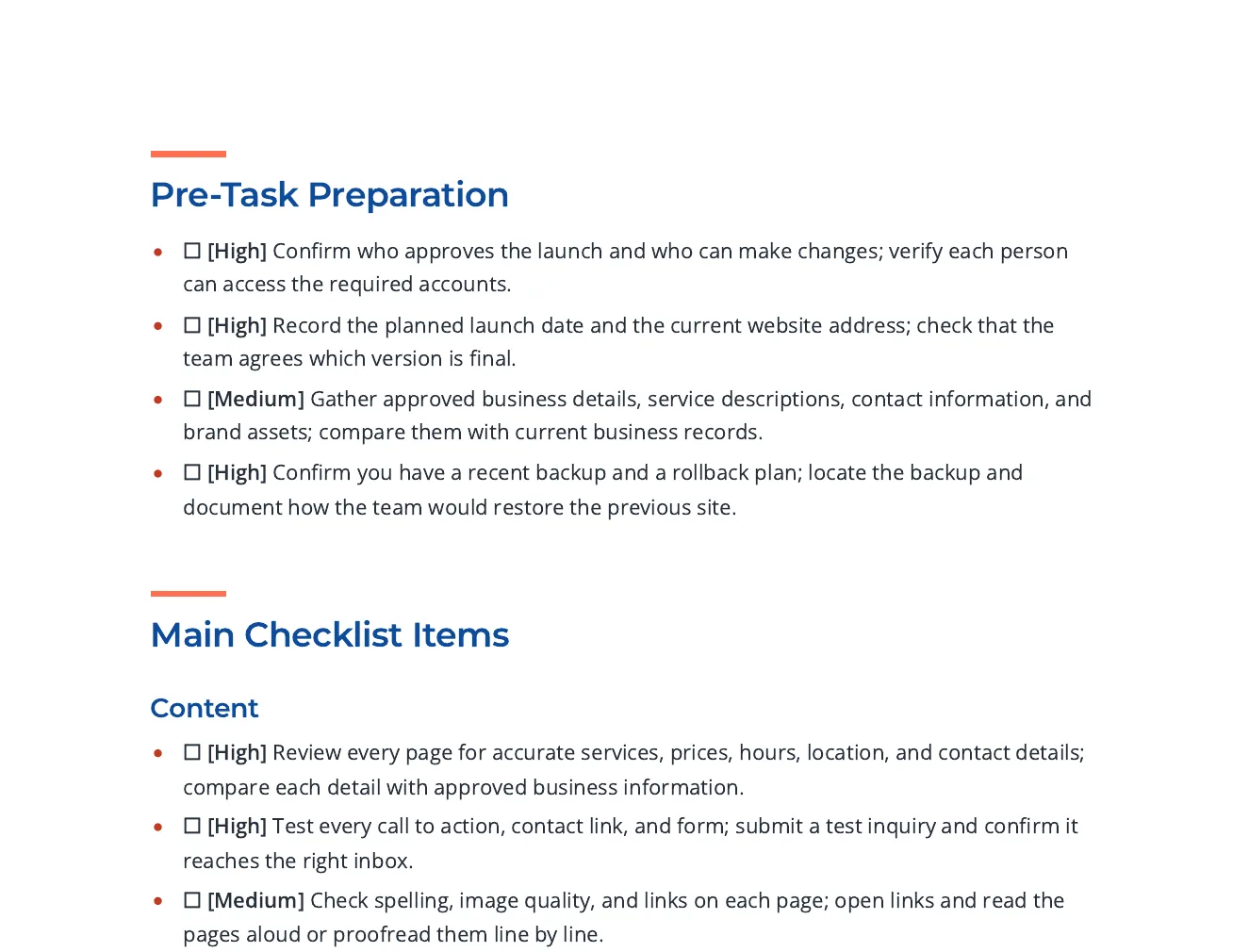
This is an actual Quill export, with the input brief available alongside it. Use the workflow below to connect source material, structure, editing and delivery.
Checklist items grouped by phase, each with a priority tag and a way to check it, with links to Google, W3C and FTC guidance for the search, accessibility and security items.
Write an actionable checklist for a small business about to launch a new website. Group the items under content, search visibility, accessibility, performance, security and privacy, analytics, and what to verify on launch day. Each item should be a single action someone can tick off and should say how to check it. Cite published guidance for the search, accessibility and security items.
Open the full export and compare its statements with the cited sources before reuse.
Set the reader, purpose, required points, sources and section budgets. Review extracted material from an upload, paste or URL before using it as grounding.
Review the outline, then the draft. Add structured blocks, edit selected passages and use Image Studio for permitted generation, photo selection and responsive insertion; retain attribution where required.
Review citations, wording and metadata. Use the supported export or connected destination for the current account; Markdown handoff and a live publishing connection are different delivery paths.
Power Edit starts from an active selection. You can give iterative or voice-transcribed instructions, choose a reply language, stop a streamed response, inspect the result and explicitly replace the selected range. Full-document context is reference material. Structured blocks have typed fields, item-level regeneration and previews; their AI field assistance is separate from their layout.
Use builder or advanced prompts with the subject and document context. Shape style, mood, lighting, palette, composition, camera and supported image dimensions. Inspect generated alternatives or a selected real photo, retain required source attribution and edit alternative text before insertion. Finishes and prompt edits create a new result; compare it with the original instead of assuming an edit is lossless.
Import options depend on the source type: pasted text, Markdown or HTML; document extraction; spreadsheet cells; image OCR; and supported media transcription. Review extracted material before drafting. Export settings include the supported format, theme, author, spacing, headers, footers and page appearance. Inspect the actual download because HTML, print PDF and editable Word represent structure differently.
A source-led draft needs human review. HTML, PDF and editable Word have different layout fidelity; connected publishing support is destination-specific.
Turn briefs, source material, and existing drafts into structured content, then keep editing, evidence review, collaboration, transformation, export, and publishing attached to the same document.
Keep briefs, drafts, review notes, and approvals in one place so the team is not passing content around by chat, email, and attachments.
Shared voice rules, permissions, guest approvals, activity history, version history, and publishing history keep the workflow inspectable.
Work across 38 industry categories with format-aware guidance so the first shot reflects the tone, terminology, structure, evidence standards, and reference expectations of the domain.
Create localized versions across 71 languages without rebuilding the structure or message from scratch.
Use source-aware drafting, evidence grounding, and references when the team needs stronger claim discipline than a general assistant can provide.
Send reviewed work to connected WordPress or Ghost sites, or to your own Webflow, Notion, HubSpot or Shopify connection. Destination actions differ: HubSpot receives a blog draft and Notion a page. Medium supports manual export or an available legacy-token draft handoff; inspect the receiving destination before publication. Export in PDF, DOCX, HTML, Markdown, TXT, and JSON when the destination is outside the direct path.
The problem is not getting words. It is getting usable work product that survives review.
Start with a business brief, source material, or an existing draft so the first shot is shaped around the actual job to be done and has the evidence needed to support it.
Select the content format that matches the business workflow instead of generating generic paragraphs and restructuring them later.
Comments, mentions, assignees, due dates, permissions, and version history keep the review loop attached to the content.
Finish in the same workspace, then publish directly or export for the downstream system without recreating the work.
The gap is workflow quality after generation, not who can produce text.
| Capability | Gixo | General assistant | Broad AI platform |
|---|---|---|---|
| Industry-aware first shot | Yes | Prompt-dependent | Varies |
| Brand voice, grounding, references | Built in | Manual prompting | Varies |
| Review workflow | Built in | Limited | Partial |
| Permissions and guest approvals | Built in | No | Varies |
| Localization | 71 languages | Manual setup | Varies |
| Direct publishing | connected WordPress and Ghost sites | No | Varies |
| Export-only handling | Medium manual export or article-form draft handoff, and Substack export | Manual | Manual |
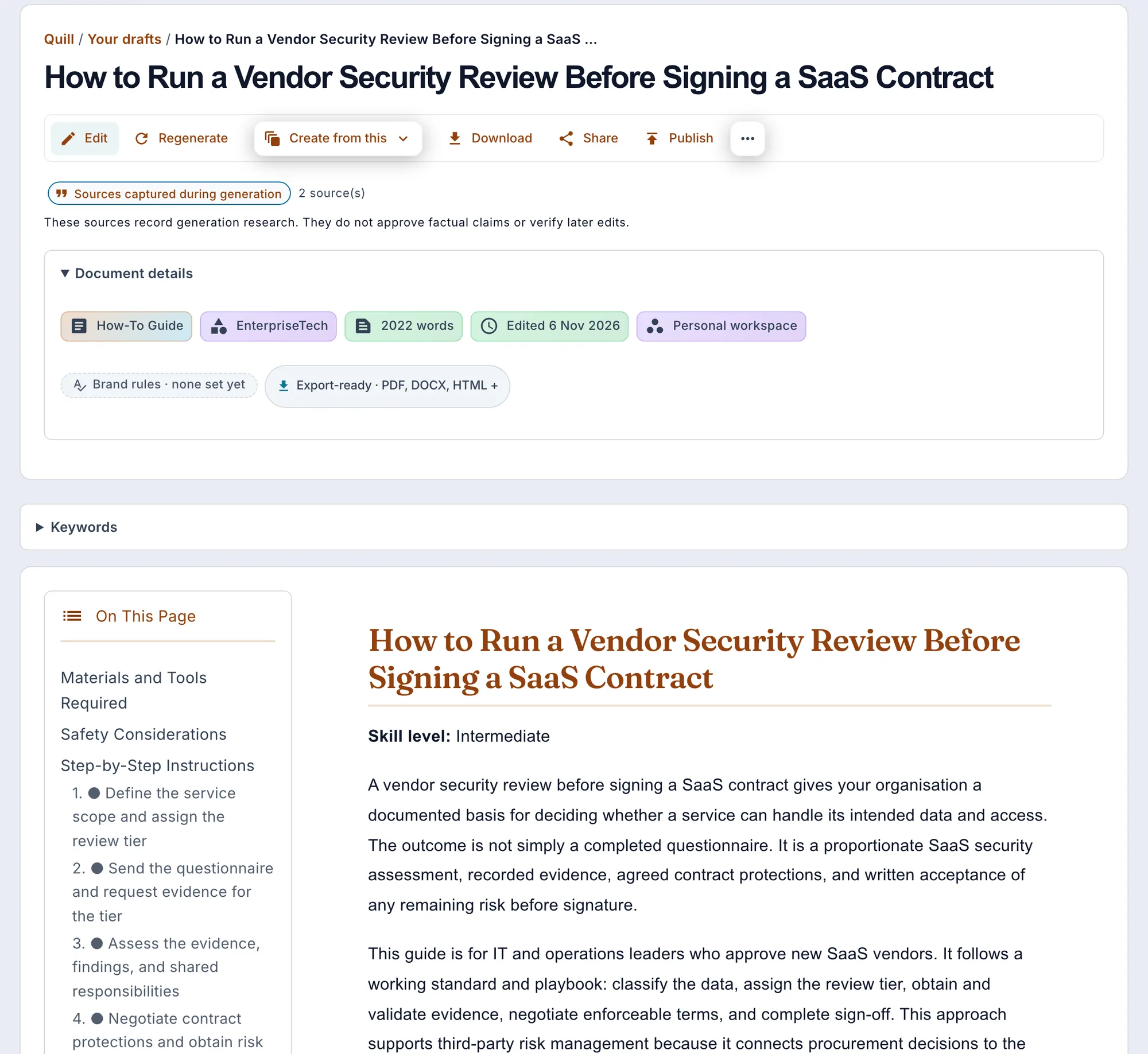
Inside Quill
Updated